

Vacancy Taxes and Empty Plots: Do They Help or Backfire?
In cities all over the globe, the cost of housing is on the rise, and it is apparent that the land is not being used to its full capacity; this has led to frustration among the people and experimentation with policies.
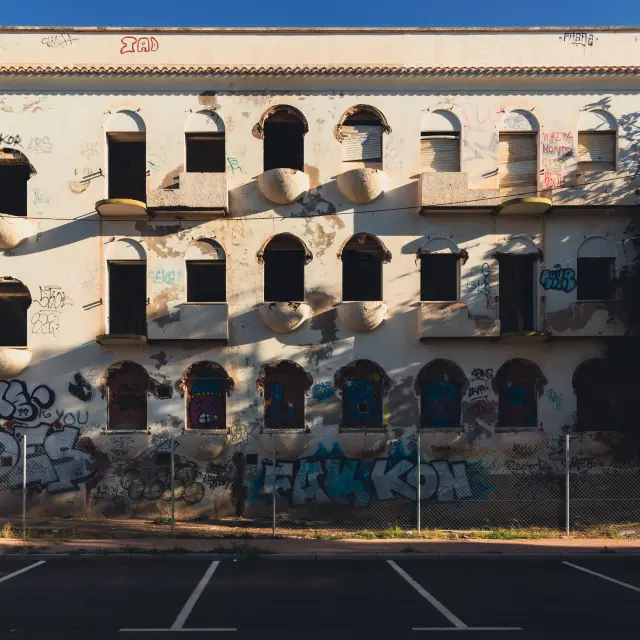
Whereas the majority of the residents are finding it hard to acquire affordable houses, empty apartments, vacant structures, and undeveloped parcels are scattered around the urban environments.
 Governments, in turn, have been
increasingly resorting to vacancy taxes and penalties on idle land as means
of promoting productive use of real estate, raising the supply of housing, and
deterring speculation. These actions are usually politically attractive, being
touted as common sense solutions to the hoarding behavior in cramped housing
markets.
Governments, in turn, have been
increasingly resorting to vacancy taxes and penalties on idle land as means
of promoting productive use of real estate, raising the supply of housing, and
deterring speculation. These actions are usually politically attractive, being
touted as common sense solutions to the hoarding behavior in cramped housing
markets.
Vacancy taxes essentially aim at forcing property owners to rent, sell, or use idle assets. Empty lot tax is a similar tax to deter land banking whereby land is not used (and instead owners wait until value increases) instead of being used in house construction or economic use.
Proponents believe that such policies can open up slumbering dormant housing,
stabilize prices and bring in public revenue. Opponents, though, caution of the
unintended effects, administrative problems, and lack of concrete impact in the
real world.
The success of the vacancy taxes and empty plot regulation is more reliant on the local market environment, policy development, the enforcement ability, and the overriding housing policies.
These tools in certain cities have been shown to yield positive results, whereas in others they have been disappointing or even counterproductive, contributing to the supply bottleneck or scaring away expansion.
In this blog, the issue of vacancy taxes and empty plots is analyzed in detail, including their theoretical motivations, practical results, economic effects, equity effects, implementation issues, and their contribution to housing crisis solutions in the long term.
By comparing
these positives and negatives, we can have a clearer picture of the
circumstances in which these policies can be useful- and when they can be more
of a detriment than an asset.
Rationality of Vacancy Taxes and the Policies on Empty Land
The basic reasoning of vacancy taxes and empty plot penalties is based on the assumption that the unutilized property in the demand-intensive areas is a market failure. Theoretically, in case of scarce housing and high prices, the rational owners are expected to rent or sell vacant units.
In conditions where it does not, the policy makers are likely
to believe that the market is being distorted by speculative action or
inefficiencies and therefore, the government should intervene.
Vacancy tax tries to make it more expensive to retain residential properties when vacant, and this will change the behavior of the owners. Governments hope to balance the scales by making it more attractive to occupy homes with loans of empty homes by levying a tax annually.
Empty plot
taxes work on the same principle, but they are focused on the undeveloped land
within urban areas where there is a high demand of housing. These policies
presume that an increase in holding costs will stimulate a faster development
or land turnover.
Advocates believe that vacancy taxes mitigate distortions that exist due to speculative investment, especially in world cities where real estate is seen as a financial product and not a residential house.
Such
markets can also see investors leave units without tenants occupying them over
a long period in hope of appreciation instead of rental earnings. Tax on
vacancy aims to redirect incentives towards productive use.
These policies have a symbolic dimension. They indicate that
housing is not only a commodity but a social good, and that governments are
ready to interfere on behalf of residents that are under affordability
pressures. Profits made on the taxation of vacancies are frequently allocated
to the affordable housing programs, which makes them even more attractive.
The reasoning for such actions, however, is based on some important assumptions: a considerable portion of empty housing is held in reserve, owners are sensitive to tax breaks, and there is enough demand to occupy new housing.
In the event such assumptions are not true, vacancy taxes
could be limited in their effect or have unexpected effects. This is the
underlying logic that is important to understand, in order to analyze whether
these policies work as well as they should work in practice.
Are Vacancy taxes truly boosting housing supply?
Among the main arguments by the advocates of vacancy taxes
is the fact that such taxes do raise the supply of housing by returning vacant
housing units into the market. In other contexts, there is some indication that
this may occur- but sometimes on a lesser scale than what popular rhetoric
assumes.
In cities where the long-term vacancy rates truly are high
due to speculative ownership, the vacancy taxes are able to push some owners to
rent/sell. An insignificant portion of units coming back into the market can be
symbolic and practical, particularly in rental markets that are tight.
Nevertheless, most of the studies conclude that the overall number of
properties that are subjected to vacancy taxes is quite small relative to the
overall housing demand.
One of them is that not every vacant house is deliberately kept off the market. Others remain empty as they are being renovated, due to inheritance claims, legal reasons or a temporary condition in the market.
A vacancy tax that does not differentiate between speculative
vacancy and unavoidable vacancy punishes the owners who are not contributing to
the problem that policymakers are addressing.
What is more, in high-priced cities, there are owners who
will just take the tax as a cost of doing business. Vacancy taxes might not be
high enough to influence the behavior significantly to the wealthy investors.
When the tax is too high, though, it can become politically unpopular or
unlawful, and constrain its sustainability.
The situation is the same with empty plot taxes. Although
they can lead to the quickening of development in certain instances, they may
also tend to deter the landowners in complex projects in case the regulatory
nature is unpredictable or the approval procedures are time-consuming. Taxes
can raise holding costs in such situations without addressing an underlying
construction impediment.
Finally, vacancy taxes might add some marginal value to the supply of housing, but in most cases, they are never transformative in themselves. They rely on complementary policies, such as simplified permitting, zoning reform, and investment in the production of affordable housing. In their absence, it is the vacancy taxes that are liable to be overused as solutions to very fundamental housing shortages.
Economic Effects and Market Deformities
The taxes on vacancies and the penalties for empty plots
always affect the real estate markets, which in some cases is not intended.
Their intention is to remedy those distortions which are due to speculation;
however, they may give rise to other distortions in case they are ill-designed.
The possible effect is low investment in rental housing.
Vacancy taxes can be a source of regulatory risk to developers and investors,
especially in rent-controlled or tenant-protected markets. This attitude may
discourage new building particularly when developers hesitate to be punished by
having empty premises at the time of lease-ups or recession.
Pricing behavior can also be influenced by the vacancy
taxes. This can be caused by some landlords trying to indirectly transfer the
burden of the tax to tenants by increasing rents, especially in markets that are
still in demand. Although this can be curtailed by regulations in certain
jurisdictions, this is not always done perfectly, and indirect cost-shifting can
take place.
Unoccupied plot taxes can lead to distortion of land markets
because those who own the land will engage in less-than-optimal development,
just to avoid taxation. This may lead to the development of unsound projects,
hastened construction or a sale of land under duress instead of developing it
in a strategic way. Such taxes in regions where they are not in demand can
again dampen land prices without significant housing benefits.
The other issue is administrative complexity. The vacancy status can only be ascertained correctly through a lot of monitoring, data gathering, and enforcement capability. The mistakes or lack of uniformity may affect the confidence of the market and trigger legal contests.
In the event of
uneven enforcement, the compliant owners will pay a disproportionately high
amount of costs, whereas others will not pay any taxes.
Nevertheless, the risks are overcome by the fact that, in case of precise targeting and accompanied by transparency, well-calibrated vacancy taxes can enhance market efficiency.
The trick is to strike a balance
of the incentives without making productive investment unprofitable. The
effects on the economy should be considered in the long run so that these
policies rectify more issues than they create.
Equity, Fairness and Social implications.
The taxes levied on vacancies are usually grounded in the
principles of equity, where they are a mechanism for ensuring that the rich
owners of property contribute more to society in times of housing crisis. This is ideally the feeling of the people: empty houses against
homelessness and congestion are an ethical abomination to most citizens. But the
performance of equity in practice is more complicated.
One of the equity issues is who ends up paying the vacancy
taxes. The accidental landlords, small property owners, and families in
transition in life can be overshadowed by large institutional investors
who have legal teams and financial cushions. Vacancy taxes may work against the
vulnerable owner without exemptions and a graduated system of taxation.
Of concern also is how the revenues are utilized. When the
money raised by the vacancy taxes are re-invested in affordable housing,
protection of tenants, or homelessness, the equity results will be much better.
When the revenues are lost in the general budgets, the social justification of
the tax becomes weak.
More fairness concerns are brought up by empty plot taxes.
In other instances, the land is underdeveloped because of lapses in
infrastructure or lack of funding or regulation hurdles which the owner has no
control over. Punishing such owners instead of systemic barriers poses a risk
of promoting unfair results.
Socially, vacancy tax can define social discourses regarding housing responsibility. They can help to strengthen the notion that housing should be made human-centered, and this would serve wider reforms.
Meanwhile,
excessively punitive measures may only increase the level of distrust between
governments and property owners, making it more difficult to plan in the long
term in terms of housing.
A policy design that is equity-oriented, e.g., hardship case exemptions, progressive tax rates, and the clear application of funds, is
necessary so that vacancy taxes would promote, but not ruin, fairness.
Challenges in the implementation and the political realities
Inasmuch as vacancy taxes may be well-intentioned, it is
not easy to ensure that they are effectively applied. One of the largest
obstacles is identifying empty premises. Governments tend to use self-reporting, utility usage statistics or checkups, all of which are subject to limitations
and privacy issues.
Another big problem is enforcement capacity. The vacancy
taxes can be on paper without adequate manpower and legal mandate. Poor
compliance rates compromise the revenue generation and behavioral change, which
reduce the trust of the people in the policy.
Resultant political opposition also influences outcomes. The
property owners, real estate associations, and investors usually push hard
against the vacancy taxes, claiming that they affect the supply of housing
adversely or infringe property rights. The implementation can be slowed by
legal obstacles that take years to reduce momentum and impact.
This may be exacerbated by public expectations. The
vacancy taxes are also hyped as quick solutions to the housing crisis. Once
successes are small as they frequently are, a sense of disappointment may crop
in, baffling further changes in the same direction.
With these obstacles, there are cities that have succeeded
with the process of implementation by beginning with pilot programs, defining
it properly and clearly communicating with the populace. The political
viability of the vacancy taxes is enhanced when they are put forward in a wider
housing strategy, but not as an independent solution.
Finally, the actualities of implementation make vacancy
taxes effective tools or empty gestures. Policymakers should be upfront
with constraints and invest in the system to achieve success in the long-term.
When Vacancy Taxes Make Sense and When They Do Not
The most successful implementation of vacancy taxes is in environments where deliberate and long-term vacancy is frequent and economically important. The carefully adjusted vacancy tax will deter speculative holding and put a few of the unsold houses back into the market in the high-demand, high-density cities with good employment opportunities and housing shortages.
The slight change of units in these environments can
contribute to stabilizing rents on the fringes of control and proving the idea
that housing is an active process and should not lie in the vaults of the
depositories.
Vacancy tax however, is not very good in poor or volatile markets. Vacancy can be a symptom or merely an implication of deeper structural problems and not speculative activity in cities where the population is in decline, the demand is skewed, or where the economy is uncertain.
The empty
houses or undeveloped plots in such settings might not be filled by taxation, but rather the taxation will jumpstart disinvestment, abandonment, or distress
sales. Instead of addressing a problem, the tax can make markets, which already
are vulnerable, even more vulnerable.
Vacancy taxes are also based on the design of policies. Effectiveness and fairness are enhanced by clear definition of vacancy, reasonable exemptions, and graded rates of tax. In the absence of these safeguards, the policy exposes the owners to a trap of not being able to rent or develop their properties in reality.
It is also important to combine vacancy
taxes with positive incentives like grants, low-interest loans, or accelerated
approvals that would make productive use realistically possible.
Finally, the use of vacancy taxes is a context tool. They
are most applicable as directed intervention in robust market where the signs
of speculative vacancy are evident. They will much better backfire than
contribute to reforms when done without any thought or used as alternatives to
full-scale housing reforms.
Conclusion
Empty plot penalties and vacancy taxes have secured a controversial yet possibly significant position in modern housing policy. They represent the increasing societal call in housing markets with scarcity and inequality alongside apparent underutilization of land and houses.
These
policies, when designed well and properly executed, can have a modest impact on making housing available, limiting speculative action, and creating affordable
housing resources.
Nevertheless, vacancy taxes are not silver bullets. Their effects on aggregate housing supply are usually small, and poorly structured ones may be counterproductive, deterring investment, generating market distortions, or yielding unfair results.
Though it may be helpful, empty plot
taxes have to be accompanied by the reforms that would cover the issues of
acceptable delays, gaps between infrastructure, and the barriers encountered
by financing.
The most important thing is that vacancy taxes are more effective as a component of an overall approach to housing. They work best during zoning reform, investment in public housing, tenant protections, and new construction incentives.
These policies need to be transparent, equitable, and
have administrative capacity so that they can be beneficial and not
detrimental.
After all, it is not the question whether vacancy taxes are helpful, or whether they backfire, but rather in what circumstances they could play any significant role in bringing more equitable yet more practical housing systems. Intelligently used, they may serve as an assistant. If carelessly used, they may become symbolic solutions to structural issues that require a more radical change.
Also read: Microfinance Housing Loans in Asia and Africa: Who's Doing It Right




-ySWGlp0vgc.jpg)









LEAVE A REPLY