

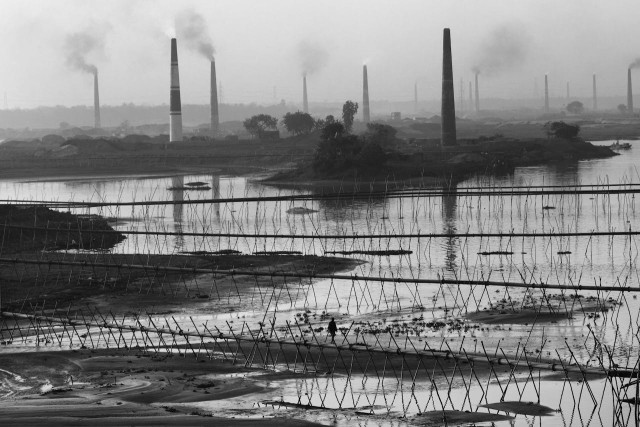
From 31% to 45% Urban: What Urbanization of Bangladesh Boom Means for Affordable Housing
The current situation is contributing significantly to the transformation taking place in Bangladesh. With the current population being about 31 percent, and an urban population of about 31 percent of the population resides within cities. However, the figures are expected to increase to 45 per cent by 2035, which means an unbelievable urban shift within a short period of time.
This fast urbanization is driven by economic prospect, rural to urban migration, industrialization and a young generation seeking employment, education and better standard of life. Superficially, this would be an improvement. However, the real picture is more complicated since cities of Bangladesh are expanding far too quickly to be served by their infrastructure and nowhere can this be seen more black and white than in the provision of affordable housing.
New migrants arrive in wait of opportunity every year in cities such as Dhaka, Chattogram, Khulna, Rajshahi, and Gazipur in hundreds of thousands. The most however cannot afford or get adequate housing. The consequence is not a safe equilibrium. On the one hand, the rich people are taken care of by high-end real estate projects. On the other side, there are swelling slums, overpopulated squatter settlements, and declining rental flats. In between, the working and the lower-middle classes are simply at a loss as to where to go in resolving their stable housing problems in the cities.
Urbanization does not only mean a bigger number of people in the cities: it means the systems required to supply them: housing, transport, water, sanitation, energy, jobs, and dignity. In case housing remains sidelined in the advanced city growth, the urban areas of Bangladesh will turn into the hub of inequality, social unrest, and environmental devastation. This blog discusses the significance of the costs of the urbanization boom on affordable housing in Bangladesh, what is wrong and why, and what the country can do before the gap is too big to close up.
The Bloating of Cities and the Degradation of Liveable Cities
With millions of people migrating to the urban areas every decade, the disconnection between planning and the results just gets bigger. The majority of the urban development in the Bangladesh is occurring in the absence of a systematic organization that could control the expansion, the utilization of the land, or the infrastructural requirements. It is the housing industry that is being hit by this shortsightedness. The cities are expanding spreading randomly sometimes chaotically. Fertile lands are being agriculturalized to residential plotting, and unplanned zoning is being developed by developers informally and fast at the rate of constructing settlements that lack government authorization as well as amenity services.
The outcome is the massive concrete jungle where habitation is becoming a luxury not a privilege. Lack of affordable housing in inner city locations is compelling low/mid-income earners to relocate to periphery regions in the city. Yet these outlying regions do not always enjoy good public transport, schools, hospitals and the availability of decent jobs. Hours a day are wasted on commuting to their places of work where people lose their income and standard of life. This is just increasing the inequality in cities and enhancing the gap between the formal and informal sections of the city.
In this way, the housing sector rings out as an exclusion arena. It is further complicated by the lack of policy coordination among the various institutions involved: RAJUK, city corporations, ministries and the private actors. Unless integrated city planning is developed with affordable housing as one of the building blocks, such a process will keep contributing fragmented, inefficient and inequitable cities.
It is not only space being lost, but the social fabric and access to economy as well. Unplanned cities fail to accommodate people who sustain these cities in terms of garment workers, street salesman, rickshaw pullers, teachers, nurses, construction and service workers. When they fail to secure a residential facility in close proximity to their workplaces, the whole urban economy starts to flake into pieces.
The Middle-Class Mirage: Who Really Gets to Live in the City?
To a great extent, the very term affordable housing has turned into a euphemism as opposed to an actual solution. In the cities of Bangladesh, especially Dhaka, the new housing supply mainly consists of mid-high-end apartments due to target upper-middle households and rich people. In key cities, prices have gone up to levels that are way out of reach of the common man. The city is a place wrapped in real estate value where owning a house is becoming an elusive dream, even to the urbanites themselves.
To young professionals, dual-income families or middle-ranking civil servants, it is usually impossible to purchase an apartment in the official market place without outside assistance. The new supply is mostly found within BDT 12 crore ($90,000180,000), which is substantially beyond the average income of the households living in Bangladesh. Even rented accommodations cannot be managed in the core localities grabbing people to settle in unfavorable and congested houses.
These discrepancies between supply and demand are motivated by the desire of making a profit, poor regulation, and the lack of state intervention. Builders cannot afford to fund affordable housing because of the high pricing of land, cost of construction and less incentive. The upshot of this is a bias in housing policy, which supports capital not citizens.
The middle classes are not doing very well in this corrupted market- not to mention low-income earners. The so-called missing middle does not have access to credit, it has no subsidies, and it is subject to regulatory challenges in land ownership or building. The middle classes will continue to be tenants to the rest of their lives or they would relapse back into the informal housing sectors in case they do not have innovative models of housing finance, cooperative housing schemes or rent-to-own programs.
The solution to this middle-class housing crisis is the future of the urban Bangladesh. The moment those who construct, educate, treat, and administer cities are priced out of living in the same cities, then the social fabric is at the beginning of coming undone. Urban areas cannot be a collection of infrastructure, but communities. And neighborhoods will not be successful without affordable housing.
Slums as the Plan B: Price of being Outsiders:
Informal systems emerges to close the gap when formal systems do not answer to demand. This has taken the form of the fast and ever-growing creeping of slums and low income settlements in the cities of Bangladesh. Although millions of people might find their own shelter using these types of areas, they tend to be places of unsafe constructions, bad hygiene and insecure properties. Creation of slums does not happen by accident; it is a result of planning and market access denial, as well as policy neglect.
In Dhaka alone, there are more than 5000 informal settlements in which more than 4 million people live. A large number of the residents exist outside the law with no piped water supply, electricity or waste collections. There are slums where a small room is shared by more than five human beings. Fire outbreak, eviction and outbreak of diseases are common. However, these communities are so much rooted into the urban economy as a supplier of necessary labour and services.
The urban poor remain in the slums due to lack of an alternative available. An average family receiving low income cannot even think of renting out an apartment that would be legal, to say nothing of purchasing it. The housing programs provided by the government, so-called microfinance housing products are of the short-term and high-interest credit and hardly ever can serve the real estate interests.
Informal settlements are persistently regarded as issues to be eliminated by the planners and authorities, even though they are massive and strong communities. There is no campaign to get rid of the slums without providing alternatives. In the meantime, land clearance can prove advantageous to private developers and elites since cleared lands are converted into high-end living space and business premises.
It is an astronomical social cost of such exclusion. It contributes to poverty between generations, ill health, illiteracy and instability in the society. However, there is yet another way. Successful examples of the world city have demonstrated that it is possible to upgrade slums, legalize tenure, deliver basic services, and create communities that are involved in decision-making processes, and in all such ways, informal houses can be changed to humane, livable areas. Bangladesh now has to take a strategic decision: they will have to decide either to keep slums as the crisis management or they will have to start emulating to use slums as the core of the affordable housing problem.

The Future of Urban Housing Depends on Policy, Innovation, and Political Will
Housing shortage cannot be addressed in a conventional way since the urbanization has taken place at a high pace in Bangladesh. Providing an increasing number of urban residents with affordable housing will necessitate daring policy choices, financial innovation and consistency with social equity. The government will have to play a leading role in making the housing market more inclusive that is to cater to the needs of all kinds of people and not solely to the rich.
To do this, the national and the local governments should not regard affordable housing as a vestige of the market but as an important urban infrastructure. Housing is a pillar of city functioning just as other factors such as roads and schools are. It implies the dedication of public land, budget grants and subsidies to the affordable housing developers.
Second, the financial system should be transformed to be in the favor of the majority. To ensure that housing finance is made accessible, there is a need of mortgage products to informal workers, rent-to-own products, housing savings plans, as well as state-supported credit guarantees. Fintech tools such as digital credit scoring can also be used to reach out to the under banked segment.
Third, new alliances between the public and the private are to be promoted. Role can be played by the public-private partnership (PPP), community based housing cooperatives, and social impact funds. Developers need to be rewarded into developing mixed-income housing and the regulations should make inclusion perfunctory.
Last but not least, data and planning should be made the key to the process. Red tape can be decreased by real-time housing needs evaluations, land-use analytics, and online permit programs, which increase transparency. Slum improvement initiatives should not be small-scale temporary schemes, but they should form part of national urban policy.
All of this cannot come about without a political will. Housing is not a problem of technology in the city-it is a problem of administration. The leaders should be ready to discriminate the need of the many over profit of the few. That is the only way the cities in Bangladesh can turn into a place where growth is inclusive, the opportunity is shared and everyone is able to live in a home.
Why the Private Sector Alone Can’t Solve the Housing Crisis
The private sector has been dominant in housing development in the backdrop of high rate of urbanization in Bangladesh. The main player’s cavitating the skyline of the cities such as Dhaka or Chattogram have been real estate developers, construction companies, and landlords. Nevertheless, in spite of this increasing accommodation supply in the form of buildings and gated communities and apartments in high rise buildings, the prevalent housing crisis, especially among the low income and middle income population has not been alleviated. It points to one important fact; the private sector can and will not end the supply of affordable housing.
The commercial house industry works on grounds of profit. The developers are focusing on areas most profitable with their money invested- the high valued property or luxurious housing. The prices of land in the cities are insanely high and construction materials are expensive. Consequently, there is just no economic sense at all in constructing homes that most of the Bangladesh citizens live that are not subject to substantial incentives or subsidies by private firms. Even at the promise of affordable units, there are good chances of getting them poorly constructed, in places of no interest, or end up being upgraded to more profitable units.
Besides, the regulatory environment is not the kind one that can provide the oversight towards inclusive development. The zoning ordinances, construction permits and land-use schemes are either in poor condition or are not well enforced. This provides the opportunity to speculate and hoard land which increases the price, and this has knocked off affordable projects altogether. The challenge is compounded with corruption and lack of transparency.
Scale is another constraint. No matter how dedicated developers may become, they still will not be able to reach out to the millions of people who now occupy informal settlements or slums. These settlements do not just need construction, they need legalization, infrastructures, tenure and integrated planning. They are fields where we cannot leave to the market but that has to be provided by the state.
There should be public-private partnership but this should be balanced with the interest of the people. Governments have a role in playing as facilitators, and they can facilitate by giving land, subsidies and incentives but also governments have a role of a regulator so that affordable housing does not get pushed to sidelines. In the absence of this leadership, the market will remain in the inclination to serve the top 10% only and the rest will be left in the informal or exploitative forms of housing.
Affordable housing is a social obligation and not a money making activity. Provided that Bangladesh is keen to control its urbanization sensibly and fairly, it needs to understand that an entirely privatized form of housing system will never provide a home to everyone. There is no other way but to follow a mixed, inclusive model.
Conclusion: Our Autonomy is What We Build a City to Be
The urbanization number in Bangladesh is more than a demographic number as it has risen to 45 percent in the past twenty years, which means there is a wake-up call to increase urbanization in Bangladesh. This change has a staggering potential, but vision and fairness must manage it. One sits at the center of that promise, affordable housing. Otherwise, urbanization will increase inequality, exclusion and stress all facets of life in the city to its fullest strive including transport, health, education and employment.
We have to realise that housing is not merely the issue of shelter, but it is the question of human dignity, stability and opportunity. Once individuals inhabit good houses, they are more productive to the economy, they have better and healthier children as well as communities. Excluded in the formal housing system, everyone suffers through crime, sickness, social conflict, and unproductive lifestyles.
This is an opportunity that Bangladesh can handle. There must be the will to take action--that is not late. Today, the decisions taken will decide what will be the fate of the cities in Bangladesh? Will these cities be the springboard of prosperity or badge of missed opportunity? It is the unavoidable urbanization. It will either end in a success story or a lesson to be learnt by the way we take the issue of the affordable housing.
Also Read: Bangladesh – Analysis of Inclusionary Housing as an Urban Planning



-bsBmIgEW58.jpg)
-5yCS4OoVBg.jpg)






LEAVE A REPLY