

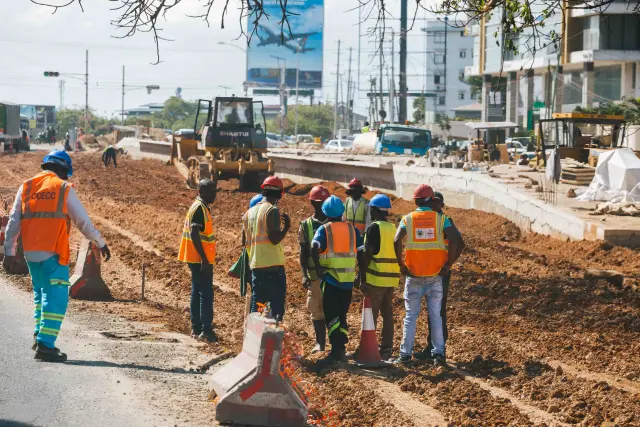
Urbanization in Nigeria: Government Solutions for Affordable Housing Deficit
The process of urbanization in Nigeria has changed the social, economic, and physical space of the country and has increased at a high pace in recent decades. Nigeria has millions of rural to urban migration every year in search of better jobs and education, health and high standards of living.
 Although urbanization has led to the increase in the economy, it has
also escalated the housing crisis. The cities in Nigeria have problems with
accommodating the increasing populations which results into overcrowding,
informal settlements, and poor accessibility to basic facilities.
Although urbanization has led to the increase in the economy, it has
also escalated the housing crisis. The cities in Nigeria have problems with
accommodating the increasing populations which results into overcrowding,
informal settlements, and poor accessibility to basic facilities.
One of the
most visible effects of unplanned urbanization has become the shortage of
affordable housing. The role of the government in this challenge cannot be
underestimated because market forces have not been effective in providing
housing to the low and middle income earners.
The blog discusses the connection between urbanization and
housing demand in Nigeria as well as the variety of the government-based
solutions focused on decreasing the affordable housing shortage. This is
critical to the assessment of the ability of Nigeria to develop inclusive and
sustainable cities in the future.
Blistering Urban Population increase and Housing Strain
The urban population growth is one of the fastest in the world as a result of high birth rates and continuous rural-urban migration in Nigeria. Lagos, Abuja, Ibadan, Aba, and Benin City are cities that are still growing at very high levels that are not well planned or equipped.
Such urbanization exerts a lot of pressure to the available housing stock leading to congested housing, increase in the cost of rents, and development of informal settlements.
The issue confronting the government authorities is how to balance
the growth of cities and to provide affordable accommodation that is of minimum
standards both in terms of affordability and livability.
The economic opportunities in cities have been such that they have attracted job seekers to cities, which have further augmented the need to have housing. In the absence of adequate supply, the cost is affected and low-income households are forced into slums or marginal regions with infrastructural deficiency.
The government has been involved in controlling the rise in population in urban areas by coming up with regional growth centers, bettering the rural economies, and adoption of urban planning structures that rely on the demographics to ensure that housing supply matches population realities.
Housing pressure can be solved by implementing coordinated
population management, land-use planning, and housing policy. The lack of such
problems will lead to the increasing urban inequality and social instability.
Government Housing Policy and National Constructive
Nigerian government has implemented a number of housing policies in an attempt to cope with affordable housing shortage brought about by urbanization. National policies like the approach to national housing, like the National Housing Policy aim to facilitate the provision of decent housing to each and every income group by the intervention of the state, involvement of the private sector and reforming the housing finance.
Affordability, sustainability, and inclusiveness are some of the fundamental values of these policies. Government policies tend to employ environments facilitation in supplying serviced land, infrastructure and regulatory assistance as opposed to being a sole housing provider.
The federal and state governments come together
to coordinate policy goals with local housing requirements by working together
in housing ministries and agencies.
Nevertheless, the effectiveness of the policies is largely determined by consistent implementation and political desires. Administrative shifts tend to lead to policy continuity, which restricts their effects in the long term.
Ensuring continuity between government cycles and enhancing
institutional capacity are crucial towards making policy objectives translate
into actual housing outputs. National frameworks are important in setting
direction, yet where urbanization pressures are sharpest, through execution of
policies, success will depend on state and local execution.
Public Housing Schemes and Interventions by State government
One of the most obvious government reactions to the lack of affordable housing in Nigeria is the public housing schemes. State governments have come up with housing estate in the areas that aim at civil servants and low- to middle-income earners, frequently through subsidized prices or rent-to-own deals.
These programs are meant to lower the cost of housing due to
the availability of land and common infrastructure owned by the government.
Some states have housing corporations which manage the development and
distribution whereas some states collaborate with the private developers on the
basis of the public-private partnerships.
Nevertheless, the public housing supply is still low in comparison with the demand. Limited funding, politicized allocation procedures, and maintenance problems among others have decreased the performance of certain schemes. However, the role of the public housing in sheltering vulnerable groups remains significant.
The effectiveness of state-led housing
interventions can be improved by promoting transparency, enlarging it and
establishing fair distribution. With the increasing trend in urbanization, states
will be forced to consider more innovative and scalable models of the public
housing to satisfy the increasing demand.
City Planning and Land Administration Reforms
Access to land and urban planning is the key to the resolution of the housing deficit in Nigeria. The Land Use Act that regulates land ownership and management has been pointed out as a limitation to delivery of housing efficiently.
Development costs are also high due to complex approval procedures, cost, and delay in titling the land that discourages investment in affordable houses. These barriers can be greatly mitigated through government reforms which would make the process of land administration easier and land records digitalized so that they can be easily accessed.
Reform of urban
planning is also essential because unplanned growth results in lack of
efficient use of land and shortage of infrastructure.
The governments on every level are becoming aware of the necessity to have master plans, which make such integration of housing, transportation, and economic activity. The planned urban sprawl to the peri-urban regions provides a chance to create an affordable housing in large scale and alleviate the urban centers.
Appropriate land and planning reforms would open up the supply of houses, increase costs, and promote sustainable urban development.
Housing Finance and Mortgage Support Programs
Availability of finance is a vital element of the government interventions in the housing shortage. The housing finance is facilitated by the government of Nigeria via the Federal Mortgage Bank of Nigeria and programs like the National Housing Fund.
These efforts are meant to offer long-term and low interest mortgage loans to the qualified contributors. It leads to lowering the cost of borrowing money and increases accessibility of home ownership by low and middle-income earners except with government support.
Besides this,
there are policy initiatives to enhance penetration of the mortgage market as
well as encouraging the participation of the private sector and increasing
housing finance alternatives.
Nonetheless, mortgage penetration is low and a significant proportion of people in the urban areas have no access to formal credit because of unstable income or informal employment.
These weaknesses need to be
addressed by custom-made financial products and regulatory changes that reflect
the economic reality of Nigeria. It is important to enable housing finance
systems to translate a housing supply into real homeownership opportunities.
Developer Incentives and Public-Private Partnerships
One of the major strategies that have been implemented to deal with the housing shortage in Nigeria is the public- private partnerships. Governments, through PPPs, are tapping into capital, expertise and efficiency of the private sector as they offer land, infrastructure and regulatory assistance.
Incentives offered by the developers like tax remission, accelerated approvals and availability of cheap financing encourage the involvement of the private sector in affordable housing development.
Such partnerships allow mega developments which the public sector can hardly provide on its own. Effective PPPs must have clear contractual schemes, risk-sharing schemes, and transparent governance.
Properly organized, PPPs would have a
substantial effect on housing supply and affordability. It will be necessary to
expand these partnerships as the urbanization process keeps putting pressure on
communal resources.
Infrastructure Development and Combined Urban Housing
There is no way infrastructure development can be divorced of affordable housing. The investment of the government in roads, transport, water, electricity and sanitation have a direct impact on the housing affordability and livability.
The complexity of housing projects that are situated
in remote areas means that residents have high costs in terms of transportation
and services which compromise the affordability. Combined urban development
plans that put housing in tandem with infrastructure development are thus
essential.
Governments take the forefront in organizing infrastructure investment and equitable delivery of services in urban areas. Governments can lower the cost of developing infrastructure in their housing development areas to facilitate a rise in investments by the private sector.
Urban housing
can be long term sustainable through integrated planning and this will
positively impact on the quality of life of the people in the urban areas.
Technology, Innovation and Sustainable Urban Housing
The government responses to the housing shortages in Nigeria are increasingly being influenced by technology and innovation. The use of alternative construction techniques, electronic planning, and green building materials provide possibilities to save on expenses and enhance effectiveness.
Policy incentives, pilot projects, and capacity-building programs are some of
the ways governments can help in the process of innovation. Special attention
is paid to sustainable urban housing solutions that would be energy efficient
and climate resistant due to the environmental challenges in Nigeria.
Urban management that is guided by data is also an area of
innovation that will allow planning and allocation of resources. The adoption
of technology enables governments to scale affordable housing solutions in
the consideration of environmental and social issues that come with the pace of
urban growth.
Slum Upgrading and Urban Renewal Government Housing policy strategies
Slum renewal and upgrading have been other components of government policies in the solution of Nigeria affordable housing shortage, which does not involve a mass level of displacement.
This has been due to rapid urbanization which has led to the development of informal settlements that are overcrowded, under-sanitized, without tenure security, and with access to basic services.
Instead of destroying these communities, the governments are slowly moving towards in-situ upgrading strategies that not only enhance the living standards but also maintain the social groups and livelihood.
The upgrade of slums is usually carried out by providing the necessary infrastructure, including roads, drainage, water supply, electricity, and waste management, housing development, and acquisition of land tenure.
These interventions
improve the safety, health and dignity of residents and also improve the
aspect of informal settlements being incorporated in the formal urban
landscape. The urban renewal efforts are also therapeutic towards the old
inner-city neighborhoods whose housing units have worn out because of neglect
and overutilization.
Governments use redevelopment and rehabilitation as a way of maximizing land use, enhancing housing density, and enhancing urban functionality. These attempts must however be well planned in a way that does not lead to gentrification at the expense of the poor population.
Renewal models that include the use of affordable housing quotas and community involvement are needed. When well planned, slum upgrading and urban renewal serve as cost-efficient remedies to lack of dwellings since it aims at utilizing the available settlements and infrastructure instead of creating a new city altogether.
These approaches show how governments can resolve the
issue of affordability and encourage social inclusion and sustainable urban
development.
Decentralization and Regional Development to alleviate Urban Pressure of Housing
Decentralization and balanced regional development is one of the long term government solutions to the housing shortages in Nigeria cities. The high level of concentration of economic activity, infrastructure and publicly provided services in some large cities has led to mass migration and excessive housing demand.
The government policies that focus on strengthening
the secondary cities and growth centers can be used to redistribute the growth
in the population and reduce the overstretched urban centers. Smaller urban
areas are becoming an easier place to settle and invest in due to investments
in transport networks, industrial areas, schools, and healthcare centers.
Governments can prevent rural-to-urban migration by generating viable economic opportunity in regions, as well as curb housing demand in megacities, such as Lagos and Abuja.
Decentralization also encourages more sustainable patterns of urban growth where the housing supply and the infrastructure can grow simultaneously. When the regional development plans are integrated with the housing strategies, they will facilitate affordable housing by reducing the land prices and stimulating planned growth.
But effective decentralization needs to be worked on over a sustained period, with intergovernmental coordination and specific funding. The secondary cities lack proper infrastructure and governing capacity to absorb growth.
With the proper application, decentralization will not only assist in the affordable delivery of housing but also help in achieving national economic resilience as well as spatial equity.
Regional development spearheaded by the government is
thus an urgent but little used option to solving the housing problem in
Nigeria.
Government, Institutional Potential, and Policy Enforcement Problems
Good governance and institutional strength are the building blocks of government housing solutions in Nigeria. Although the challenges of affordable housing deficit are well documented and policies and programs developed to address it, gaps in implementation are a longstanding problem.
Lack of strong coordination between the federal, state, and local governments usually results in disjointed activities and overlaps of duties. Effective housing delivery is further limited by limited technical capacity, lack of sufficient data and bureaucratic inefficiencies.
The problem of transparency
and accountability has also influenced the confidence that citizens have in
government housing programmes. Institutions dealing with urban planning, land
administration and housing finance should be strengthened to enhance better
results.
Efficiency and delays can be improved with the help of capacity-building programs, performance monitoring, and digital governance tools. Role clarification and mutual arrangements amongst the government agencies enhance coordination and resource mobilization.
A continuous political perspective is also critical and since long-term housing development depends on the durability of political changes, the incidence of political change is detrimental.
The incorporation of housing strategies in overall national development plans may assist in creating uniformity across administrations. Engagement with the community is also a part of good governance so housing solutions will be based on the local needs and realities.
Even good policies on housing, without good institutions and
accountable governance, will not achieve results. The mitigation of the
governance issues could therefore not be optional but at the center of bridging
the affordable housing deficit currently facing Nigeria against the backdrop of
rapid urbanization.
Conclusion
Urbanization in Nigeria also offers a challenge and opportunity of solving the affordable housing deficit. Although the rapid urbanization has put a strain on the housing availability and infrastructure, it has also provided the impetus to policy change and innovation.
Governmental solutions are still a core aspect to reduce the housing gap by policy frameworks, the public housing schemes, land reforms, the housing finance support and the collaboration with the private sector.
The challenges of success will rely on the combined efforts of all three levels of government, political will, and inclusive planning with the focus on affordability and long-term sustainability.
Through good urbanization management and enhancement of housing delivery systems, Nigeria can make the cities inclusive as affordable housing can fuel economic growth, social unity and better living standards to all citizens.
Also read: Urbanization and Housing: Addressing the Growing Demand for Affordable Homes
















LEAVE A REPLY