

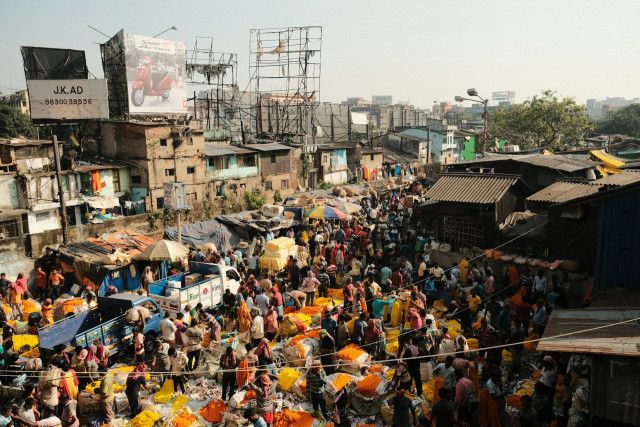
Urbanization in India: Challenges of Rapid City Growth
India is currently experiencing the fastest ever expansion of urban territory. The constant urban expansion happens due to rural population movements toward cities where better opportunities appear to be available.
The speed of urban expansion creates immediate challenges for proper attention. This article examines three main urbanization problems in India alongside proposed solutions.
Overburdened Infrastructure and Housing Shortages
The swift expansion of Indian cities during urbanization has placed severe pressure on its infrastructure. \
Public transportation and roads alongside water supply and sewage systems cannot support the expanding population at current levels.
The surge of city migrants intensifies housing demands thus resulting in larger numbers of slums and unregulated settlements.
Key Issues:
Traffic Congestion and Transportation Woes
The biggest urban issue in India's metropolises exists as traffic congestion.
Specifically because of inadequate road planning and inefficient transportation services and rising private vehicle usage India faces severe roadway congestion.
Bengaluru and Mumbai residents face extended journeys on their way to work making both work output and personal standard of living less effective.
Water Scarcity and Poor Sanitation
Water deficiency has become a major issue that plagues numerous Indian cities.
Cities have rapidly expanded during recent years resulting in declining groundwater supplies which deepens due to inadequate water distribution procedures.
Management of waste disposal and treatment of sewage has resulted in widespread water contamination alongside disease outbreaks in affected areas.
The lack of suitable housing has produced millions of slum areas.
Essential housing needs in cities exceed the available supply thus causing an increase in both informal shanty towns and slums.
The Indian population living in urban slums exceeds 35% according to official data as these communities do not have access to fundamental amenities such as clean water or proper sanitation or electrical power.
Potential Solutions:
- The government started the Smart Cities Mission which helps build cities through the use of technology and efficient planning methods.
- The use of public transport becomes more appealing through expanded metro systems and enhanced bus services and cycling promotion as effective congestion-control measures.
- The Pradhan Mantri Awas Yojana (PMAY) represents an important initiative for offering affordable housing solutions to urban dwellers though the program needs additional measures to fulfill the growing housing requirements.
- Water conservation strategies that integrate rainwater collecting systems together with wastewater treatment and water distribution optimization systems will minimize water-related crises.
Environmental Degradation and Pollution Crisis
When urban areas spread into new regions the result is higher levels of pollution spread across larger areas and greater forest destruction and diminished green areas.
Worldwide research shows that Indian cities have become some of the most polluted areas because industrial pollution and vehicle exhaust combines with dust created during construction operations.
Key Issues:
Air Pollution and Health Hazards
The pollution in Delhi Kolkata and Mumbai exceeds dangerous levels because PM2.5 and PM10 exceed the established safety thresholds.
Parts responsible for pollution contamination of the air include:
- Vehicular emissions from the increasing number of private cars.
- Industrial pollution from factories and power plants.
- Construction dust and waste burning.
Waste Management and Urban Cleanliness
The excessive waste production in Indian cities poses significant difficulties because the country struggles to handle waste properly.
Local governments in many areas operate defective waste segregation programs alongside improper garbage collection practices which create extensive landfills along with environmental contamination.
Deforestation and Loss of Green Spaces
Deforestation on a massive scale caused by urban growth has decreased biodiversity while shrinking green areas of land.
Parks together with open spaces disappear quickly which exacerbates the urban heat island phenomenon resulting in hotter cities.
Potential Solutions
- Effective Air Pollution Regulation through Strict Emission Standards Supported By Electric Vehicle Promotion and Increased Vegetation Development to Fight Pollution.
- Modern cities need to develop optimal waste management systems which include waste segregation and composting and recycling methods to reduce landfill expansion.
- The government must give priority to developing urban green spaces through vertical gardens and urban forests together with green roof structures to fight environmental degradation.
Unemployment and Economic Disparities
The increased number of job opportunities in cities proves insufficient for the large number of migrants arriving there.
The urban economic system functions primarily through informal labor markets which expose workers to unstable jobs along with deficient earnings and unsatisfactory standards of employment.
Key Issues:
Informal Labor Markets
A substantial percentage of Indian urban employment functions within informal portions since employees receive neither employment stability nor social protection nor proper compensation.
Migrants perform manual labor in construction sites and clean houses and work on street vending despite facing unfavorable working situations.
Rural-to-Urban Migration and Job Scarcity
Millions of people leaving rural areas to settle in cities face an unemployment problem because job openings have failed to expand concurrently.
Many people end up without jobs so they must accept difficult and poorly regulated low-wage positions.
Income Inequality and Cost of Living
Urban income inequality in India has become substantially greater during the last few decades.
While the elite have access to high-paying jobs and luxurious lifestyles, the majority struggle with low wages and high living costs.
Potential Solutions
- Skill development programs under government investment must become a priority because they prepare workers with skills to obtain employment.
- Small and Medium Enterprises (SMEs) help economic growth by creating employment opportunities for the population.
- Social security provisions for informal workers which include health insurance together with pensions. will enhance their standard of living.

Urban Crime and Social Challenges
The fast pace of city growth has resulted in growing criminal activity throughout Indian cities.
Unemployment together with rising poverty and social inequalities produces crimes of theft alongside drug abuse and violence.
Key Issues
Indian metropolitan areas experience growing crime statistics.
Urban districts throughout the country report higher numbers of victims in cases of burglary alongside increased incidents of cyber fraud and violent crimes.
High populations in slum areas and social disparities together create these problems.
Gender-Based Violence and Safety Concerns
The protection of women in Indian cities continues to be an essential issue because harassment and assault incidents keep rising.
Public safety becomes worse because of insufficient street lighting together with police vacancies and dangerous public transit options.
Drug Abuse and Substance Addiction
Young adults living in cities who remain jobless and idle develop drug problems and become substance addiction.
Potential Solutions
- Better security measures emerge when police enforcement turns stronger through enhanced surface patrolling and community policing along with widespread CCTV monitoring.
- Better protection of women involves developing dedicated public transportation for women while providing emergency phone numbers and updating laws to protect them effectively.
- Alternative educational and work-based activities combined with sports initiatives serve as protective measures against young people getting involved with crime.
Urban Planning and Sustainable Development
Proper sustainable planning represents the essential approach for handling effective urbanization. Through proper planning a society achieves coordinated development together with optimized resource allocation as well as superior living conditions.
Key Issues
Unplanned Urban Expansion
The lack of proper planning during city development results in crowded areas with insufficient sanitation systems and inadequate access to transport.
Lack of Disaster Preparedness
Poorly planned urban areas face substantial risks from urban flooding together with earthquakes and persistent heat waves.
Potential Solutions
- Government entities need to establish sustainable urban planning by focusing on both planned development together with environmentally friendly infrastructure and adequate transport connectivity.
- These initiatives utilize advanced technology so governments can enhance their operations alongside infrastructure administration which produces superior results.
- As a mitigation strategy Disaster-Resilient Cities require flood-resistant construction alongside drainage system improvements and established emergency response strategies to minimize disaster harm.
Public Health Challenges in Rapidly Growing Cities
The process of urbanization creates financial gain yet it triggers numerous health risks which affect populations.
Multiple health consequences arise from severe population density together with environmental pollution and inadequate sanitary conditions and health service duress which spread diseases while reducing life quality.
Key Issues
1. Air and Waterborne Diseases
The combination of polluted air with contaminated water resources and inadequate sanitary conditions drives up the numbers of tuberculosis and cholera and various water-borne diseases.
2. Healthcare Accessibility
Insufficient hospital capacity and dearth of medical professionals exist throughout numerous Indian cities and they become especially severe in slum districts.
The cost of proper healthcare exceeds what the urban poor can spend.
3. Mental Health Crisis
The combination of greater stress and longer workdays and social segregation leads to higher incidences of depression anxiety and substance misuse among urban citizens.
Potential Solutions
- The government should establish more medical establishments through its budget support in regions with high population densities.
- The sanitation of waste and clean drinking water access through appropriate treatment systems helps decrease outbreaks of disease.
- Mental Health Awareness efforts should promote therapy together with counseling services in addition to promoting work-life balance for improved mental wellness.
Traffic Congestion and Urban Mobility Issues Introduction
Severe traffic congestion afflicts Indian cities because it creates stressful and time-consuming commutes for residents of these areas.
Over the past years the expanding number of personal automobiles has brought about higher pollution levels while also driving up road collisions.
Key Issues
1. Overcrowded Public Transport
The overcrowded nature of bus metro and local train transportation systems in cities such as Delhi Mumbai along with Kolkata makes travel difficult and lengthens commute durations to unacceptable levels.
2. Road Safety and Accidents
Silently India stands as one of the countries which leads globally with fatal road accidents numbers.
The combination of bad roads together with insufficient walkways and dangerous vehicle behavior results in deadly accidents.
3. Lack of Cycling and Pedestrian-Friendly Infrastructure
Indian cities currently lack structures that independently guide cyclists and pedestrians thus creating dangerous conditions for people who do not use motor vehicles.
Potential Solutions
- Building extended Metro and Bus Rapid Transit (BRT) networks with proper management systems provides congestion relief.
- Shared mobility programs should be supported through promotional initiatives in order to lower car and ride usage.
- Environmental sustainability increases by implementing walkable communities that support biking and walking paths for transportation.
Smart Cities and the Role of Technology in Urban Development
Urban development will evolve into smart cities which combine technological innovation with sustainable practices to achieve maximum efficiency and high quality of urban living.
Key Features of a Smart City
1. Digital Infrastructure and IoT-Based Solutions
Real-time monitoring of traffic as well as pollution levels and energy usage and waste management systems operates through Internet of Things (IoT) devices within smart cities.
2. E-Governance and Smart Services
Simplified access to property tax payments along with utility bills, traffic observation and digital governmental services through online platforms boosts governance processes.
3. Renewable Energy and Sustainable Living
The initiatives of smart cities embrace solar power while implementing energy-efficient construction practices and waste conversion to energy solutions which minimize their environmental impact.
Potential Solutions
- Expansion of the Smart Cities Mission demands that additional municipalities establish AI and big data and IoT systems for effective urban administration.
- The combination of Public-Private Partnerships (PPP) with smart infrastructure development allows governments to work together with private technology companies for successful smart city programs.
- The involvement of urban residents in decisions should be supported through digital governance platforms.
Climate Change and the Impact of Urbanization on the Environment
The mechanism of urbanization functions as a key player in climate change processes.
Rapidly growing cities caused GHG emissions to rise while destroying ecosystem areas and resulting in higher temperatures.
Indian urban areas experience more severe heat waves along with abnormal rain patterns and unpredictable flooding as well as increased environmental pollution because of their susceptibility to climate change stressors.
Sustainable urban planning remains essential because it can slow down the escalating environmental impact of city expansion.
Key Issues
1. Rising Carbon Emissions and Energy Consumption.
The 75% share of global carbon emissions originates from urban settings which Indian cities significantly escalate through their utilizing substantial amounts of energy and fueling industrial operation and vehicle emissions.
The excessive dependence on fossil fuels throughout transportation sectors as well as power production systems intensifies global climate change conditions.
2. Urban Heat Island Effect (UHI)
Due to the replacement of natural areas with concrete and asphalt urban regions develop an Urban Heat Island Effect (UHI) that causes them to be much warmer than rural areas.
The global warming effect of heatwaves grows worse while cooling system electricity requirements intensify thus stressing out power distribution networks.
3. Increased Risk of Urban Flooding
Urban floods become more frequent in Indian cities including Mumbai, Chennai, and Bengaluru because their drainage systems fail and water bodies face illegal occupation by people while developers carry out construction without planning.
The removal of lakes and wetlands and their role as natural water reservoirs has raised the danger of flooding.
4. Deforestation and Loss of Biodiversity
The construction of new urban areas results in massive forest removal which causes complete damage to habitats and drives biodiversity reduction.
Climate change speed increases because the forest removal for housing and commercial sites decreases carbon storage potential.
Potential Solutions
1. Promoting Renewable Energy and Sustainable Urban Practices
- Organizations should invest in wind power and solar systems because they help nations decrease their fossil fuel usage.
- Encouraging energy-efficient buildings with green rooftops and solar panels.
- Smart energy grids and LED technology should be promoted to decrease the amount of energy people need.
2. Expanding Green Spaces and Urban Forests
- The establishment of urban green zones and horticultural spaces on rooftops serves to decrease heat levels in urban settings.
- Reforestation programs should be deployed to return damaged urban areas to their natural state.
- Encouraging vertical gardens and tree plantations along roads and highways.
3. Improving Urban Drainage and Water Management
- Strategic restoration of wetlands lakes and natural drainage channels functions as a flood prevention method for cities.
- Rainwater harvesting must be implemented for both buildings and public areas.
- Wetland restoration and lake restoration go hand in hand with the implementation of permeable pavings which absorb rainwater.
4. Encouraging Sustainable Transportation
- The implementation of cycling infrastructure together with pedestrian-friendly city planning should be promoted.
- The implementation of better charging facilities for electric vehicles (EVs) combined with their promotion to consumers.
Conclusion
Urbanization in India produces both positive benefits from economic growth and development alongside substantial problems that endanger urban life sustainability.
The quick city growth requires immediate planned interventions to handle infrastructure constraints along with environmental problems and rising crime rates and unemployment and public health emergencies.
Without proper intervention the problems will continue to deteriorate until Indian cities become both unhealthy and unsustainable.
By implementing appropriate governance along with technology advancement and strategic policies India's urban centers can become smart and residue to environmental changes and inclusive.
Also read: Urbanization and Income Inequality: Bridging the Wealth Gap




-shtTqaPktk.jfif)









LEAVE A REPLY