

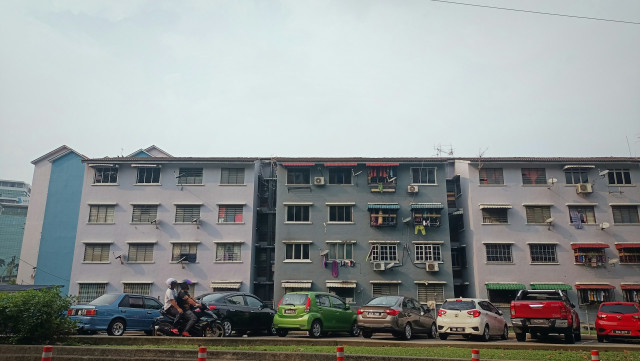
Urbanization and Housing: Addressing the Growing Demand for Affordable Homes
The 21st century is being shaped by the phenomenon of urbanization. Around the world, cities are growing at a frenetic pace as people move from rural areas in search of employment, schooling, healthcare and an improved standard of living. This transition has transformed economies, cultures and societies — but also left wrenching challenges in the housing sector. Especially for affordable housing, it is now one of the most urgent urban challenges.
Millions of families are trapped in a cycle where rising real estate values outpace their income, driving them into crowded, unsafe and temporary homes. The United Nations expects that by 2050, nearly 68 percent of the world’s population will live in cities and we do not have enough housing as it is.
The need for affordable homes is not just about shelter; it’s about equity, stability and opportunity. Access to education, healthcare and employment are dependent on safe and secure housing, while insecure or insufficient housing cycles through poverty and exclusion. Affordability Imperative As the urban agglomerations expand, an inability to offer affordable housing would undercut not just individual welfare, but indeed urban sustainability, economic productivity and social harmony. A ‑ Governments, the private sector, civil society and international organizations alike know that tackling this challenge calls for collective innovation.
The challenge here is to distribute housing, as the quick pace of urban growth has been taking place. Shortages like Japan's derive from a variety of factors: Land is limited, construction costs are high, real estate market speculators and poor city planning. Yet, alongside these challenges, climate change, mass migration and global economic volatility introduce new layers of complexity. But for all its challenges, urbanization also presents opportunities. By reimagining housing policy, incorporating technology and focusing on diversity, cities can be not repositories of inequality but areas resilient to it — and full of opportunity.
This blog provides trenchant analysis of six urbanization and housing dimensions. It looks at how population growth creates demand, where affordability laps occur, the role of government and policy responses, private sector involvement, housing model innovations and what we can learn from around the world to help navigate a way forward. These two findings in combination emphasize the importance of affordable housing and point towards ways to help ensure that urban growth is not exclusionary, but rather is inclusionary.
The Urbanization Surge and Escalated Housing Demand
Urbanization is not just about people moving to cities; it also changes lifestyles, aspirations and social systems. Millions of people are moving to the cities every year for better jobs. But their migration to cities puts huge pressure on housing markets. The prepackaged housing stock, designed for much smaller populations, quickly proves insufficient. This scarcity contributes to the rise of rent and purchase costs, piling up low- and middle-income families in informal settlements, slums or shared cramped quarters.
Housing shortages are particularly severe in rapidly urbanizing countries such as India, Nigeria and Brazil. Cities such as Mumbai, Lagos and São Paulo receive a huge inflow of migrants each year, but affordable housing schemes have failed to keep up with their needs. Informal settlements are quick fixes, but they frequently do not have safety, sanitation or services. In the developed world, urbanization is a different beast in which an increased demand for housing means gentrification, displacement and urban crisis among working class families alike.
He must clamp down on the urbanization moving faster than housing. These systems are often based on reactivity rather than proactivity, and gaps exist between population demands for housing. They are also exacerbated by a lack of land available for development in central cities that forces developers to focus on expensive luxury housing rather than affordable housing necessary to meet social need.
Increased housing creates different urban structures, too. In cities, of course, sprawl outward through agricultural tracts and natural ecosystems. Suburban development arguably offers some relief but with the pain of long commutes and transportation costs and all their negatives. It is a social issue, but also an ecological one - this pattern of increasing city sizes and housing prices.
Urbanization offers a golden opportunity for both governments and developers to reimagine how housing is provided. Planned properly, it can create dense, inclusive, and sustainable cities with equitable housing opportunities for all. But without attention to the housing crisis, inequality will deepen and urban growth compromised.
The Affordability Gap - Homes Unaffordable for Average Wages
A crisis of affordability is at the centre of the urban housing issue. Housing affordability is determined by dividing the income spent on housing to a percentage of the household income, preferably 30 per cent, experts say. The fact is that in many cities of the world families spend 40-60 percent of their income on rent or mortgage which does not leave much on food, medical care, education or savings.
The reasons why there is a reduction in the affordability are many. Firstly, the rise in wages has not matched the rising real estate prices. Urban economies generate employment, which however is low-paying and temporary, that is, working in the informal sector. The families are able to secure employment in cities, but not in those positions that enable them to live in a decent house.
Second, speculation and investment in housing markets distort them. The property in global cities like London, New York or Dubai is not and is not likely to be an actual need, but a financial investment. Wealthy investors are now purchasing property not to occupy it but as a means to hold wealth, and this increases prices and renders it more difficult to other bona fide homebuyers. And in most of the emerging markets, lax regulation has allowed speculation to make housing unaffordable to most of the middle-income families.
Third, the cost of construction is also high due to the continuous increase in the cost of land, lack of labor and the cost of materials. Driven by their profit motive, housing developers prefer the more costly luxury housing that will fetch them higher returns at the expense of the unprofitable affordable ones. In addition to this no incentives or subsidies are available to construct the poorest. The effects of the affordability crisis spill over to the social world. The poor households are left with the option between poor housing and inaccessibility to them due to distance, which complicates social and economic isolation, and poverty.
The population of homeless individuals is constantly increasing, and it became a problem in affluent nations. The insecure housing also has various intergenerational implications- children raised in insecure homes have significant health and learning obstacles. The only way to overcome the affordability gap is by implementing changes in policy round-the-board.
The governments are advised to get rid of empty houses and apply zoning regulations to execute low-cost housing. Limitation or rational subsidizing of speculative trading can help subsidize affordable social housing. Also, the affordability crisis necessitates the introduction of new housing models that de-commercialize the living space. Unless serious steps are taken, the disparity between the affordable housing demand and supply can and will continue to grow, leaving billions of individuals incapable of enjoy the rewards of the urbanization process.

The Role of Policy and Governance.
Governments and policies are essential in the affording housing process as they shape the market. Effective policy might distinguish sustainable urban growth and development from unsustainable urban processes. In most situations, the scarcity of affordability doesn’t just reflect an economic problem but rather a problem of governance.
National and local governments can employ many levers to make housing more affordable. These have traditionally included subsidies for low-income households, regulation of rents and investment in public housing. But contemporary policy frameworks prioritize mixed-income development, inclusionary zoning (which forces developers to devote a percentage of projects to affordable housing), and land value-capture mechanisms that pay for housing.
Governance is safety, and quality too. The results of weak oversight are played out in tragedies such as building collapses in Karachi or Dhaka. Strong regulation, inspections and enforcement are in place to safeguard vulnerable families. Homes need to be both safe and affordable.
Beyond regulation, governance involves coordination. There’s an interrelationship between housing and transportation, energy, environment. Comprehensive urban administration that mothers affordable housing with infrastructure to ease commuting and improve the quality of life.
International organisations also have an impact on housing policy. "UN-Habitat, World Bank and regional bodies also support with resources, technical innovation and policy framework to guide countries respond to housing deficits. Global agendas the Sustainable Development Goals (SDGs) affirm that housing is a human right and compel governments to adopt more inclusive approaches.
"The bottom line is governance depends on political will. Affordable housing is about choosing collective needs over profits or elites. Funders investing in equitable housing are helping to build communities where all people have the stability and opportunity they need to thrive.
Role of the Private Sector in Addressing Housing Need
Housing construction is largely market based, even though governments dictate the structure. The developers, financers and investors play a critical role in affordability. They are however oftentimes driven by profit maximization and thus a discrepancy exists between supply and social needs.
It is usually the middle and high-end of the market that private developers are targeting because the profit margins are larger. Skylines of cities are full of luxury housing projects whereas low-income housing is in constant shortage. There are no interest, subsidy or private-public partnerships to attract and bring in private capital in affordable housing.
However, the market can help to revolutionise the supply of housing. Innovative finance, building and collaborating practices and methods can enable developers to develop affordable housing projects in a sustainable manner. Housing finance can be in the form of financial products like micro-mortgages, rent-to-own agreements or shared equity that can be used to facilitate affordability of homes.
There are also opportunities of participation at a citizen level in corporate social responsibilities and impact investing. Impact investors seek financial gains and social development, so businesses can incorporate inclusive housing in their more significant sustainability strategies.
The world has been focused on Public Private Partnerships (PPP). In places such as Singapore and Mexico, governments will provide land or subsidies and the private sector will construct and run them. They are as efficient a space mission as can be done at the price.
A person in the commercial arena also needs to begin doing the right thing. There must be transparency, accountability and community participation in housing to ensure that it does not sustain inequality but serves the actual needs of people. Inclusive growth developers do not just make profits on their part; they also enhance health and prosperity of a city.
Innovations and new models in affordable housing
Innovation is also changing how cities think about affordable housing. A new crop of strategies would completely flank existing ways to manage cars – whether by technology (which suggests as much waste and opportunity for hyper-rationalization), or by finding new ownership models.
With the increasing cost and time advantages of modular and prefabricated housing, the trend is making a significant comeback. By putting together off-the-shelf parts, developers are lowering labor expenses and errors to construct homes faster without sacrificing quality.
Technology also allows for smarter home design. Digital supports such as the Building Information Modelling (BIM) enhance the design and material use. It includes green features such as energy-saving appliances, solar panels and a rainwater collection system that help hold down long-term costs for homeowners and the environment.
Different forms of ownership are just as transforming. Other examples are of community owned housing where residents own and manage the buildings together side what we know as shared equity schemes to limit the inflation of property prices.
Financial innovation is another driver. Increasing access to financing: By providing microfinance, housing vouchers and digital platforms for crowd funding housing projects, which facilitates more people to have access financing. Technology enables transparent, scalable and decentralized funding models free of intermediates that have long been erected.
These models are being tested in global cities, and they provide lessons for others. For instance, Vienna’s social housing system mixes state funding with cooperative management. The embrace of digital finance in Kenya is an example of how technology can fill these gaps.
To meet the demand for cheap housing in the next 30 years, more effort needs to be made to scale such innovations. Through the fusion of technology, finance and community involvement, cities can provide housing that is not just affordable but also sustainable and inclusive.
Global Lessons and Next Steps
The housing problems of cities are universal, and so are the lessons. There are lessons that other countries could learn and adopt from places where housing crises have been successfully addressed.
Singapore is often held up as a poster child for the world, with its Housing and Development Board (HDB) having supplied quality homes at affordable prices to most citizens. Its success is based on a robust state-led system, rigorous safety standards and tie-ins to transportation and social services. Vienna is one: decades of investment in social housing means rents are low and speculation has been prevented.
Even developing countries have innovative lessons to offer. The Brazilian government’s “Minha Casa, Minha Vida” program showed that it is possible to have large-scale state intervention in housing without evidence of low-quality or other limitations. In Africa, slum upgrading led by communities has highlighted the role that community action plays in promoting greater inclusiveness.
The international lesson is clear: Affordable housing will not happen without long-term political will, investment and innovation. The housing crisis is not something any one actor can solve alone. These ecosystems of housing provision will only be built through partnerships between government, private developers, financiers, civil society and international infrastructure.
The path ahead is to resolve how to keep affordability in check while making new buildings environmentally sound. We need housing that’s not just affordable today, but also tomorrow. It also has to be built for climate change, adjustable for technological change, and inclusively of all kinds of communities.
The future of our cities will be shaped by how they respond to the challenge of housing. Approached with urgency, creativity and equity — affordable housing can be the cornerstone of sustainable, inclusive cities where prosperity is shared.
Conclusion
Urbanization is a fact of life, but inequality in housing is not. The burgeoning of cities is a double-edged sword. Affordable housing, or the lack of it, threatens to make urbanization a source of further exclusion, impoverishment and instability. With it, cities can be engines of opportunity, dignity and sustainability.
The first lesson is that affordable housing isn’t just about building more units. It is creating futures — where families feel safe, children are given education and societies grow on inclusion. There are radical policy solutions to the housing crisis that might only appeal to the marginalized among us but need to be heard if we ever hope of stopping Headline Madness.
The path forward won’t be easy, but the dream of housing that’s affordable for everyone is within reach. By adopting the best of international best practices, by becoming more innovative in policy-making and urban planning and by building inclusively, the world can bridge today’s housing gap while getting ready for tomorrow.
Also Read: Smart Home Technology for Affordable Living












LEAVE A REPLY