

Urbanization and Income Inequality: Bridging the Wealth Gap
Economic expansion together with societal advancement has been a fundamental part of urban development because it provides wider life possibilities to numerous individuals.
The process of urbanization has led to increased wealth concentration among elites while numerous people barely maintain financial stability.
The expansion of cities and evolving economics results in an ongoing inflation of the gap separating wealthy from disadvantaged people which produces major social and economic effects.
The inclusive advancement of urbanization demands that governments along with policymakers adopt economic distribution models to distribute wealth equitably between society members.
The Relationship between Urbanization and Income Inequality
When cities expand economically their new prospects benefit people yet they increase economic differences between residents.
The rapidly expanding cities have parallel premium income positions such as finance and technology and real estate sector alongside multiple low-paying fields including construction work and domestic services and informal employment.
The unbalanced wage system develops financial separation between experienced professionals who earn high salaries in important fields and ordinary workers who lack the resources to meet their essential needs.
People from lower-income groups find it progressively harder to pay for housing together with education and healthcare costs as urban living expenses rise beyond their means.
Income inequality in urban areas develops because people do not have equal access to necessary resources.
Wealthy people obtain superior education systems and healthcare services and financial instruments that allow them to build and protect their money across various generations.
Most marginalized populations deal with substantial hurdles when attempting to advance through society because they lack access to excellent schooling and they have few job prospects and limited entry into financial systems.
Total inequality growth from urbanization can persist because insufficient policies keep imbalanced conditions between rich and poor areas thus leading to a dual society where wealth concentrates among high-income households while lower-income residents stay trapped in poverty.
The Role of Affordable Housing in Reducing Inequality
Income inequality in urban areas substantially increases due to the importance of housing as a factor.
Rising real estate values in growing cities create a situation where low and middle income individuals either cannot buy houses or afford suitable rental properties.
Many millions of people endure substandard housing in inadequate residential clusters and overcrowded living spaces because they cannot find affordable housing which exposes them to poor environmental conditions and evictions.
Wealthier individuals take advantage of real estate investments because they possess enough money yet lower income residents face substandard living situations.
Public and urban leadership needs to establish budgets that focus on developing affordable housing solutions to reduce social inequality.
State governments allocate funding for public house construction while also implementing rent regulation systems together with low-income family subsidy schemes.
Formal urban planning that incorporates informal settlements enables residents to secure property rights and benefits living condition improvements and generates paths for wealth generation.
Secure housing enables people to direct their attention to employment along with education and economic upward mobility thus decreasing the future consequences of urban income inequality.
Education and Skill Development as a Pathway to Economic Equity
The power of education helps minimize income inequality across populations who live in cities because it establishes equal possibilities for all urban residents.
Low-income communities within cities face educational barriers because they receive limited access to good educational resources thus restricting their ability to secure profitable positions.
Impoverished school areas maintain underfunded education systems which combine overcrowded classrooms with obsolete educational content leading students to struggle in learning modern economy skills.
Governments need to allocate funds towards accessible quality-based educational services to diminish the wealth inequality.
The government must support public education by financing schools and training teachers as well as distribute scholarships and education financial aid to students.
The acquisition of vocations through training along with digital capabilities will enable poverty-stricken people to achieve employment opportunities with economic stability.
Urban societies can achieve economic fairness by providing equal education access to all citizens which would enable ability and effort to determine success regardless of status or wealth.
The Importance of Progressive Taxation and Wealth Redistribution
Reduction of urban income inequality works best through both progressive taxation and wealth redistribution policies.
Various urban areas throughout the USA maintain vast economic differences between their upper-class citizens who accumulate great wealth and the lower-income residents who need basic substances.
Public funding for low-income community services becomes possible through tax policies which demand wealthier people and companies to pay higher amounts of their earnings.
Wealth redistribution programs that offer cash transfer programs with food aid and social welfare services deliver immediate assistance to impoverished people.
Governments must allocate funding toward establishing public healthcare facilities together with educational and transport networks as part of their mission to develop inclusive urban systems.
A future urban community that benefits from equal wealth distribution will become more stable and prosperous through greater economic growth distribution among its members.
Building Inclusive Cities for Sustainable Economic Growth
The process of urbanization creates combination of problems and potential solutions in the fight against income inequality.
Through the establishment of inclusive policies which focus on affordable housing and education systems and fair taxation and wealth redistribution programs urban areas build fair economic conditions.
Urban plans which support sustainability need to integrate each social and economic group because urban advantages must benefit all population members regardless of their financial situation.
A coalition between authorities and business sectors together with civil institutions needs to work jointly for reducing wealth gaps in the population.
Established collaborations between public agencies and private companies enable affordable housing financing and employment development and academic support programs.
Technology can establish economic possibilities for underserved populations through digital job finding systems that link freelance workers to labor opportunities while financial programs create access to banking for unbanked communities.
The successful elimination of urban wealth inequality needs societies to maintain enduring support for economic and social rights development.
Urban growth requires policymakers to establish economic inclusion through policies which distribute resources fairly throughout the city.
When such initiatives are implemented urbanization becomes a catalyst for growth which establishes energetic communities where every resident can build financial security and obtain success.

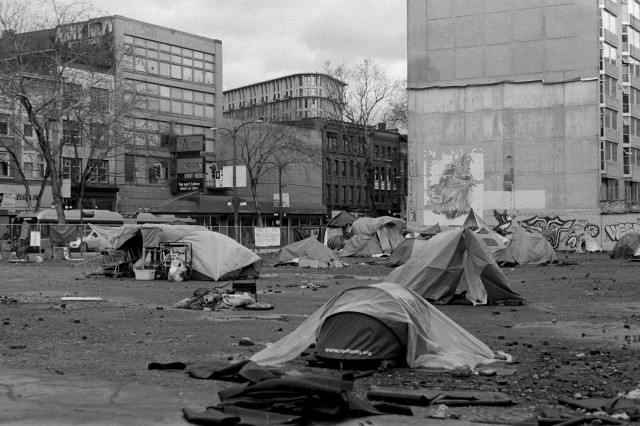
The Impact of Gentrification on Low-Income Communities
When affluent residents move into lower-income residential areas they cause property values to increase while attracting more investment which transforms both cultural and social elements of the neighborhood.
Gentrification leads to positive developments in infrastructure and services but its financial growth creates harmful impacts on the residents who reside there for a long time especially those from low-income brackets
The direct consequence of gentrification leads to displacing people from their homes.
The growing property market leads landlords to enhance rental costs which prevents eligible residents from maintaining their current living arrangements.
Some landlords remove tenants from their homes to capture more profitable real estate opportunities.
Gentrified neighborhoods push homeowners into financial struggle because property taxes increase which drives them to sell their properties for cheaper neighborhoods.
This displacement creates community disruption while destroying social networks so it moves vulnerable populations toward the edges of cities where their access to work opportunities and education services along with healthcare facilities is restricted.
The process of gentrification destroys local business establishments. Gentrifying areas typically support various businesses operated by families which provide low-cost essentials along with cultural services for communities that have lived there before gentrification.
The arrival of wealthier residents triggers rising commercial leases which forces property builders to choose upscale stores and restaurants aimed at serving well-to-do clients. Local businesses struggle to survive and shops as well as restaurants alongside community centers face closure when the neighborhood transitions through gentrification.
These lost businesses create two major negative effects by weakening both the local economic foundation and the characteristic character of that geographic area.
Gentrification transforms public facilities together with the identities of public locations into its primary features. A neighborhood benefits from public infrastructure updates when new investments occur in these areas.
These upgrades cost the original residents their ability to remain in their neighborhoods because of increasing property rates.
Gentrified areas usually implement higher security through increased policing which results in the racial profiling and criminalization of existing residents especially in communities with historical discriminatory practices.
The resolution of gentrification issues needs planned interventions between economic improvements and social fairness maintenance.
Public authorities should establish rent control systems as well as require affordable housing and enact anti-displacement regulations which protect established community members from being forced out.
Residential ownership models based on community trusts and cooperative housing developments serve as market-independent alternatives which let residents co-own and direct their housing projects' management.
Local businesses will maintain their cultural significance alongside neighborhood economics when communities receive financial aid for development and receive business-boosting tax incentives.
Gentrification itself does not need to result in either displacement or excluding tenants from their homes and neighborhoods.
Cities can achieve the positive aspects of gentrification through inclusive urban planning and equitable development policies alongside community participation for vulnerable population protection.
The best sustainable gentrification frameworks make efforts to lift up natives living in target communities so the economic gains spread throughout the area instead of concentrating solely in elite residential zones.
Financial Inclusion Strategies for Reducing Urban Poverty
Banking alongside credit insurance and investment possibilities form an essential combination that solves urban poverty when access becomes available to every social class regardless of financial standing.
The ability of low-income urban populations to save and access business and personal development funds is restricted because they stay out of formal banking systems.
Communities of urban poor individuals who receive greater financial inclusion from government and financial institution initiatives can gain wealth while breaking free from persistent poverty.
Banks remain inaccessible to a significant portion of the population thus blocking entry into financial systems.
Urban low-income communities depend on cash transactions with informal financial solutions because these systems leave them vulnerable to theft hazards as well as fraud schemes and insufficient protection from financial uncertainty.
Governing bodies together with financial institutions need to create accessible banking solutions for low-cost savings accounts, mobile banking and community banking initiatives to resolve this issue.
Digital financial services represented by mobile money platforms and online banking apps successfully expanded access to banking services because people no longer require traditional bank accounts to save money transfer funds or process payments.
Microfinance alongside small business loans marks a vital approach to accomplish financial inclusion. Low-income urban residents who depend on small business operations face growing challenges to business expansion because they lack access to credit funding.
The microfinance program of Microfinance institutions (MFIs) supplies accessible loans with low-interest rates to untraditional bank loan recipients who use the funds to support their business development and purchase operational materials thus enhancing their operational capacity.
Numerous people use rotating savings and credit associations (ROSCAs) as community-based financing programs that let members support each other through pooled resources.
Stocking facilities and lending programs at low interest rates enable poor business owners to gain financial independence while growing their local economies.
The essentiality of financial literacy works toward both the improvement of financial inclusion alongside poverty reduction in urban settings.
People who reside in impoverished communities commonly lack understanding regarding budgeting and credit management together with saving options and investment possibilities.
Educational training and community outreach initiatives and workshops enable people to become more capable in choosing wise financial decisions.
Governments along with banks together with NGOs should establish collaborative financial education programs in educational institutions and communal and workplace areas to teach essential financial management techniques.
Governments should adopt economic policies to defend vulnerable populations against banking discrimination with measures that protect citizens from exploitation.
Wells and financial offerings remain accessible and equitable through regulatory measures which protect borrowers from predatory lending while limiting discriminatory banking procedures and controlling interest rates.
Social welfare programs with digital payment options for direct cash transfers maintain population financial security which minimizes informal financial dependence.
Financial inclusion benefits from the adoption of financial technology solutions which drive its expansion.
Digital payment platforms peer-to-peer lending networks and block chain-based financial services revolutionize how people manage and access their money. The modern financial technologies create transparent payment channels that cut down operating expenses while ensuring controversy-free money transfers for unbanked individuals.
Cities which utilize platform fin tech will establish financial systems that welcome all citizens including marginalized populations.
Through financial inclusion people acquire assets which enables them to offer their children educational opportunities simultaneously improving their economic status.
Low-income urban populations who obtain financial resources become more active participants in economic growth which creates better social mobility together with decreased income disparities.
A financially inclusive urban environment allows cities to deliver opportunities for growth to all citizens regardless of income level.
Conclusion
Urban poverty forms a complicated issue which exists in the junction between gentrification practices and financial exclusion along with income disparity.
The continuous development of cities demands comprehensive policy measures that should include every resident to achieve economic growth benefits for all people.
The process of gentrification typically contributes to population displacement while also destroying cultural heritage and adds financial stress to impoverished neighborhoods.
Gentrification requires proper management to prevent its negative effects since inadequate regulation allows wealthy groups to create more economic inequality that drives poor communities deeper into financial instability.
Through rent control laws coupled with community land trusts along with small business support initiatives communities can protect their neighborhood culture despite gentrification.
Healthcare and public transportation within urban space remain barriers to social mobility because of the wide income divisions between residents.
Unique measures beyond economic growth must exist to fight poverty since they ensure access for everyone through equitable policies.
Cities need to fund educational opportunities combined with employment preparation courses alongside supportive labor policies which provide solid paying work opportunities to their disadvantaged population.
Communities with accessible social safety systems including affordable housing programs and reliable healthcare and public transit services achieve economic prosperity distribution.
Financial inclusion functions as an essential tool which gives power to the disadvantaged sector alongside their communities.
A significant number of urban poor people do not use banking institutions which prevents them from building savings or obtaining credit and investment possibilities.
Financial institutions can give low-income people access to independent finances by broadening their range of services beyond mobile banking and microfinance through fintech innovation.
Through financial literacy education people learn to make better economic choices thereby ending their state of poverty over the long term.
Thorough resolution of urban poverty demands three-way cooperation between the public sector and both commercial organizations alongside civic groups.
To achieve inclusive and sustainable economic development policymakers need to develop an active policy for urban planning.
Financial institutions and businesses need to develop products and jobs accessible to marginalized communities for their upliftment.
Grassroots organizations alongside community leaders need to fight for low-income resident rights while expressing their needs during all stages of decision-making processes.
A just and inclusive city exists only when people take precedence over profit because economic development must serve all residents equally.
Cities can establish meaningful progress toward eliminating urban poverty through the implementation of equitable housing policies and the support of small businesses and financial inclusion investments and increased social mobility programs.
Also read: Green Urbanization: Building Sustainable Cities for the Future




-3dkuLgKhRD.jpg)
-49HupTvwDD.jpg)








LEAVE A REPLY