

Housing shortage in Africa has been ever increasing with the
growth of urbanization due to the fact that the formal housing mechanisms are
not able to keep pace with the increasing population. The discussion on the
best ways of finding affordable housing usually revolves around two major
solutions, which are the upgrade of the current informal settlements or the
creation of new housing solutions altogether. Each of the two strategies has
its own advantages and disadvantages, and none of them is a universal solution.
Urban upgrading aims at enhancing the living standards of
millions of people who already live in the slums, and the new-build projects
focus on avoiding the development of slums in the future through the provision
of structured, serviced, and affordable housing. The dilemma facing the African
governments is to know which strategy or a combination between the two is
producing the most impact using the little resources. The role of
cost-effectiveness in this choice is important because the budget is limited and
there is an urgent need to have fast solutions that can be extended in a short
time.
This blog discusses the advantages, issues as well as long
term implications of upgrading and new build in the African context. It also
enumerates the new techniques, funding mechanisms, planning models that can
assist cities to develop balanced and sustainable housing strategies. Awareness
of these dynamics can enable the African policymakers and developers to
effectively deal with the housing crisis in the continent and establish livable
and inclusive cities to all citizens.
Understanding the
Housing Crisis and the Demand for Cost-Effective Solutions
The causes of Africa urban housing crisis are the fast
population increase, inadequate supply of formal housing, and high economic
disparity. There is a constant influx of millions of people who migrate to
cities in search of jobs and improved opportunities, and available housing
options are still not affordable. Consequently, informal settlements keep
growing at unprecedented rates and in most cases in risky or unplanned
locations.
Governments have strained financial resources which
constrain the magnitude of new housing projects and hence cost efficient plans
are necessary. The issue is further increased by construction costs, land
prices as well as infrastructural deficits, which render the traditional
housing model unsustainable to the low-income earners. Also formal housing does
not usually accommodate the economic reality of urban dwellers who are in
informal sectors and are not able to obtain mortgage funding. The cost-effective
solutions should thus focus on efficiency, cost and scalability. They are also
required to incorporate flexibility in planning, community involvement, and new
technologies so as to satisfy the increasing demand.
Knowing the full
extent of the crisis, economic, demographic, spatial and social, can enable
governments and other stakeholders to consider the issue of whether it is more
economical and practical to upgrade the existing settlements or build new
homes. The crisis level of urgency requires strategic decision making that will
give the maximum impact and least cost.
The Case for Urban
Upgrading: Improving Existing Settlements
Urban upgrading is based on increasing the availability of
basic infrastructure and housing standards in the current informal settlements.
The rationale of this approach is the fact that millions of people currently
reside in such locations which in many cases are lacking basic amenities,
including clean water, drainage systems, safe roads, sanitation, and
electricity. The programs that upgrade normally overcome these inadequacies by
installing infrastructure, providing better access routes, fortifying housing
buildings and creating better spaces.
An important benefit
of an upgrade is that, despite it breaking down existing social networks,
livelihoods and community structures that are relied upon by residents will
remain intact. The upgrading enables the residents to stay in the areas near
the work opportunities and transport networks instead of moving them to places
where they are not familiar. Upgrading normally costs less as compared to new
construction as it is based on the existing layouts instead of constructing
them entirely. It also reduces both political and financial expenditures of
displacement.
Nevertheless, the
redevelopment should be carried out at a slow pace to prevent gentrification,
tenure wars, and interference with income-generating operations. Upgrading,
when exercised in an inclusive and open manner, can create safe, vibrant, and
resilient neighborhoods in informal settlements. It is a practical strategy,
which enhances living standards and averts worsening and spreading of slums.
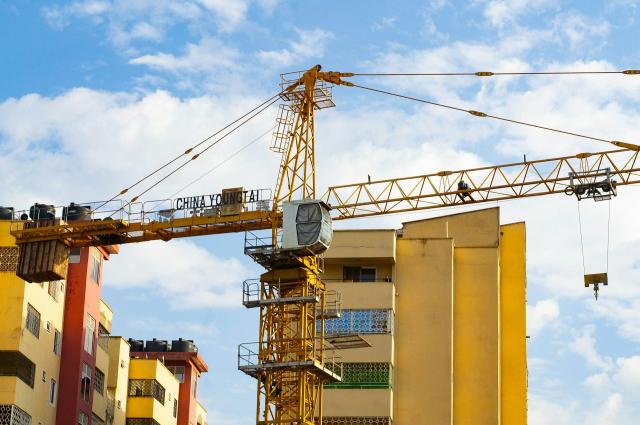
The Case to New
Build: Building Cheap Houses Ground up.
New-build housing is a proactive solution to slums
prevention through provision of affordable, well-planned, and serviced housing
prior to the development of informal settlements. The developments have enabled
governments and developers to adopt contemporary concepts in planning such as
well-planned road networks, drainages, green areas, and social facilities. New
constructions have the capability to support high density buildings, mixed use
development and an environmentally sustainable design that informal settlements
do not.
Besides, they allow
testing new technologies in construction and financing that minimizes the
expenses in the long term. In the case of fast growing cities, new-build
projects are necessary in order to organize the development of urbanization.
They assist in controlling population, planning land use and enhancing balanced
urbanization. Nonetheless, new constructions are usually costly because of the
cost of acquiring land, installation of facilities, and the cost of
construction.
Otherwise, unless properly planned and subsidized, they
would be unaffordable to the low-income households that need them the most.
Moreover, new-build projects that are not in the right location and are
situated far away from the job centers are likely to become underpopulated or
become new slums. Nevertheless, new builds are necessary despite these
difficulties, once they are included in the larger city-planning and adapted to
income facts. They constitute a vital component of the long-term urban development
strategies.
Costs Comparison:
Upgrading vs New Build
To determine whether the upgrading in an urban area is
cost-effective compared to new building, it is important to consider the
financial and social cost of the project. Upgrading is less costly, as
upgrading normally employs the present structures of settlements and all that
is needed is an investment in the infrastructure, service delivery and
structural fortifications. There is reduced cost on land acquisition,
relocation and new infrastructure.
Research has demonstrated that renovation may cost less than
new-build projects, and yet may bring extensive improvements in the quality of
living. New builds however demand a large amount of capital in land
preparation, construction materials, labor and utilities. Though the initial
investments are expensive, new constructions come with long term advantages of
intended density, effective environmental control and efficient service
provision. The unit cost may also reduce under the use of modern technologies
and industrialized building techniques.
Finally, the economic analysis will be determined
case-by-case: in well-populated, highly concentrated settlements, the cost of
renovation will be cheaper; in developing peri-urban settlements, new
construction will be more profitable in the long term. A combination strategy
is a common technique that can achieve the best results, balancing the
short-term requirement and demand. Cost-effectiveness should be assessed based
on the financial basis, but also social stability, resilience, and
sustainability.
Social and Economic
Effects of Restoration of Existing Areas
Urban upgrading delivers cities of great social and economic
profits by enhancing the conditions in which millions of people already reside
and labor. Upgrading minimizes the risk of health issues by improving
infrastructure and service delivery, mobility is enhanced, and the wellbeing of
people is better. Such enhancements create more productivity because residents
are not wasting time on issues related to infrastructural problems like floods,
delays of commuting to work or absence of sanitation.
Modernization also
enhances the economy of the countries by empowering the micro businesses and
providing chances to small contractors and craftsmen. In upgrading, tenure
security, which gives residents the ability to invest in their homes and
neighborhoods, is normally introduced. The social cohesion is maintained
because families are enclosed in known circles which give them emotional and
economic support. This continuity is particularly significant in informal economies
where the means of livelihood depend on the closeness to customers and
suppliers.
In addition, upgrading creates the inclusive governance
through the engagement of communities in decision-making. There are still
challenges such as the potential increase in the land values which can drive
out the original inhabitants unless protection measures are put in place.
However, social and economic benefits outweighing the financial expenditure of
upgrading usually makes it an important device of sustainable urban growth.
The New Build
Developments Long-Term Urban Planning Advantages.
Developments based on new-builds have the benefit of
long-term planning since they allow cities to develop in a balanced and planned
fashion. It is a clean start that enables planners to come up with efficient
layouts, interconnect transport corridors and to have schools, health
facilities and commercial spaces placed strategically. This is proactive so
that chaotic growth that typifies informal settlements is avoided and
consequently the load of subsequent retrofits or infrastructure fixes is
minimized.
Mass-unit service delivery reduces the unit cost of service
delivery and makes new buildings high-density living, which supports mass
transit. They can also be embraced to provide climate-resistant structures like
flood-resistant constructions, green structures, and energy-efficient
buildings. In the long run, these developments have the potential to become
prosperous urban centre which can stimulate economic activity and lure in the
private investment.
Nonetheless, their effectiveness is determined by location,
price, and a connection. When constructions are constructed in remote areas,
without access to transport, they will become unattended or the constructions
will be too expensive to buy. Proper planning also provides the alignment of
new constructions with the development objectives of a larger section of the
city, to establish accessible, inclusive, and sustainable cities. They might be
costly in the short term, but long-term benefits can be excessive where they
are incorporated into overall city plans.
Use of Technology and
Innovation in providing Cost effective Housing.
The transformation in the aspect of affordable housing at
scale is the contribution that is to be made by technological innovation. The
modern methods of constructions such as prefabrication, modular structures, 3D
printing as well as interlocking block of stabilized soil lowered the cost and
shortened the construction cycle to a significant extent. The accuracy of the
planning and the minimisation of wastage can be enhanced through digital
technology (Geographic Information Systems (GIS) and Building Information model
(BIM)).
These technologies
enable the governments and developers to evaluate risks, find proper land,
streamline designs, and handle projects in an efficient manner. Devices to use
renewable energy sources like solar energy and energy saving appliances reduce
utility bills in the long term, and hence housing becomes affordable to
residents. Water harvesting, renewal of wastewater, and climate responsive
design additions also help minimize environmental impact with greater resilience.
Financial tools on mobile and digital land registries
increase the transparency and access to low-income households. Although
technology will not resolve the housing crisis on its own, it offers the
necessary means of cutting costs, enhancing quality, and increasing the scale.
This, in conjunction with effective governance and community participation,
makes innovation a potent component in the upgrading of current settlements and
construction of new houses.
Governance,
Partnerships and Financing Approaches
Good housing policies-be it renovation or complete
construction-are based on good governance and strategic alliances. To promote
development, governments should come up with clear policies, transparent land
management systems and simplified regulation processes. Large-scale projects
are now financially viable as public–private partnerships (PPP) are able to
share resources, expertise, and to risk-share. There are also the donor
agencies, non-profits, and the community organizations that are key in funding,
capacity building and implementation.
Finance models should
be based on the reality of urban dwellers. The alone-mortgage systems are not
able to support the majority in the informal sectors hence alternatives like
micro-finance, cooperative housing programs, rent-to-own programs and
incremental financing is necessary. Costs can also be lowered through
government subsidies, land grants and tax incentives. Housing finance has to be
successful by coordinating the innovation of the private sector, and the
engagement of the community with the public investment.
Good governance will
make sure that there is equal distribution of resources, projects are completed
effectively and benefits are given to targeted population. Even brilliant
strategies will fail to scale and may not have long-term impact without good
financing and alliances.
Striking a balance
between Upgrading and New Build: A Hybrid Approach.
Due to the variety of African urban issues, the mixed
solution of upgrading with new constructions is generally the most appropriate.
Upgrading is a short term response to the current needs as it improves the
situation in the already existing settlements where millions of people already
reside. It promotes safety, wellbeing, and social stability and maintains
livelihoods. In the meantime, new constructions offer long-term solutions to
direct the urban growth, avoid future slums, and provide the appropriate housing
to the population increase.
Timing of these
strategies lies between the availability of land, the population density,
financial capacity and the growth trends in the cities. Upgrading can be more
feasible and less expensive in high-density urban centers whereas in peri-urban
regions with land available, new constructions have higher long-term worth. The
hybrid approach also enables the governments to focus more on equity so that no
section of the population is neglected. The integration of the two approaches
will help African cities address the current problems, as well as to establish
the background of sustainable development in the future.
Conclusion
The argument between urban upgrading and new-build housing
is not that one strategy is better than the other but rather knowing how the
two strategies will help in solving the housing crisis in Africa. The upgrading
provides affordable enhancements in the current localities so that the social
networks do not get lost, as well as the living standards are improved.
New-build
developments are more capital-intensive, but they do influence the development
of urban areas in the long term and eliminate the possibility of developing
future slums. The most effective solution is to take a balanced solution-
upgrade where settlements are already found and build new houses where some
cities are growing. To ensure inclusive, resilient, and sustainable urban
development, the policymakers in Africa should capitalize on innovation,
effective governance, effective financing, and community participation.
Affordable housing is not merely building physical
buildings, but it is the foundation of stability, productivity and social
development in communities. Individuals enjoy better health, robust family
background, and economic freedom when they receive secure and affordable
houses. Proper housing enables the residents to learn, work, and themselves
instead of fighting every day to survive. The integration of strategic,
cost-effective housing solutions is a key to the creation of the inclusive and
sustainable urban future of African cities that have to deal with the rapid
urbanization.
Cities can end the
current shortages in terms of lack of innovative construction techniques,
extension of serviced areas, and enhancing good governance, in addition to
avoiding the development of new informal settlements. Such initiatives
contribute to the development of the conditions when every resident
irrespective of income can receive decent living conditions and valuable
opportunities. Finally, affordable housing becomes the driver of the change in
the urban landscape and the development of the society based on equity,
resiliency, and long-term prosperity.












LEAVE A REPLY