

Urban Renewal Programs
in Nigeria: How They Address Slums
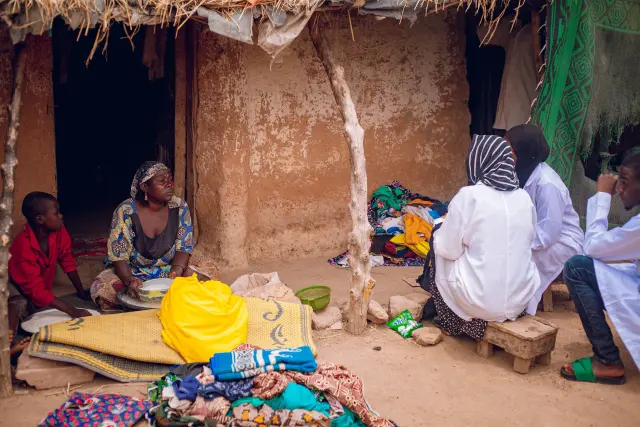
The pace of urbanization in Nigeria has been increasing faster in the preceding few decades due to population growth, and rural-urban migration, as well as, and the concentration of economic opportunities in the cities.
 As much as this increase has led to economic dynamism, it has also
resulted in some serious challenges, especially the spread of slums and informal
settlements. Widened, overcrowded neighborhoods in cities like Lagos, Port Harcourt,
Abuja, Ibadan, and Onitsha have been marked by a lack of housing facilities,
sanitation, unavailability of clean water, lack of security of land tenure, and
poor infrastructure. These circumstances are a threat to the health and dignity
of the residents and urban sustainability, security and economic productivity.
As much as this increase has led to economic dynamism, it has also
resulted in some serious challenges, especially the spread of slums and informal
settlements. Widened, overcrowded neighborhoods in cities like Lagos, Port Harcourt,
Abuja, Ibadan, and Onitsha have been marked by a lack of housing facilities,
sanitation, unavailability of clean water, lack of security of land tenure, and
poor infrastructure. These circumstances are a threat to the health and dignity
of the residents and urban sustainability, security and economic productivity.
As a reaction, there has been the emergence of urban renewal initiatives as a major policy instrument to solve the slum situation and enhance the standard of living in Nigerian cities.
The concept of urban renewal in Nigeria involves a number of initiatives, such as slum redevelopment, slum upgrading, urban rehabilitation of infrastructure, housing, environmental sanitation, and reforms in urban governance.
Such
programs are enforced by federal, state, and local governments with the help of
international development agencies, actors of the private sector and community-based organizations.
This blog discusses the urban renewal programs in Nigeria and their response to slums. It examines the history and policy environment of urban renewal, the key strategies implemented by government agencies, the contribution of infrastructure and housing development, and the involvement of the community, environmental sustainability, as well as the social and economic effects of such programs.
In this discussion, the article
has brought to light the successes and challenges of the current effort of urban
renewal going on in Nigeria, which can be used to understand how the various
programs can be enhanced to help foster inclusive and sustainable urban
development.
Urban Renewal Policy Framework and History in Nigeria.
The issue of urban renewal in Nigeria did not come out of the blue; it has a deep-rooted history on the colonial and postcolonial urban development history in Nigeria. The urban planning of the colonial era was mainly used to serve administrative and commercial needs, where the European quarters were usually separated from the indigenous settlements.
Little was done in terms of infrastructure and services in the native areas, and this formed the basis of the informal settlements and slums presently to appear in large numbers after independence.
Due to the urbanization of cities that lacked
a well-constructed framework of planning, informal housing became the main
choice that low-income migrants were willing to use to be nearer to employment
and other services.
With the rise in urban population after independence in 1960, the growth in Nigeria became at an alarming rate that the government could not cope with to keep up with the increase in population in terms of housing and infrastructure. In the early years, urban renewal was mainly a reactionary concept of slum clearance instead of slum improvement.
The 1970s and 1980s
policies focused on the demolition of so-called blighted areas, frequently
without proper resettlement or compensation of those affected. These strategies
created social opposition and they did not deal with the structural factors
that resulted in the slums like poverty, lack of housing and poor urban
management.
With time, the thinking about policies became more inclusive and sustainable. Urban renewal now has structures in the National Housing Policy, National Urban Development Policy, or several state-level laws that govern city and region planning.
These policies acknowledge the necessity of
integrated development that is a combination of physical development followed
by social and economic intervention. They also focus on public-private
partnerships, decentralization of the planning process, and adherence to the
global development agendas like the Sustainable Development Goals.
The state governments have been especially active in determining the urban renewal efforts. An example is that of the Lagos State, which has come up with detailed plans to regenerate its urban areas using agencies like the Lagos State Urban Renewal Agency.
Those strategies
incorporate infrastructure rehabilitation, environmental management, and
redevelopment of housing. Similar frameworks have been adopted in other states
such as Rivers, Anambra and the Federal Capital Territory among others that are
made to suit the urban setting of the state.
Although these policy improvements are in place, it is not being implemented equally. Inadequate funding, institutional dispersion, land tenure system, and political demands tend to limit effectiveness.
However, the
historical development of urban renewal policy in Nigeria has moved from exclusionary slum clearance to more comprehensive and participatory ones
that will help to improve living conditions and unite informal settlements
with the formal urban environment.
Slum Upgrading and Development of Infrastructure as the Strategic Plans.
Slum upgrading and the development of infrastructure are among the greatest solutions to the slums provided by the urban renewal programs in Nigeria. In contrast to the demolition methods, slum upgrading is aimed at enhancing the current settlements through the provision of basic amenities and allowing residents to stay where they are.
This approach
acknowledges that slums are not physical issues but living social communities
having social networks, livelihoods, and cultural identities that must be maintained
and reinforced.
Slum upgrading efforts focus on the development of infrastructure. Most of the slums in Nigeria do not have basic facilities like clean water, sewerage, tarmac roads, lighting, and sewage services. The urban renovation schemes emphasize increasing and redeveloping these facilities to minimize health hazards and enhance living standards.
Through such initiatives as road construction and drainage systems, for example,
flooding, which is a common hazard in the low-lying urban settlements, is
contained. The access roads are also improved, such that mobility is improved, and
the residents can easily access their employment opportunities and social
services.
The improvements in water and sanitation are of critical importance. Urban renewal programs commonly consist of the installation of boreholes, taps in the streets, sewerage systems, and communal toilets in order to deal with waterborne diseases and environmental pollution.
In other
instances, they are supplemented with hygiene education and community-based
maintenance agreements to make sure that they are sustainable. Safety and
economic activity in the upgraded neighborhoods are also improved by electricity
provision, either via grid extension or other energy solutions.
Urban renewal programs are also used when dealing with the shortage of social infrastructure in slums. Human development and social cohesion are facilitated by the building or renewal of schools, health centers, markets, and recreational areas.
Not only do these facilities enhance life
quality, but they are also indicative of recognition by the government of slum
communities in the city as respectable entities.
Although there have been positive outcomes of slum upgrading, there are still difficulties. Infrastructure projects may be expensive, and the amount of funding is usually limiting to a coverage.
Lack of
coordination among agencies can lead to the fragmentation of interventions, and
maintenance is a continuous problem. However, slum upgrading is a more humane
and efficient way of urban renewal in Nigeria because it addresses the
shortcomings of slums at hand rather than the vulnerability of the slums.
Development and Redevelopment of Housing
Another significant part of urban renewal programs in Nigeria
is housing development and redevelopment programs. One of the most significant
factors that contribute to slum formation has been chronic shortages of
housing, especially for low-middle-income and poor households. The urban renewal
initiatives thus aim at providing more affordable and decent housing and
redeveloping the run-down urban neighborhoods.
The Nigerian urban policy has always included public housing schemes. Governments have created estates via the federal and state housing corporations to ensure that planned residential environments have the basic infrastructure.
When applied in the urban renewal context, these schemes
are occasionally used to resettle people who have been displaced by a
redevelopment project or as an alternative to informal accommodation. The past
several years have seen an increase in focus on mixed-income developments and
incremental housing models which enable residents to develop homes as time goes
on.
The redevelopment efforts are usually focused on the inner city that is characterized by old buildings, congestion and poor infrastructure. Such undertakings can include redevelopment of residential units, reorganization of land use, and modernization.
Partnerships between the
government and the business sector have been making a major contribution
to the funding and execution of such projects with the involvement of private developers who offer capital and technical knowledge in return to the
rights to develop.
The housing-oriented urban renewal in Nigeria has however, come in a manner that has brought an issue of debate and controversy. The redevelopment projects may cause gentrification, whereby better areas become unaffordable to the initial inhabitants.
Poor pay, absence of low-cost options,
and poor implementation of the resettlement policies have even occasionally led
to social displacement. Opponents claim that unless well-established,
redevelopment of housing might favor those having higher income levels compared
to slum residents.
In response to these issues, in some urban renewal projects, an urban inclusive housing policy, including affordable housing quotas, rent control systems, and community land trusts, is now being applied.
These have
been done to ensure that the housing development is used to support social
equity as opposed to increasing inequality. The housing development and
redevelopment programs, when properly used, can significantly help to reduce the
number of slums in Nigeria and to improve living in a city.
Urban Renewal, Community Participation and Social Inclusion.
The involvement of the community is now being identified as a
pillar of successful urban regeneration in Nigeria. The residents of slums
are not the passive beneficiaries of the development, but active stakeholders
with the crucial information about the local conditions and priorities. Urban
renewal programs involving the communities in planning, making decisions and
implementation will yield more sustainable and acceptable results.
Participatory practices can take different forms such as community consultations, stakeholder workshops, community collaboration with resident associations, and civil society organizations. Through these mechanisms, residents will be able to express their needs and raise concerns and participate in the development of renewal projects.
Community participation is considered one of the prerequisites in slum upgrading
programs when it comes to determining the lack of infrastructure, organizing
the construction process, and sustaining facilities.
Social inclusion is also about effective implementation of the needs of vulnerable groups in slums, which include women, children, the elderly, and the disabled. The urban renewal programs can include gender sensitive
planning, availability of infrastructure, and provision of targeted social
services so that the gains are made fairly. Renewal projects are at times
accompanied by livelihood support programs like skills training and
microfinance to boost economic resilience and minimize poverty.
Although it is important, there is a challenge of community involvement in the urban renewal programs in Nigeria. True engagement can be blocked by power disparities, lack of awareness, and distrust between the people and the government.
There are instances where consultations are carried out in
a shallow manner, with the decisions being pre-defined. Enhancing
institutionalized participation and accountability is an important exercise.
However, successful cases show the possibilities of
inclusive methods. Whenever communities are engaged in a meaningful way, urban
renewal has the potential to create a sense of ownership, diminishing
conflict and increasing the sustainability of interventions. The renewal plans
in Nigeria can better meet the complicated social aspects of slum development
because they recognize slum residents as partners, and not as an impediment.
City resiliency and the Sustainability of the environment
Urban resilience and environmental sustainability are
becoming an important part of urban renewal programs in Nigeria and within the
slum conditions. The informal settlements are usually found in places that are
sensitive to the environment like the floodplains, wetlands, and the coastal
regions and therefore they are highly susceptible to the effects of climatic
conditions. The aim of the urban renewal initiatives therefore is to minimize
the environmental risks and also encourage urban sustainability.
Among others, there is flood mitigation. Poor drainage, lack
of proper waste disposal, and climate change contribute to seasonal flooding
in many cities in Nigeria. These problems are addressed by the drainage
rehabilitation process, dredging of canals, and the removal of waterway impediments under urban renewal projects. In other situations, evacuation from risky areas is coupled with the provision of alternatives
of safer dwellings.
Sustainability of the environment is also achieved through waste management concerns and enhancement of sanitation. There is uncontrolled dumping and defecation activities in the slums, and this causes pollution and health hazards.
In order to enhance the environmental quality, urban renewal
programs present systematic waste collection, recycling programs, and sanitation
plants. These are supported by public awareness campaigns and community-based management systems.
Green spaces and green infrastructure are being used more in
renewal plans. The emergence of parks, green corridors, and urban agriculture
projects increases the ecological balance, improves air quality, and offers
recreational opportunities. These characteristics also lead to social
welfare and urbanism.
Urban resilience is a process that reinforces the ability of communities and institutions in order to absorb and recover from shocks. Urban renewal can also involve disaster training, early warning mechanisms, and the construction resilience methods.
Nigeria can establish urban renewal
programs through the incorporation of environmental perspectives into slum
interventions in order to meet wider sustainable development and climate change
agenda.
Conclusion
The problem of slums and informal settlements in Nigeria is a significant concern that can be resolved with the help of urban renewal programs. These programs are aimed at enhancing the living standards and encouraging inclusive urban development through a combination of policy reforms, slum upgrading, infrastructure development, housing, community participation, and environmental sustainability.
Even though the situation has
improved, there are still unresolved issues, like the lack of finances, weak governance,
social displacement, and environmental risks that determine the results.
The case of urban renewal in Nigeria highlights the fact
that it is necessary to adopt holistic and participatory strategies that treat
slums as part of the urban system. Instead of using only demolition and
redevelopment methods, efficient renewal policies have turned to in situ
enhancements, social integration, and sustainability. It is imperative to
strengthen the institutional capacity, increase community involvement, and
provide fair access to housing and services.
With the city population of Nigeria ever increasing, the strain on urban areas and informal settlements will exert more pressure. Urban renewal initiatives should thus change to meet the new challenges such as climate change, economic inequality and demographic changes.
Nigeria can use urban renewal as an effective means of turning slums into living, sustainable, and attractive districts that can lead to the growth of the nation by overcoming its experience and adopting inclusive planning principles.
Also read: How Land Tenure Issues Are Holding Back Affordable Housing Development In Ghana’s Slums




-3dkuLgKhRD.jpg)
-49HupTvwDD.jpg)





LEAVE A REPLY