


Urban Migration And Housing Pressure: The Role Of Informal Settlements In Ghana’s Housing Crisis
One of the most apt social and economic change taking place in Africa in the twenty first century is urbanization. The development of urban in Ghana as people leave their rural communities and move to urban centers has been very high in recent decades due to the fact that rural to urban migration has led to a high level of urbanization in the country as people aim to get better economic services, better infrastructure as well as to access education and healthcare services.
The urban centers (Accra, Kumasi and Tamale) have
grown tremendously with people surpassing housing and urban planning systems.
Although migration into urban areas may be of benefit in economic growth and
development, the migration also exerts a lot of demand on urban infrastructure
and housing market. This pressure has been experienced in Ghana in form of
acute housing shortage, which is estimated to have millions of units, with
several urban dwellers lacking proper and affordable housing.
Among the most apparent effects of Ghana housing shortage is
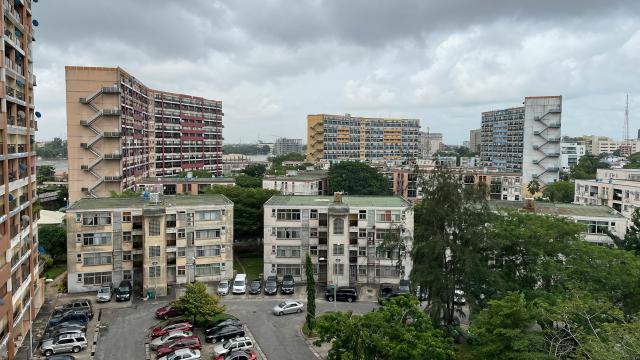
the spread of informal settlements, which often refer to slums. Such
settlements are usually formed beyond the formal planning policies and many
times are typified by congestion, lack of sanitation, low quality of housing
and access to community services. In spite of this, informal settlements are
also important in dealing with the rising urban population. They also house
low-income migrants who are unable to afford formal housing and, in many cases,
serve as feeders of newcomers who seek to find a foothold in the city
economically.
Policymakers and urban planners tend to have a negative
perception of informal settlements, which they view as an element that leads to
poverty, crime, and environmental degradation. Yet that is a rather simplistic
view of how these communities play a complicated social and economic role in
the world. Urban settlements are not just causes of urban crisis; they also
represent ways of dealing with structural imbalances in housing markets,
governance, and economic opportunity. To a big number of migrants, informal
settlement areas are the only way to find a home in the urban areas where the
cost of land and housing is only increasing.
This blog discusses the connection between urban migration,
housing pressure and development of informal settlements in Ghana. It explores
the causes of rural-urban migration to the housing crisis, the growth of
informal settlements, and how they are changing the urban landscape. Through
the economic, social and policy perspectives relating to housing problems in
Ghana, the discussion reveals the necessity of ensuring housing development in
Ghana is more inclusive by considering the actual situations of the low-income
urban dwellers.
Urban Migration and the Growth of Ghanaian Cities
Population growth in Ghanaian cities has had urban migration
as one of its major causes during the last several decades. The rural-urban
differences in economic aspects have been inviting huge masses of citizens to
urban locations in pursuit of jobs, education and better living conditions. The
traditional dependence on Agriculture as the foundation of rural economies is
no longer as stable as it used to be because of the variability of weather, the
reduction in soil fertility, and the lack of markets. Because of this, a large
number of rural dwellers view cities as places where economic movements are
more viable.
Such cities as Accra and Kumasi have become the centers of
migrants, as cities have a broader diversified job market, and many services
unavailable in rural villages can be found there. Industrialization,
development of service sector and the growth of informal economic activities
has resulted in job opportunities that appeal to the migrants nationwide.
Migration is a way of escaping poverty and living their personal dream and this
is the case in many young people. Nevertheless, as much as cities are opportunities,
they also come with big challenges especially on housing.
The rate at which urban population has been increasing in
Ghana has been higher than the capacity of the government institutions and the
private developers to house the population. The systems of urban planning
usually fail to meet the demand of land, infrastructure, and housing units. The
outcome is that the gap between the number of people who are in need of homes
and the number of homes will be increased. This has been one of the gaps that
have led to propagation of informal settlements in the periphery of the cities
and in underutilized areas of cities.
Immigrants who come to cities often cannot afford to obtain
formal accommodation because of a lack of money. There are also prohibitive
rental rates in most cities and the landlords usually require advance payments
of years worth of rent. These demands render formal accommodations unaffordable
to low income migrants who are still setting up shop economically. As a result,
informal settlements are the only possible housing alternative.
Migration of people to cities also affects the design of
cities. With population growth, land rates go up, and the city centers are
becoming more commercialized. The poor inhabitants are driven in to marginal
areas or prone to the environment like the floodplains and wetlands where land
is inexpensive or unregulated. Such sites become overpopulated and informal
settlements slowly as a larger population of migrants comes and builds shanty
housing.
The Housing Shortage and structural issues.
The housing shortage in Ghana has emerged as one of the most
critical city issues that the state is grappling with currently. It has been
estimated that many millions of housing units are required to fulfill the
demand generated by the rise in population and urbanization. Such a shortage is
not merely the effect of high-speed migration, but also based on structural
problems in the housing sector such as poor access to financing, high-cost
construction, and poor land administration frameworks.
The high cost of construction services and building
materials is one of the major causes of housing shortage. Other necessary
materials, cement, steel among others are usually costly and this means that
the developers may not be able to build cheap housing units. Also the formal
housing market usually serves mostly the middle and upper-income segments and
so the low-income households have minimal choice. The private sector that
dominates in the development of housing is usually interested in those projects
that have better financial payoffs.
The barrier on housing finance is also a major problem.
There is a comparatively lower development of mortgage systems in Ghana in
comparison with the more developed economies. The housing loan rates tend to be
high and most banks demand that their loan applicants show a good income and a
regular job before they can be granted the loan. These requirements are very
hard to meet by the migrants and workers in the informal sector.
The situation with land tenure also complicates the housing
situation. In Ghana, the land administration system has a number of
stakeholders such as the traditional authorities, government agencies and the
individual owners. Land acquisition, being a legal process, may be too time
consuming, costly, and bureaucratic. Due to this, there are a significant
number of people who end up constructing houses without proper documentation or
planning permission. This also adds to the growth of informal settlement and
renders the urban growth hard to control.
The other structural problem is in the capacity of urban
planning. People in municipal governments have low financial and technical
resources to undertake extensive housing plans. The development of
infrastructure facilities like roads, drainage systems, water supply and waste
management is often behind the progress of population. Formally constructed
housing developments can have difficulties in offering reasonable living
conditions without proper infrastructure.
All these challenges have cumulated into a housing system
that does not serve a significant proportion of the population. The poor
households, especially the migrants are locked out of the formal housing
markets and have to resort to other alternatives. Informal settlements
therefore come up as viable answers to system failures in the housing sector.
Government programs have tried to curb the housing shortage by undertaking government housing and collaborating with the private developers but this has not yet turned out to be the solution to the housing shortage. The size of urban population increase needs more innovative and inclusive solutions which address housing policy. The solutions should not only solve the supply-side constraints but also be able to solve the affordability problem so that housing development can be in line with the overall goals of urban planning.

Informal Settlements as Urban Survival Strategies
It is now a characteristic of the urban environment in Ghana
to have informal settlements. These communities are often in the margins of
urban areas, where several thousand migrants and low-income citizens who are
unable to afford the formal housing markets obtain their housing. Though they
are often depicted as the representatives of the urban chaos, informal
settlements are not complicated social systems as they help people live in the
harsh economic environment.
To a good extent, informal settlements act as gateways to
urban existence of many migrants. Newcomers tend to use social networks that
are created by their family or friends or people of the same hometown. Through
such networks, migrants get accommodation, jobs and support within the
community. The informal settlements therefore serve not just as place of
settlement but as a means of social support that helps one to integrate into
the urban economies.
Building systems in these settlements are usually made by
using the materials which are available in the area like wood, metal sheets and
recycled parts. These buildings are not very durable or officially approved,
but they enable users to have houses within a short time and at a comparatively
cheaper price. Development is often done in small parts, whereby the residents
are upgrading their homes as they manage to earn more money to improve them.
Informal settlements have residential life that is greatly
integrated with economic activities. A good number of home based businesses are
run by the residents such as food selling, tailoring, carpentry, and retail
business. These microenterprises earn the income and feed the larger urban
economy. In this regard, informal settlements are vibrant economic centers as
opposed to residential areas.
The living conditions within these communities are however
quite challenging most of the times. The lack of clean water, sanitation, and
waste management facilities may pose health hazards to the residents. There is
overcrowding which enhances the proliferation of diseases and houses that are
not well constructed can be prone to fire outbreaks or flooding. The
environmental risks are very prevalent especially in settlements that are on
low-lying land or close to drainage channels.
In spite of all these challenges, the people living in
informal settlements often express resiliency and flexibility. The community
organizations, local leaders, and non-governmental organizations tend to
collaborate in a bid to deal with mutual challenges. Community clean-up
campaign, informal savings groups and self-help housing projects are examples
of the activities that community members engage in to help those better living
situations.
The existence of informal settlements shows that the
settlements serve basic roles in urban systems. When these communities are
tried to be abolished without taking into consideration the housing
requirements of its people, in most cases, displacement and social instability
would result. The better solution is to acknowledge the existence of the
informal settlements and strive to ensure their gradual advancement by
improving their infrastructure and comprehensive planning.
Governance, Urban Policy, and Planning Limitations
The urban governance is an important factor that defines the
development and management of the housing systems in Ghana. Nevertheless, the
current systems of governance have been found to be not responsive to the
accelerating urbanization. The growth of informal settlements and the continued
existence of housing shortages has been associated with institutional
fragmentation, limited financial resources and weak implementation of planning
rules and regulations.
The coordination of various institutions that control land
management, housing development, and urban planning is one of the greatest
difficulties in the urban governance. Several agencies have overlapping
mandates and this can create delays in bureaucracy as well as inconsistencies
in policies. The local governments, whose role is to enforce the urban
development policies, do not always have the authority or the power to enforce
the planning conditions.
The developmental patterns of urban planning in Ghana have
developed and focused on formal patterns of urban development that may not be
representative of the realities of the low-income urban residents. The legal
planning mechanisms usually presuppose the fact that the inhabitants will
legally acquire land, obtain building permits, and build houses in line with
the available regulations. Practically, the processes can be very costly or too
complex to be afforded by most households, and thus the processes are simply
bypassed.
Tools of dealing with informal settlements have at times
been via evictions and demolition campaigns. Although these might be done to
implement the planning policies or reclaim the land to be utilized in
developing projects, they will frequently evict the vulnerable population
without offering them any alternative homes. This strategy is likely to further
foster social inequality and achieve minimal success in resolving the causes of
informal settlements increase.
The other issue of governance is in provision of urban
infrastructure. Cities are often unable to supply their residents with
facilities like water supplies, sanitation, electricity, and garbage disposal
due to fast population growth. The informal settlements are by far left out in
the formal plans of service delivery due to their lack of formal recognition or
legality.
Regardless of such challenges, more inclusive urban policies
have been adopted. Other projects are based on the slum upgrading program that
focuses on enhancing the living conditions and infrastructure without forcing
the residents to leave their homes. These programs put an emphasis on the
involvement of the community since it is understood that the locals are a
source of information regarding the neighborhood and their needs.
Conclusion
The housing crisis in Ghana is highly interlaced with the
overall phenomenon of urban migration and urban sprawl. With the ever-growing
migration of the rural population to the urban centers in pursuit of economic
and better living standards, the housing demand has greatly surpassed the
supply given by the formal housing markets and government efforts. This
imbalance has placed a tremendous strain on the urban infrastructure and has
seen to it that the informal settlements in the major cities have been proliferated.
As much as informal settlements have been equated with
poverty, crowding, and poor living conditions, they contribute significantly in
providing accommodation to the urban migrants and support the city economies.
These communities offer low-cost housing programs and offer areas where social
networks, informal business as well as community programs can flourish. Instead
of seeing informal settlements as the urban problem only, it is worthwhile to
consider them as the adjustments to structural inequalities in the housing
systems and political orders.
The ongoing housing shortage in Ghana is a symptom of a
multifaceted set of interconnected issues such as high construction expenses,
lack of access to housing finance, ineffective land tenure systems and
inadequate urban planning expertise. The effective solution of these problems
is the concerted actions of the governmental bodies, private commercial
developers, community groups, and international collaboration. The polices
should also be aimed at not only raising housing supply but also enhancing affordability
and accessibility by the low income populations.



-3dkuLgKhRD.jpg)
-49HupTvwDD.jpg)


LEAVE A REPLY