

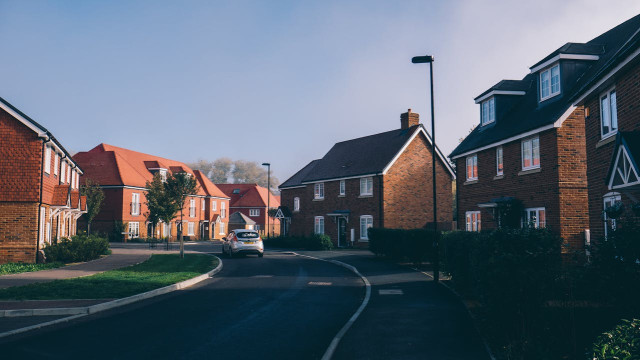
UK's £2 Billion Investment: Addressing the Affordable Housing Shortage
Shelters are more than just four walls and a roof. For individuals and families, it is a means of security, dignity and opportunity. Yet, within the United Kingdom, the existence of affordable housing has become increasingly scarce and accessible. So, when we are confronted by soaring property values, stagnant wages, and a growing population, being able to afford a home is increasingly becoming an unattainable goal for millions. Against such a setting, the UK government announcing and committing to a £2 billion investment with the intent of creating affordable housing could be a game changing potentially.
The intent is not to balance the budget. The intent is to change the perception of the government in relation to the country's affordable housing shortage issue. Affordable housing shortage and the accessibility to it is a country's deep inequality and an impediment to the prosperity of individuals. It has a direct impact on a person's health, education, job opportunities and socializing. Allocating such a large and immense spending budget reinforces how the United Kingdom perceives affordable housing – not a marginal issue, but an important segment of a country’s social and economic development.
In this blog, we shall attempt to understand the impact of this particular investment of £2 billion within the greater context of the housing shortage/crisis in the UK. We shall try to understand what different factors set this particular investment apart from any previous investments, what social and economic value it stands to create, the challenges it needs to tackle, and the reason it stands to change the housing sector for the next few decades.
Extent of Shortage of Affordable Houses in the UK
In order to understand the impact of the investment, in this instance £2 billion, we must understand the crisis to which this investment is targeted. The UK has had housing shortage problems for decades, but over the years it has come to a head. The demand for homes is still and in these greater concentrations such as the greater metropolitan region of London, Manchester, and Birmingham.
The forecasts suggests that at the current construction rates the demand would surpass the supply by 300,000 units each year, which automatically poses the question, what happens the rest 100,000? This is the ever growing gap of affordable housing which is set to swell indefinitely barring any proactive measures. More and more expensive housing developments are being constructed at the expense of affordable housing, which is absolutely shutting the doors of both tenancy and buying.
Affordable housing shortage has put enormous pressure on the families already in poor housing. Many have to find medical and ‘in their client fees, where middle class housing is, which in turn. In the middle of all of this, the situation is dire for the thousands of individuals and families at the risk of losing their homes. Homeless has transformed from a worrying truth to a worrying phenomenon, with the increasing amount of people living on the streets and ‘hidden homelessness’ that is sweeping the UK.
Compounding problems, the current scenario appears to have been handled unevenly. On one side, underinvestment in rural housing shortage, which makes living in the countryside, increasingly dire. On the flip side, the intense competition for the few available affordable homes, adds to the strain. Many on the housing waiting lists have no idea how long the process would take. In these difficult situations, it is often the slimmest margins of society, low income families, single parents, refugees and elderly, who suffer the most.
In this instance, the £2 billion investment is more than the building of houses, it is an attempt to solve a crisis which permeates every community and spans generations. It is an effort to fill a chasm which if not filled, would aggravate inequality which is already present and shake the foundations of social order.
What Sets the £2 Billion Investment Apart?
Like any other country, the UK, too, has implemented a number of housing schemes which in a larger part have not materialized the promised change. What in this instance makes the commitment of £2 billion investment stand out is its range of objectives and its alignment with other political goals.
To begin with, the size of investment is considerable. In these times of economic adversity, where the government is being compelled to allocate funds to numerous other sectors, this investment of £2 billion in affordable housing shortage is a demonstration of a positive political attitude. It is an acknowledgement of the reality, which is that the market in its free state will not be able to address the issues of housing inequality.
Second, this investment seeks to address affordability in its true sense. While previous programs have sometimes “lowered the bar” for affordability by mixing it with “market-rate” homes, this initiative has committed to delivering homes to those who are most in need. The program accepts the criticism that affordability has often been defined concerning the housing market and not with the income levels of the people.
Third, the initiative focuses on the relationships between the central government, local authorities, and housing associations. This partnership is important since the need for housing differs from one area to another. The needs of the communities must guide local area solutions; there is no cookie-cutter approach.
Finally, the investment is part of a broader plan that integrates housing with sustainability. The new homes in the UK need to meet climate commitments and to help do that, new houses need to stock with energy efficient systems, which also helps reduce utility bills, and enhances affordability.
The initiative combines these elements with focus, collaboration and, sustainability, which is why the £2.00 billion investment is more than a symbolic gesture. This is a pragmatic and visionary approach to tackle one of the most difficult social issues in the country.
Economic Consequences of the Investment
Accessible housing is frequently framed as purely a social policy concern, but the economic consequences are massive. The investment of £2 billion could serve as both a short-term impetus and a long-term stabilizer for the UK economy. In the case of the UK economy, it first acts as a stabilizer, and then due to the added investments coming in, acts as a short-term impetus. The investment first stabilizes the economy of the UK, and then due to the investments being made, acts as a short-term impetus.
In the ever-financially-constrained world, housing construction do tend to provide a significant number of employment opportunities. The employment opportunities constructed in the housing sector economically benefits the people in the region, as the number of wages are spend in the economy.
In the long run, the availability of affordable housing improves the stability of markets and diminishes the fluctuations incurred with the absence of available housing. Individuals with the ability to purchase such housing have better chances of engaging with the local economy, obtaining higher education, and securing stable employment. Housing shortage, on the other hand, puts a strain on public funding due to the influx of requests for emergency accommodations, medical care, and social assistance.
Such investment has the potential to increase productivity of the economy. Workers that live nearer to employment centers do not waste a lot of time in traffic, thus improving their productivity and overall productivity. Everyone gains; companies have a more reliable and available workforce while the community also wins with the economic activity performed by the employed residents.
Potential investors in affordable housing have the ability to target the ethical investment market, thus fulfilling their investment criteria. The government’s commitment may be signaled with the investment of £2 billion for such purpose. This has the potential to be a funding catalyst which increases the effect of investment spent to more than just the initial value. In other words, the investment benefits the economy not just in the housing sector. This makes the investment the most important for social and economic development.

Social and Community Benefits
Alongside the strong economic argument, the social effect of affordable housing of which the £2 billion allocation is just one of the changes which this investment might make to the communities and lives of the citizens, is more far-reaching than one would expect. Affordable housing gives families living in secure homes the gift of having less stress and anxiety, thus translates to the family’s improved mental and physical wellbeing. For children, stable housing is a precondition to better educational outcomes because stable housing is a prerequisite to children’s participation in school.
Affordable housing brings people of different levels of income and social status together which enables the community to become more inclusive and diverse. It, therefore, fosters social integration, diminishes segregation, and enhances the potential for collective advancement. Also the investment saves people who are homeless. Expanding affordable housing saves people who are at the edge of the cliff. For the people and families who have no homes, housing is more than a shelter. It is the foundation to their recovery, gaining health services, and finding a job.
The investment also assists disadvantaged people such as the elderly, disabled, and refugees, and guarantees that housing is available and usable. By advancing equity, the initiative understands that a just society cannot be achieved without proper housing for its most disadvantaged members. Most notably, affordable housing restores a sense of dignity and hope. It signifies that the government cares for its citizens, that they are not abandoned to the market’s self-regulatory forces, and that they are a part of the society. This intangible yet powerful effect should not be underestimated; it is the glue that holds societies together.
Challenges and potential roadblocks
The £2 billion investment is one full of promises, but it also comes with its challenges. The delivery of affordable housing on a large scale is a complex task that requires balancing various political, financial, and social challenges.
One of the most critical challenges is the ‘found money’ problem. While £2 billion may seem a large amount of money, it is the argument of some that even it is not sufficient to tackle the full scale of the crisis. A continuous consolidation of funding spread over a number of years is what is needed to make a sustainable impact.
Tensions arising from geographic jurisdictions, such as the “Not In My Backyard” (NIMBY) attitude, frequently causes local opposition, which can severely slow down housing development. Overcoming opposition in the form of public resistance for affordable housing is a progressive matter that is highly reliant on strategic public engagement as well as informative discourse on the positive impacts that affordable housing can have on society.
Increasing expenses in the construction industry, due to a spike in inflation, along with the lack of payment availability for services and problems with the distributive network, are all detriments to the ease of access to affordable housing. New construction styles such as multi-story modular buildings would ease the effects of these issues, but require a construction scaling and investment which is difficult to navigate up front.
This is particularly and critically relevant when analyzing the preservation of low cost housing for a long period of time. In the absence of careful consideration, invested budget housing can easily be assimilated into the civil private residential housing market with negative consequence to the intended purpose of the investment.
Balancing cost and environmental sustainability carefully is also a matter that must be attended to. Construction which is low cost, while functional, is not economically beneficial in the long term. One of the primary aims is to increase the availability of cost effective housing that are also low environmental pollutants. This means the construction should ideally maintain a low environmental impact over the construction and operational lifespan.
More often than not, these challenges are not easily achievable. The means to which these challenges can be logically and practically resolved has time and time again depended on the inter inclination and collective effort from all parties involved. The means to alleviate these concerns and the essential challenges require political reasoning and joint working.
Why This Investment Could Be a Turning Point
One of the most pertinent investment in the UK housing sector is the investment of two billion dollars. There is potential for this investment to single-handedly change the entire country’s approach to housing in the UK for history’s sakes. Housing in country is more than just a market, it’s a public good to be utilized by the citizens of the UK.
The investment is a clear sign of the country’s advancement in quarters. Defining it in terms of equidistant support, the country has made it clear that no one is left behind in the race for all of the citizens to get proper housing. You placed that support which is most distressed in the entire system and it proves that investment is more than enough. The investment proves that residence and investment are brought together in the country. It is an advancement because now housing can be made available at unbelievably lower prices along with all the facilities a family may need in the UK of today in addition to the environmentally sustainable.
In the face of all the challenges, the UK government spending two billion dollars shows that there in fact would be a robust approach to the housing sector which can be relied upon. It is an advancement because now there is a proper policy in place which other can draw their investment policies from in the years to come. The public's trust can be regained as confidence can be instilled from the current events hence the turning point. The spending of this investment can instill hope of the structural inequities of the housing can be reversed. Stress-producing housing can become described as a security.
The investment of £2 billion can become justifiable if the housing issue is resolved through a determined policy. The money from the investment can be remembered if used strategically in regard to compassion. The housing vision can also be added to as a part of the investment.
Conclusion
The money can be used to address the housing crisis if to be taken the UK's investment. Explaining the urgent crisis is one justifiable approach toward the intent for the future. The initiative shows the understanding of the nation to structural inequities by connecting the housing issue to a range of socio-economic issues. The funding is justified by the approach toward sustainable inclusivity and genuine affordability. Actual change is what the investment is aimed to achieve.
The rest of the route toward change becomes defined by the investment. The investment needs to be supported through continuous political interest. Along with this, progress can be made by collaboration across sectors and a flexible approach toward impending challenges. This investment, if succeeds, has the potential to reshape the housing landscape in the UK for generations by transforming homes from a source of inequity to a source of equity and opportunity. It would restate the notion that in a contemporary nation, having a house is not a luxury, rather, it is a basic necessity.
The risks involved are considerable, but the possible outcome makes it worth it: a more just, sturdy, and optimistic UK, built upon the enduring foundations of reasonably priced housing accessible to everyone.
Also Read: Australia Affordable Housing Shortage





-shtTqaPktk.jfif)








LEAVE A REPLY