

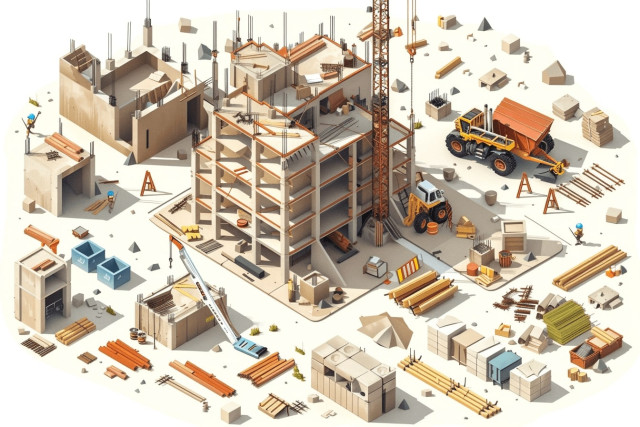
Trends in Building Materials
With today’s difficulties such as climate change, more cities and progress in technology, the construction industry is changing by needing smarter, greener and sturdier materials. Developments now mean that lighter, stronger and eco-friendly materials, as well as some that are smart, are being used to replace the traditional bricks, cement and steel. Modern building materials allow properties to handle weight and weather better, lower their effect on the environment, use energy more effectively and provide better living comfort.
The landscape that keeps changing has led to new trends that focus on sustainability, using technology, improving efficiency and making things more cost-effective. They are changing the approaches to construction as well as to architectural style, city planning and community building on a worldwide scale. Five important trends that are guiding the future of building materials are looked at in this blog. Materials that are sustainable and can be recycled, new smart building materials, high-quality composites and nano materials, modular structures that are prefabricated and building materials made from plants or can heal by themselves.

Sustainable and Recycled Materials: Building with Responsibility
We cannot ignore sustainability anymore; it is now essential. There is a clear trend in construction today towards using more sustainable and recycled materials. Because people are worried about carbon emissions, resources being used up and waste from construction, the industry is exploring ways to reduce its impact. More people are choosing recycled concrete and reclaimed wood because they are strong and maintain the original charm of classic building materials. The carbon footprint of fly ash and slag-based cements is less than that of Portland cement. In addition, construction companies are changing plastic waste into bricks and panels that are both sturdy and lightweight.
People are starting to use bamboo as an alternative to traditional materials. Because it grows quickly and in large quantities, it matches steel in strength and is broadly used for both structure and decoration in Asia. Rammed earth and adobe are becoming more popular in dry regions because they keep buildings cool using natural insulation and cause little harm to the environment. People are also adding green roofs and living walls to the list of building materials.
They consist of using plants within buildings which helps to reduce pollution, cool urban spaces, prevent heat island formation and help a wide range of species in cities. Projects in the industry are more likely to be approved by governments and developers if they meet green certifications such as LEED and BREEAM. The focus of these certifications is often on using eco-friendly building materials and methods.
Life-cycle thinking also relates to the importance of sustainable building materials. How a building is built is important, but so is how it functions and what happens to it when it is no longer wanted. Recyclable, biodegradable or easily taken apart items assist in completing the circle in a circular economy. There is growing interest in researching and building waste-to-resource technologies because of a focus on sustainability. It is possible that, in the future, companies will construct with hempcrete, recycled glass, agricultural waste and specialized concrete that captures carbon. They work towards more than just saving the world from disaster. It’s about finding new definitions for responsible development in the 21st century.
Smart Materials and Technology Integration: Intelligent Construction
Modern life is full of technology and the construction industry is also affected. Responding materials are now changing how buildings communicate with their surroundings as well as with people living and working inside them. Phase-change materials (PCMs) are becoming one of the most interesting recent developments. In going from liquid to solid and vice versa, they act as heat transfers which is helpful for keeping indoor temperatures in balance. The result is better energy savings and a more comfortable environment for people in the building.
Electro chromic glass is one of the latest innovations being used in both homes and offices. As a result, this type of glass behaves transparently or opaquely depending on electronic commands, letting people improve the lighting and manage empty spaces more efficiently and effectively. Self-tinting windows, changing building surfaces and building materials with sensors are affecting the way buildings operate. Think of a smart building where lights, shades and ventilation are automatically changed based on the number of occupants and other conditions outside. People are already using these responsive systems as part of smart city concepts.
Integrated sensors in building materials monitor the structure for signs of structural damage, like cracks, stress, moisture or changes in temperature. By using this type of technology, it is possible to detect maintenance needs early and extend the lifespan of a building. With automation in manufacturing, materials now often have tracking and data systems built-in. Through radio-frequency identification (RFID) tags and block chain-compatible QR codes, the whole manufacturing process can be followed from where the material came from to how it was used and maintained, supporting openness in supply chain management.
IoT is making a significant difference as well. IoT devices, when embedded in building materials, can manage lighting, energy, air quality and security. By embedding sensors into concrete, the data on temperature and strength can be sent straight to monitoring systems while the material cures. Participating in artificial intelligence (AI) advances, project teams use data gathered from prototypes to help select materials which reduces the amount of trial-and-error during the planning process. Smart materials and technologies are not only for luxury purposes. They are helping to ensure that buildings are efficient, responsive and designed for the future. A new era is developing in which buildings behave and respond to changes, not just remain static.
High-Performance Composites and Nanomaterials: Strength Meets Precision
When buildings are made taller, built to be lighter or must withstand stronger forces, traditional materials can no longer meet all the requirements. In this situation, using high-performance composites and nanomaterials provides durable, flexible and advanced solutions. A stronger material is created by blending two or more separate ingredients to create composites. One example is fiber-reinforced polymers (FRP) which are applied in bridge building, modern facades and renovations. These materials are strong, but they are also lighter than other options and corrosion-resistant.
In construction projects with a high budget, carbon fiber is popular because it is incredibly strong compared to its weight. In structural applications, it helps to lower the load and foundation needs. Glass fiber and basalt fiber are a better deal, offering similar strength as other materials. Thanks to nanotechnology, construction materials are now being transformed at the smallest levels to make them function better. If nanoparticles are mixed with concrete, it can become stronger, easier to clean and less likely to absorb water. Nanocoating surfaces and windows helps prevent dirt from building up, ensures better heat insulation and gives them anti-microbial protection.
Ultra-high-performance concrete (UHPC) is also promising, as it is much more sturdy and resilient than average mixes. It allows for slimmer architectural designs and larger spans without having to reinforce them. This approach can save the company money over time and allow for more creative designs. Such building materials as light aerogels and vacuum-insulated panels are being evaluated for their excellent insulating and slim features. They are ideal for insulating older buildings as well as tiny homes and modular units. Modern architecture and engineering are being improved by the integration of top-performing and nanomaterials. Given the rising availability and decreasing expense, we may experience higher performance as a regular standard.
Using Modular and Prefabricated Elements Enhances Construction Speed
With fewer workers, little time, and increasing prices, people are starting to use modular construction and prefabrication more often. The construction of summer houses depends heavily on advanced materials that are simple to put up and fashion. Prefabricated building materials are made in a different location away from the site, and then brought to the site to be put together. These factors help to cut down on the time needed to construct a building, reduce waste, and address weather-connected difficulties. Common building materials for prefabricated buildings include engineered wood, CLT, steel frames, and insulated panels.
Among the top materials this year is CLT, which is both renewable and tough. Thanks to its use, installing the building material is quick, it is fire resistant, and it enhances the natural beauty of buildings. It has now become a substitute for concrete and steel in the construction of both middle-level and high buildings. SIPs and ICFs are used to supply your home with insulation and strength. The sandwich materials are made to boost energy efficiency and they work perfectly for modular constructions.
3D printing is also becoming increasingly popular in this industry. Printing homes or other construction components out of printable concrete, clay, or recycled plastics can be done faster and more accurately than ever before. It makes a difference in cases of disaster relief or for those with low incomes. Using prefabricated building materials makes it possible to customize the design quickly and with fewer problems. Pre-engineering walls, floors, and roofs allows them to include plumbing, electrical, and HVAC systems without extra work on the site.
The modular approach is now being used in business, healthcare, and education, due to the importance of quick and adaptable options. Should needs change, buildings designed in this way can be rearranged or taken apart, making them flexible options for future growth. With more people living in cities and the demand for affordable housing increasing, modular and prefab methods will be key to global construction. Their positive impact and smaller environmental footprint help us build smarter for the future.
Bio-Based and Self-Healing Materials: Nature-Inspired Innovation
Many inventions come from what we learn from nature, as is the case with building materials. There is a growing popularity of using materials that imitate nature to help ensure performance and eco-friendliness. These materials are created using natural resources, including plants, fungi, or what is left after growing crops. Examples range from mycelium (part of fungi) and hempcrete, to straw bales and construction materials made from algae. They decay easily, consume relatively little energy and usually work well as insulators.
For example, mycelium bricks are made from fungal spores and agricultural waste. They are not too heavy, are fireproof, and return to the soil when composted. This eco-friendly alternative, hempcrete from hemp fibers and lime, insulates well and controls moisture. Such building materials can automatically repair themselves when damage occurs, lengthening the product’s life span. One of the most interesting examples is self-healing concrete. The bacteria in this concrete, when exposed to water and air, create limestone and seal the pores themselves.
Another breakthrough is polymers that can close cracks when heated and coatings that repair small scratches. They make it so that the structure has lesser repairs and keeps its quality for a long period. Insulation made from materials like sheep’s wool, cotton, or cellulose is becoming more popular. Since these products are safe, can be recycled, and more breathable, they are suitable for promoting good air quality inside. Science is also exploring the notion of combining animal tissues with construction materials. In the future, bioluminescent bacteria might light up areas, and algae used for panels could be used to take care of carbon and biofuel needs.
Digital Fabrication and 3D-Printed Construction Materials
Using digital fabrication, especially 3D printing in construction, is set to reshape the future of building materials. Machines once imagined in science fiction are becoming a part of everyday building sites. Not only are 3D-printed building materials useful for building homes, but they can also be applied to much larger projects. 3D printing is also called additive manufacturing because it builds an object by gradually depositing material guided by a digital model. In most cases, this means using printers that lay out exact patterns of cement or other building materials. The blend can contain concrete, geopolymers, recycled waste, clay, or biodegradable binders based on what properties are preferred and how environmentally friendly the project needs to be.
Environmentally, 3D printing is assisting in lowering how much construction waste is produced. As materials are delivered to the place where they are needed, this prevents overage and waste. Certain building materials such as sand, clay, and even shredded plastic, collected near the construction site, are used in the print mix to help protect the environment. Both businesses and governments are still researching and investing in the field, which is driving the technology from trials to real-world use.
The building of 3D printed houses in Mexico and the UAE, bridges with robotic arms and printed steel parts in the Netherlands, and many other similar projects offer excellent examples. Both AI and human architecture help imagine the design possibilities of the future. All in all, digital fabrication is more than a simple construction method; it reflects a new point of view. With advancing technology and greater accessibility, we can expect it to be key in shaping how we design cities and where we build, mainly due to cost, timing, and sustainability factors.
Conclusion: Building the Future with Smarter Materials
Changes in building materials indicate wider shifts in our mindset about architecture, engineering, and sustainability. These days, buildings are not limited to using only concrete, steel, or timber. Instead, it means being flexible, creative, and responsible toward the environment. These building trends are focused on making structures that are safe for the environment, as well as being designed for the future. They are changing the way we think about designing, constructing, and using any sort of space. Addressing climate change and resource scarcity is driving the industry’s transformation. By using sustainable and recycled materials, we can cut down on waste, save energy, and lower emissions. These developments are part of a circular economy and support responsible consumption in the industry.
At the same time, using technology in building materials—like sensors, reacting surfaces, and automation—makes infrastructure more intelligent. By learning from their occupants and surroundings, smart buildings can be more efficient with energy, thermostats, and security. These improvements are crucial for improving and stabilizing the way our cities function. Advances in composites and nanotechnology are making designs and structures tougher. They enable architects and engineers to make stronger, lighter, and safer structures with greater design options. As these products become less expensive and more easily obtainable, they will likely become regular instead of rare.
The use of modular and prefabricated parts is making it easier to build projects, save time, and improve efficiency. It highlights the industry’s need for more control and clarity in face of past randomness. Thanks to their faster assembly, minimal waste, and custom features, modular materials are helping solve current challenges in housing and infrastructure. The most amazing and promising field of development seems to be in bio-based and self-healing materials. Nature serves as inspiration for these products, which can regrow, disintegrate, and have a low impact on our environment. Reproducing living processes in buildings is more than preventing harm; it is about reinventing how buildings can be beneficial to the environment.
A shared goal unites these patterns: to create something better. There is more to “better” than taller buildings or design. They are buildings that have intelligence, are more environmentally friendly, and adapt to the needs of their inhabitants. In the 21st century, these materials will assist us in meeting the needs of more city dwellers while using less of nature’s supply. All in all, building materials are much more than just things to use in construction; they are the basis for progress. As such advancements progress and develop further, they allow us to make smarter, more environmentally friendly structures for the benefit of people in the future.



-3dkuLgKhRD.jpg)
-49HupTvwDD.jpg)








LEAVE A REPLY