
USA – AFFORDABLE HOUSING INFRASTRUCTURE
Introduction
Affordable Housing Infrastructure lies at the heart of addressing the deepening housing crisis in the United States, where millions of families struggle to afford rent or homeownership. With housing costs consuming more than 30%—and often over 50%—of household income, the need for a robust and inclusive system has never been more urgent.
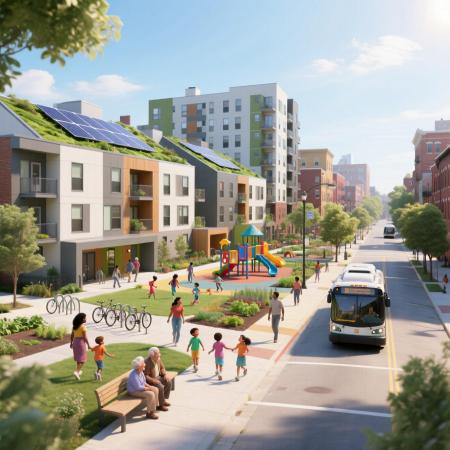
Affordable Housing Infrastructure encompasses not only the physical buildings where low- and moderate-income individuals and families can live, but also the interconnected systems of policy, funding, urban planning, and community engagement that make such housing accessible, sustainable, and equitable over the long term. Strengthening Affordable Housing Infrastructure is essential to creating stable communities and ensuring that housing remains a right, not a privilege.
Historical Development of Affordable Housing Infrastructure
The roots of modern Affordable Housing Infrastructure in the U.S. trace back to the New Deal era. The Housing Act of 1937 established the first federal public housing program, aiming to provide decent, safe, and sanitary homes for low-income families. Over the following decades, additional legislation expanded access, including the Housing and Urban Development Act of 1965 and the creation of Section 8 rental assistance in 1974. However, starting in the 1980s, federal investment in public housing declined sharply. Funding shifted from direct construction to subsidies and tax incentives, such as the Low-Income Housing Tax Credit (LIHTC), introduced in 1986. While LIHTC has financed over 3 million units, this market-based approach has not kept pace with demand. As a result, the national Affordable Housing Infrastructure has become fragmented, underfunded, and increasingly reliant on local governments and nonprofit developers.The Current Crisis in Affordable Housing Infrastructure
Today, the U.S. faces a shortage of approximately 7.3 million affordable rental homes for extremely low-income households, according to the National Low Income Housing Coalition. In nearly every state, a full-time minimum wage worker cannot afford a two-bedroom apartment at fair market rent. This gap reflects a systemic failure in Affordable Housing Infrastructure development and maintenance. High construction costs, land scarcity, and restrictive zoning laws limit new supply. At the same time, aging public housing units—many over 50 years old—require billions in repairs. Deferred maintenance and insufficient capital funding threaten the long-term viability of existing Affordable Housing Infrastructure, especially in major cities like Chicago, New York, and Los Angeles. Moreover, rising rents and gentrification are displacing long-time residents from historically low-income neighborhoods. Without proactive policies, even neighborhoods once rich in affordable options are losing their Affordable Housing Infrastructure, pushing vulnerable populations to the margins.Federal, State, and Local Roles in Affordable Housing Infrastructure
A coordinated government response is essential to rebuild and expand Affordable Housing Infrastructure. The U.S. Department of Housing and Urban Development (HUD) remains the primary federal agency, administering programs like Section 8 vouchers, public housing, and the HOME Investment Partnerships Program. These tools are vital, but they serve only a fraction of eligible households due to chronic underfunding. State and local governments play a growing role. Some states, like California and Massachusetts, have established housing trust funds and passed laws to streamline affordable housing approvals. Cities such as Minneapolis and Seattle have eliminated single-family zoning to allow for denser, more inclusive development—key to modern Affordable Housing Infrastructure. Yet, without stronger federal leadership and sustained funding, local efforts remain piecemeal. A national strategy that aligns policy, financing, and land-use reform is needed to scale up Affordable Housing Infrastructure effectively.Private Sector and Nonprofit Partnerships
The private sector and nonprofit organizations are critical partners in building and managing Affordable Housing Infrastructure. Developers leverage tax credits, public land, and financing tools to construct affordable units. Financial institutions provide loans, while impact investors seek socially responsible returns. Nonprofits often take the lead in community-based development. Organizations like Habitat for Humanity, Mercy Housing, and local housing development corporations focus on long-term stewardship, resident services, and equitable development. These groups are often more willing than for-profit developers to build in high-need, lower-return areas, making them essential to expanding Affordable Housing Infrastructure in underserved communities. Public-private partnerships have proven effective, especially when paired with strong affordability covenants and oversight. However, without enforceable long-term agreements, there is a risk that units may lose their affordability status after a set period, undermining the sustainability of Affordable Housing Infrastructure.Barriers to Expanding Affordable Housing Infrastructure
Despite growing recognition of the crisis, several major obstacles hinder progress. Zoning laws remain one of the most significant barriers. Exclusionary zoning—such as bans on multi-family housing or minimum lot sizes—limits density and inflates land costs, directly undermining Affordable Housing Infrastructure. NIMBY ("Not In My Backyard") opposition also stalls or kills proposed developments, even in high-demand areas. Fear of traffic, school overcrowding, or declining property values often overrides data showing that affordable housing benefits communities. Construction costs are another major challenge. Labor shortages, supply chain issues, and lengthy permitting processes drive up expenses, making it difficult to build units without heavy subsidies. In many markets, it is simply not profitable to build affordable housing without public support. Finally, climate change threatens existing Affordable Housing Infrastructure, especially in flood-prone or heat-vulnerable regions. Many low-income communities are located in environmentally high-risk zones, making resilience and adaptation key components of future development.Funding and Investment Needs
The most persistent challenge is funding. Federal housing assistance reaches only about 25% of eligible households. The gap between need and available resources is estimated at over $40 billion annually. To close this gap, the U.S. must significantly increase investment in Affordable Housing Infrastructure. Expanding the Low-Income Housing Tax Credit (LIHTC) program—currently capped—would allow for more projects. Creating a national Housing Trust Fund with dedicated, recurring funding could provide stable support for new construction and rehabilitation. States and cities can also do more. Some have implemented real estate transfer taxes or inclusionary zoning mandates that require developers to include affordable units in new projects. Others have established municipal housing authorities with independent funding streams. These models show that local innovation can complement federal action in strengtheningInnovation and Technology in Affordable Housing Infrastructure
New construction technologies are transforming how Affordable Housing Infrastructure is built. Modular and prefabricated housing—constructed off-site in factories—can reduce build times by up to 50% and lower costs significantly. Companies like Factory OS and Cover Modular are demonstrating how scalable, high-quality affordable units can be produced efficiently. Green building practices are also being integrated into new developments. Solar panels, energy-efficient windows, and sustainable materials reduce utility costs and environmental impact. Programs like LEED and Enterprise Green Communities set standards for healthy, resilient, and affordable homes. Smart technology—such as automated heating and cooling systems, remote monitoring, and community Wi-Fi—can improve resident comfort and safety. When combined with digital literacy programs, these tools help bridge the digital divide, especially in underserved communities served by Affordable Housing Infrastructure.Community-Driven Development and Equity
The most successful Affordable Housing Infrastructure projects are those that center community voices. Participatory planning—where residents help design, locate, and manage housing—leads to better outcomes and greater long-term stability. Models like community land trusts (CLTs) and housing cooperatives put control in the hands of residents. CLTs, which separate land ownership from housing, ensure that homes remain affordable for future generations. Burlington, Vermont, home to the first modern CLT, has preserved affordability for decades through this model. Equity must be a core principle. Historical policies like redlining and racial covenants excluded Black and brown families from homeownership and wealth-building opportunities. Today, communities of color are disproportionately affected by housing insecurity and displacement. Any effort to strengthen Affordable Housing Infrastructure must include targeted investments in historically marginalized neighborhoods and anti-displacement protections.Regional and Rural Challenges
The Affordable Housing Infrastructure crisis is not limited to cities. Suburbs and rural areas face growing affordability pressures as low-wage workers are pushed out of urban centers. In rural communities, limited access to financing, fewer developers, and aging housing stock make development difficult. Mobile homes and manufactured housing—which house over 20 million Americans—represent a significant portion of rural Affordable Housing Infrastructure. However, these homes often lack secure land tenure and are vulnerable to rising lot rents and natural disasters. Transportation and broadband access are also critical. Without reliable transit or internet, rural residents cannot access jobs, education, or healthcare—undermining the value of even the most well-built Affordable Housing Infrastructure. Solutions must be tailored to regional needs, whether through infill development in cities or modular units in remote areas.Tenant Protections and Preservation
While building new units is essential, preserving existing affordable housing is equally important. Rent control, just-cause eviction laws, and legal counsel for tenants help prevent displacement and maintain stability. In cities like New York and San Francisco, rent stabilization has helped protect long-term residents from being priced out. Preservation programs that rehabilitate older affordable buildings—rather than demolishing them—are cost-effective and sustainable. The federal Rental Assistance Demonstration (RAD) program, for example, allows public housing authorities to leverage private capital for renovations while maintaining affordability. Without strong tenant protections and preservation efforts, even the best Affordable Housing Infrastructure can be lost to market forces.The Broader Benefits of Affordable Housing Infrastructure
Investing in Affordable Housing Infrastructure delivers wide-ranging benefits. Stable housing improves physical and mental health, reduces emergency room visits, and lowers public costs. Children in stable homes perform better in school and are more likely to graduate. It also strengthens the economy. Every dollar invested in affordable housing generates an estimated $1.44 in economic activity through construction, local spending, and job creation. Moreover, affordable housing enables essential workers—nurses, teachers, transit operators—to live near their jobs, supporting community resilience. From a fiscal perspective, preventing homelessness is far less expensive than managing it. Permanent Supportive Housing for chronically homeless individuals costs about $20,000 per person annually, compared to over $50,000 for emergency services, shelters, and hospitalizations.Policy Recommendations for the Future
To build a sustainable Affordable Housing Infrastructure, the U.S. must adopt a comprehensive national strategy. Key recommendations include:- Increase federal funding for HUD programs, especially public housing capital repairs and housing vouchers.
- Expand the LIHTC program and eliminate allocation caps.
- Reform exclusionary zoning through federal incentives or mandates for density and inclusionary zoning.
- Support community land trusts and cooperative ownership models.
- Establish a national Housing Trust Fund with dedicated, recurring funding.
- Integrate climate resilience into all new and rehabilitated affordable housing.
- Protect tenants with universal access to legal counsel and stronger eviction safeguards.