
URBANIZATION, SLUMS GROWTH, AND CHALLENGE TO URBAN PLANNERS IN PAKISTAN
Introduction
Urbanization, slums growth, and challenges to urban planners have become central issues in Pakistan’s development trajectory. Over the past few decades, the country has experienced rapid urban expansion, driven by population growth, rural-to-urban migration, and economic shifts. While urbanization can be a catalyst for economic development, innovation, and improved living standards, in Pakistan, it has largely unfolded in an unplanned and unsustainable manner. This has led to the explosive growth of informal settlements—commonly known as katchi abadis—and placed immense pressure on city infrastructure, governance, and environmental sustainability. Urbanization, slums growth, and challenges to urban planners are deeply intertwined, creating a complex urban landscape that demands urgent, coordinated, and inclusive responses.
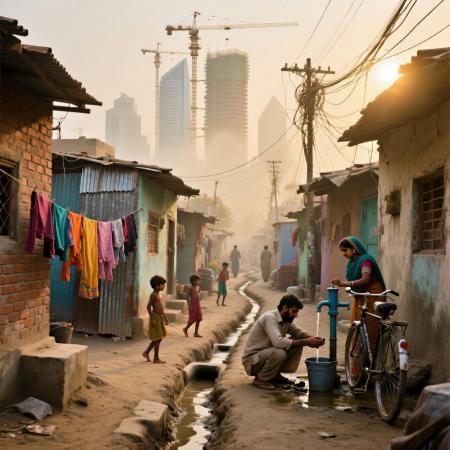
The Accelerating Pace of Urbanization
Urbanization, slums growth, and challenges to urban planners begin with the sheer speed at which Pakistan’s cities are expanding. The country’s urban population has grown from around 32% in 2000 to over 38% in 2024, with projections suggesting that more than half of Pakistanis will live in urban areas by 2040. Major cities like Karachi, Lahore, Faisalabad, and Rawalpindi are absorbing millions of new residents each year, many of whom are displaced by climate change, conflict, or lack of rural employment.This rapid urbanization is not matched by corresponding investments in infrastructure, housing, or public services. As a result, cities are struggling to accommodate new arrivals, leading to overcrowding, traffic congestion, and deteriorating air quality. Urbanization, slums growth, and challenges to urban planners are evident in the way cities expand—often without zoning regulations, environmental safeguards, or long-term development plans.
The Expansion of Slums and Informal Settlements
One of the most visible consequences of unmanaged urbanization is the proliferation of slums. It is estimated that 40–60% of the urban population in Pakistan lives in informal settlements, where homes are constructed from scrap materials and lack basic services. These settlements often emerge on state-owned land, riverbanks, railway tracks, or flood-prone areas, making them vulnerable to eviction and natural disasters.
Urbanization, slums growth, and challenges to urban planners are closely linked because slums are not just a housing issue—they reflect deeper failures in land policy, housing finance, and urban governance. Residents of these areas typically lack legal tenure, which means they cannot access formal credit, government services, or legal protection. This insecurity discourages investment in home improvement and community development. Moreover, slums are often excluded from municipal planning. Water supply, sanitation, electricity, and waste management systems either do not reach these areas or are grossly inadequate. Open drains, contaminated water, and piles of uncollected garbage are common, leading to high rates of waterborne diseases and respiratory illnesses. Urbanization, slums growth, and challenges to urban planners highlight the urgent need for inclusive urban policies that integrate informal settlements into the formal city fabric.Infrastructure Deficits and Service Delivery Gaps
The strain on urban infrastructure is one of the most pressing challenges facing Pakistani cities. As populations grow, demand for water, energy, transportation, and healthcare increases exponentially. However, public investment in urban services remains critically low. Urbanization, slums growth, and challenges to urban planners are reflected in the deteriorating quality of life in many urban neighborhoods. For example, in Karachi—the country’s largest city—only about half of households have access to piped water, and power outages are frequent. Public transportation is underdeveloped, forcing reliance on informal and often unsafe modes like rickshaws and minibuses. Roads are congested, and sidewalks are either absent or occupied by vendors and parked vehicles. In slum areas, the situation is even more dire. Many communities rely on shared water taps, communal latrines, and illegal electricity connections. Solid waste collection is irregular, and drainage systems are non-existent or clogged. Urbanization, slums growth, and challenges to urban planners converge here: without proper planning and investment, basic services cannot be extended to those who need them most.Land Tenure and Legal Insecurity
A major obstacle to effective urban planning is the issue of land ownership and legal tenure. A significant portion of urban land in Pakistan is either state-owned, disputed, or occupied without formal documentation. In slums, residents rarely have title deeds or legal recognition, which prevents them from accessing housing finance, government subsidies, or legal protection against eviction. Urbanization, slums growth, and challenges to urban planners are intensified by this lack of secure land rights. Without ownership, residents are reluctant to invest in permanent housing or community infrastructure. Moreover, land speculation and corruption often delay or block redevelopment projects, as powerful interests resist changes that might affect their control over valuable urban land. Urban planners face a difficult choice: should they formalize existing slums through land titling and upgrading, or should they demolish them and relocate residents? Both options come with political, financial, and ethical challenges. Urbanization, slums growth, and challenges to urban planners require a balanced approach that respects the rights of the urban poor while promoting sustainable development.Weak Urban Governance and Institutional Fragmentation
Another critical dimension of urbanization, slums growth, and challenges to urban planners is weak governance. In Pakistan, urban planning is often fragmented across multiple agencies—municipal corporations, development authorities, provincial departments—leading to overlapping responsibilities and inefficiency. For example, in Lahore, the Lahore Development Authority (LDA) is responsible for master planning, while WASA manages water and sanitation, and TMA handles local services. Coordination between these bodies is minimal, resulting in disjointed service delivery and poor accountability. Urbanization, slums growth, and challenges to urban planners are exacerbated by bureaucratic inertia, lack of technical capacity, and political interference. Additionally, local governments are severely underfunded. Urban local bodies receive less than 5% of the national budget, limiting their ability to invest in infrastructure or hire skilled planners. Without empowered and well-resourced institutions, urban planning remains reactive rather than strategic.Environmental and Climate Vulnerabilities
Urbanization, slums growth, and challenges to urban planners are increasingly shaped by environmental risks. Pakistan is one of the most climate-vulnerable countries in the world, and its cities are on the front lines of climate change impacts. Heatwaves, flooding, and air pollution are becoming more frequent and severe. Many slums are located in high-risk zones. For instance, settlements along the Lyari and Malir rivers in Karachi are routinely flooded during monsoon rains. In 2022, devastating floods displaced millions and destroyed thousands of homes, many of them in informal areas. Urbanization, slums growth, and challenges to urban planners must now include climate resilience as a core principle. Yet, urban planning rarely incorporates environmental risk assessments. Green spaces are sacrificed for construction, drainage systems are outdated, and building codes are poorly enforced. As climate change accelerates, the cost of inaction will only rise.Social Inequality and Exclusion in Urban Spaces
Urbanization, slums growth, and challenges to urban planners also reflect deep social inequalities. While elite neighborhoods enjoy modern amenities, security, and green spaces, the urban poor live in overcrowded, polluted, and dangerous conditions. This spatial segregation reinforces class divisions and limits social mobility. Women and children in slums face additional burdens. Girls may drop out of school due to lack of safe toilets, and women often lack access to healthcare and economic opportunities. Urbanization, slums growth, and challenges to urban planners must address gender equity and social inclusion to be truly effective. Furthermore, ethnic and religious minorities are often overrepresented in slums and face discrimination in housing and employment. Urban planning that ignores these social dimensions will fail to create inclusive cities.The Role of Informal Economies in Urban Life
The informal economy is a lifeline for millions in urban Pakistan. Street vendors, home-based workers, and small-scale manufacturers operate outside formal regulations but contribute significantly to the urban economy. However, urbanization, slums growth, and challenges to urban planners often treat informal activities as nuisances to be removed rather than economic assets to be supported. City authorities frequently crack down on street vendors, demolishing their stalls without providing alternatives. This not only destroys livelihoods but also disrupts access to affordable goods for low-income residents. Urbanization, slums growth, and challenges to urban planners require a more humane and pragmatic approach—one that integrates informal economies into the urban fabric through designated zones, permits, and support services.Government Initiatives and Policy Responses
In recent years, the government has launched several initiatives to address urban challenges. The Naya Pakistan Housing Program (NPHP) aims to build 5 million affordable homes, while the Prime Minister’s Kamyab Jawan Program includes urban youth employment schemes. Additionally, the World Bank and Asian Development Bank have funded urban resiliece and slum upgrading projects. However, implementation remains a major hurdle. Urbanization, slums growth, and challenges to urban planners are evident in the gap between policy and practice. Many projects are delayed, underfunded, or poorly designed. For example, affordable housing schemes are often located on the city’s periphery, far from jobs and services, making them impractical for low-income families. Moreover, top-down planning often excludes community input. Residents of slums know their needs best, yet they are rarely consulted in redevelopment plans. Urbanization, slums growth, and challenges to urban planners call for participatory approaches that empower communities.Community-Led Development and Grassroots Innovation
Despite the challenges, there are inspiring examples of community-led urban development. The Orangi Pilot Project (OPP) in Karachi, initiated in the 1980s, demonstrated how low-income communities could build their own sanitation systems with minimal external support. By organizing neighborhood contributions and using low-cost technology, OPP improved living conditions for hundreds of thousands. Such models show that urbanization, slums growth, and challenges to urban planners can be addressed through collaboration rather than confrontation. When communities are treated as partners, not problems, sustainable solutions emerge. Urban planners should support, not supplant, these grassroots initiatives.The Need for Integrated and Sustainable Urban Planning
Urbanization, slums growth, and challenges to urban planners demand a shift from fragmented, sectoral planning to integrated, city-wide strategies. This includes:- Comprehensive land use plans that designate areas for housing, industry, and green spaces.
- Transit-oriented development to reduce congestion and pollution.
- Inclusion of informal settlements in master plans through upgrading, not eviction.
- Use of geospatial data and GIS mapping to identify vulnerable areas and plan services.