
U.S: BUILDING PERFORMANCE STANDARD MODULE: HOUSING AFFORDABILITY
Introduction
Building Performance Standard module is central to addressing the dual challenges of climate change and housing affordability in the United States. As cities expand and energy demands rise, the residential building sector plays a critical role in both carbon emissions and household financial stress. This framework shifts the focus from prescriptive construction rules to measurable outcomes—such as energy use, water efficiency, indoor air quality, and carbon emissions—making it a powerful tool for transforming the nation’s housing stock.
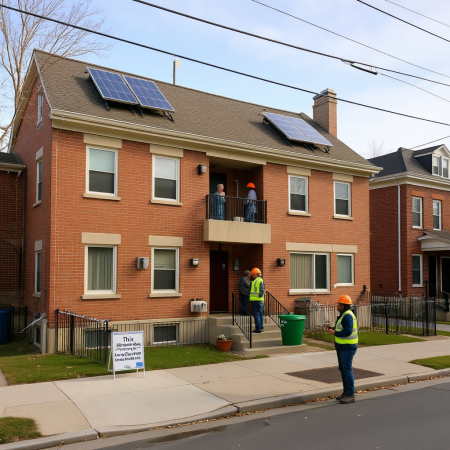
When applied to affordable housing, the Building Performance Standard module ensures that energy efficiency upgrades reduce utility costs, improve living conditions, and extend the lifespan of low-income housing without triggering rent increases or displacement. By setting clear performance targets and offering flexible compliance pathways, this module supports the creation of homes that are not only sustainable and resilient but also genuinely affordable for the long term.
The Building Performance Standard module represents a shift from prescriptive, one-size-fits-all regulations to outcome-based policies that set measurable performance targets for energy use, water efficiency, indoor air quality, and carbon emissions. When applied thoughtfully to housing, especially affordable housing, this module can transform how communities manage their building stock—making homes more sustainable, resilient, and cost-effective for low- and moderate-income residents.What Is the Building Performance Standard Module?
At its core, the Building Performance Standard module is a policy mechanism that establishes minimum performance benchmarks for existing and new buildings. Unlike traditional building codes that focus on construction methods or materials, this module evaluates how a building performs over time—how much energy it consumes, how much carbon it emits, and how efficiently it uses resources. The "module" aspect refers to its flexibility: it can be tailored to different building types (residential, multifamily, commercial), climate zones, and affordability goals. For example, a city might require all multifamily buildings over 25,000 square feet to meet a specific energy use intensity (EUI) target by 2030, with compliance pathways including retrofits, renewable energy installations, or participation in efficiency programs. When integrated with housing affordability goals, the Building Performance Standard module ensures that these upgrades do not lead to rent increases or displacement but instead enhance affordability through lower operating costs.The Intersection of Building Performance and Housing Affordability
Housing affordability is not just about rent or mortgage payments—it also includes utility costs, maintenance, and health-related expenses linked to poor indoor conditions. For low-income households, energy bills can consume up to 15–20% of income, far exceeding the U.S. Department of Energy’s recommended 6%. The Building Performance Standard module directly addresses this burden by mandating or incentivizing energy-efficient upgrades that reduce heating, cooling, and electricity costs. Moreover, many affordable housing units are in older, poorly insulated buildings with outdated HVAC systems. These structures are expensive to maintain and contribute disproportionately to urban emissions. By applying the Building Performance Standard module, cities and housing authorities can prioritize retrofits that improve comfort, reduce utility strain, and extend the useful life of affordable housing—effectively preserving affordability in the long term.Federal and Local Leadership in Implementing the Module
While building performance standards are typically adopted at the city or state level, federal agencies like the U.S. Department of Housing and Urban Development (HUD) and the Environmental Protection Agency (EPA) are increasingly supporting the integration of the Building Performance Standard module into housing programs. For instance, HUD’s Green Retrofit Program and the Low-Income Housing Tax Credit (LIHTC) now encourage or require energy performance benchmarks, aligning with the principles of the module. Cities like New York, Washington, D.C., and Boston have pioneered building performance laws that include multifamily and affordable housing. New York City’s Local Law 97, for example, sets carbon emissions limits for large buildings, with compliance pathways that include energy audits, retro-commissioning, and renewable energy adoption. Crucially, the law includes provisions to protect tenants in affordable housing, ensuring that the Building Performance Standard module does not become a tool for gentrification or displacement.Equity and Inclusion in the Building Performance Standard Module
A major concern with any building regulation is its potential to exacerbate inequities. Without careful design, performance standards could increase costs for landlords, who may pass them on to tenants through higher rents. The Building Performance Standard module must therefore be implemented with strong equity safeguards. To ensure fairness, many cities are adopting tiered compliance timelines, financial assistance programs, and technical support for affordable housing providers. Some are creating “affordability exemptions” or alternative compliance paths for properties serving low-income residents. For example, a building might meet the standard by achieving a 20% reduction in energy use rather than hitting an absolute benchmark, recognizing that older, under-resourced buildings need more time and support. Community engagement is also essential. Residents should be involved in retrofit planning, informed about expected benefits, and protected from displacement. When the Building Performance Standard module is co-developed with tenants, housing advocates, and local organizations, it becomes a tool for empowerment rather than enforcement.Financing and Incentives to Support the Module
One of the biggest barriers to implementing the Building Performance Standard module in affordable housing is funding. Retrofits—such as insulation, high-efficiency windows, heat pumps, and solar panels—require upfront capital that many housing providers lack. To overcome this, governments and utilities are expanding access to grants, low-interest loans, and on-bill financing programs. The Inflation Reduction Act (IRA) of 2022 has significantly boosted resources for building performance upgrades. It includes over $9 billion for home energy rebates and $1 billion for decarbonization of affordable housing. These funds can be directly aligned with the Building Performance Standard module, enabling property owners to meet compliance requirements without raising rents. Public-private partnerships are also emerging as a key enabler. Green banks, energy service companies (ESCOs), and community development financial institutions (CDFIs) are designing innovative financing models that tie loan repayment to energy savings—ensuring that upgrades pay for themselves over time.The Role of Data and Benchmarking
A foundational element of the Building Performance Standard module is data transparency. Most cities require building owners to benchmark energy and water use using tools like ENERGY STAR Portfolio Manager. This data is then reported annually, allowing policymakers and the public to track progress. For affordable housing, benchmarking serves multiple purposes. It helps identify the least efficient buildings—prioritizing them for investment. It enables performance comparisons across portfolios, supporting better management decisions. And it builds accountability, ensuring that public subsidies for housing also deliver public benefits like emissions reductions and cost savings. When integrated into housing authority operations, the Building Performance Standard module transforms data into action—turning utility bills into roadmaps for improvement.Challenges in Implementation
Despite its promise, the Building Performance Standard module faces several challenges. One is enforcement. Monitoring compliance across thousands of buildings requires robust data systems and dedicated staff—resources that many municipalities lack. Smaller jurisdictions may struggle to implement the module without state or federal support. Another challenge is tenant protection. If retrofits are not managed carefully, they can lead to temporary displacement, construction disruptions, or post-upgrade rent hikes. Strong tenant right-to-counsel policies and relocation assistance are essential to prevent harm. There is also the risk of "green gentrification"—where energy-efficient upgrades increase property values and attract higher-income residents, pushing out the original community. To avoid this, the Building Performance Standard module must be paired with strong rent control, long-term affordability covenants, and community land trusts.Technological Innovation and the Module
Technology is accelerating the feasibility of the Building Performance Standard module. Smart thermostats, energy monitoring systems, and building automation platforms allow real-time tracking of performance, making it easier to identify inefficiencies and verify improvements. Advanced modeling tools can simulate retrofit impacts before work begins, helping owners choose cost-effective measures. For affordable housing providers, these technologies offer a way to stretch limited budgets and maximize impact. Moreover, the rise of heat pumps, induction stoves, and solar-plus-storage systems is making deep decarbonization achievable without sacrificing comfort or reliability. When bundled into a cohesive upgrade plan, these technologies align perfectly with the goals of the Building Performance Standard module.Regional and Climate-Specific Adaptations
The Building Performance Standard module is not a rigid template—it must be adapted to local conditions. In colder climates like Minnesota or Maine, the focus may be on insulation, air sealing, and efficient heating systems. In hotter regions like Arizona or Florida, cooling efficiency, reflective roofing, and shading become priorities. Water efficiency is another regional consideration. In drought-prone areas like California, the module can include benchmarks for indoor and outdoor water use, promoting drought-resistant landscaping and low-flow fixtures. By tailoring the Building Performance Standard module to climate, building stock, and community needs, cities can ensure that it is both effective and equitable.Long-Term Benefits for Communities
The long-term benefits of the Building Performance Standard module extend far beyond energy savings. Health improves as homes become better ventilated, reducing asthma and respiratory issues linked to mold and poor air quality. Economic resilience grows as households spend less on utilities and more on essentials like food and healthcare. Communities also benefit from job creation. Retrofitting buildings requires skilled labor in insulation, electrical work, HVAC, and solar installation—opportunities that can be directed toward local workers through workforce development programs. From a climate perspective, widespread adoption of the Building Performance Standard module could reduce U.S. building emissions by 30–50% by 2050, helping cities meet their net-zero goals.Policy Integration and Scalability
For the Building Performance Standard module to reach its full potential, it must be integrated into broader housing, climate, and economic policies. It should be linked to:- Energy efficiency programs
- Affordable housing preservation initiatives
- Climate action plans
- Transportation and land-use planning