
THE ROAD TO AFFORDABLE HOUSING FOR AMERICANS
Introduction
The road to affordable housing for Americans is not a smooth highway—it’s a winding, often bumpy journey through economic inequality, policy gaps, zoning battles, and systemic neglect. Millions of working families, seniors on fixed incomes, young professionals, and essential workers are caught in a housing crisis that has been decades in the making. The road to affordable housing is not merely about constructing more units; it’s about reimagining how we value shelter, equity, and community in the world’s wealthiest nation. The road to affordable housing must be paved with political courage, private innovation, public investment, and grassroots resilience.
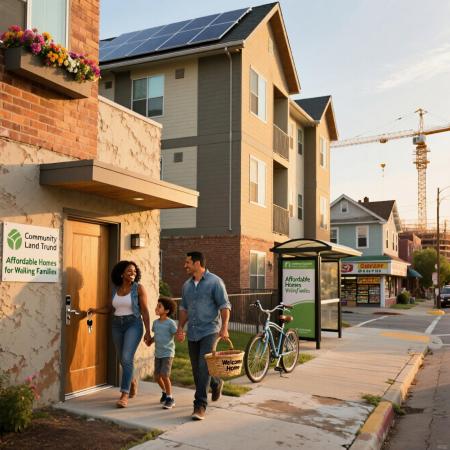
Why America Faces a Housing Affordability Crisis
The numbers are staggering—and sobering. According to Harvard’s Joint Center for Housing Studies, nearly half of all U.S. renter households—over 22 million—are cost-burdened, meaning they spend more than 30% of their income on housing. Of those, 12 million are severely cost-burdened, paying over 50%. Homeownership, once the cornerstone of the American Dream, is increasingly out of reach: the median home price in 2024 is nearly $420,000, while median household income hovers around $75,000. The road to affordable housing begins with acknowledging this imbalance. What caused this? A perfect storm: decades of underbuilding, especially in high-demand urban centers; restrictive zoning laws that prioritize single-family homes over denser, more affordable options; stagnant wages that haven’t kept pace with soaring land and construction costs; and speculative investment that treats housing as a commodity rather than a human right. The 2008 financial crisis wiped out generational wealth for many, especially communities of color, and the pandemic only deepened disparities. The road to affordable housing must reckon with these structural failures.Historical Context: From New Deal to NIMBYism
To understand today’s crisis, we must look back. The road to affordable housing in America was once guided by bold federal action. The New Deal’s Public Works Administration built the first public housing projects in the 1930s. Post-WWII, the GI Bill and FHA loans fueled suburban expansion—but often excluded Black families through redlining and racially restrictive covenants. By the 1970s, public housing fell into disrepair, stigmatized and underfunded, while “Not In My Backyard” (NIMBY) sentiment began to harden against affordable developments. The 1990s brought Hope VI, which demolished distressed public housing but often without adequate replacement. Section 8 vouchers emerged as a lifeline, yet long waiting lists and landlord discrimination persist. The road to affordable housing has been paved with good intentions—but also with exclusion, underinvestment, and broken promises. Reversing course requires not just new policies, but a moral reckoning.The Role of Zoning and Land Use Reform
Perhaps the most stubborn barrier on the road to affordable housing is zoning. In cities from San Francisco to Boston, outdated laws mandate single-family homes on vast tracts of developable land, artificially limiting supply and inflating prices. “Exclusionary zoning” isn’t just bureaucratic—it’s a tool of segregation and class preservation. Progressive cities are pushing back. Minneapolis eliminated single-family zoning citywide in 2018. Oregon followed with a statewide ban. California passed SB 9 and SB 10, allowing duplexes and small lot subdivisions even in single-family neighborhoods. The road to affordable housing runs straight through city council chambers and planning departments. Reforming zoning isn’t about bulldozing suburbs—it’s about allowing gentle density: accessory dwelling units (ADUs), townhomes, and low-rise apartments near transit and jobs.Federal Initiatives and Their Limitations
The federal government has not been idle. The Low-Income Housing Tax Credit (LIHTC), created in 1986, remains the largest affordable housing production tool in the U.S., financing over 3 million units. But it’s complex, developer-dependent, and often fails to reach the poorest households. The Housing Choice Voucher program (Section 8) helps over 5 million people—but only 1 in 4 eligible households receive assistance due to chronic underfunding. The Biden administration’s Housing Supply Action Plan (2022) aims to close the 3.8-million-unit supply gap over a decade through funding, zoning reform incentives, and construction innovation. Yet, without congressional buy-in and sustained appropriations, these plans risk becoming aspirational. The road to affordable housing at the federal level needs more than blueprints—it needs budgets, accountability, and bipartisan will.State and Local Innovations
While Washington dithers, states and cities are experimenting. Colorado’s “Affordable Housing Tax Credit” supplements LIHTC. Virginia’s “Missing Middle Housing” bill legalizes duplexes to fourplexes statewide. Austin, Texas, uses “bond money + density bonuses” to incentivize affordable units in high-opportunity areas. Community Land Trusts (CLTs) are gaining traction—nonprofits that own land and lease it to homeowners, keeping prices permanently affordable. Atlanta’s “Land Trust for Affordable Housing” and Burlington’s model in Vermont show how this can work. The road to affordable housing is being remapped at the local level, where creativity and urgency meet.The Private Sector: Profit vs. Purpose
Developers aren’t villains—but the market alone won’t solve this crisis. For-profit builders chase margins, often avoiding deeply affordable projects unless subsidized. Yet, mission-driven developers like Enterprise Community Partners, Habitat for Humanity, and Mercy Housing are proving that scale and social impact can coexist. Public-private partnerships (P3s) are key. Denver’s “Affordable Housing Fund,” capitalized by a small tax on luxury real estate transactions, leverages private capital for public good. Modular housing startups like Cover and Plant Prefab are slashing costs and timelines. The road to affordable housing must include the private sector—not as saviors, but as accountable partners.Construction Innovation and Cost Reduction
Why is building so expensive? Labor shortages, material inflation, regulatory delays, and inefficient methods. The road to affordable housing demands innovation. Mass timber, 3D-printed homes, and panelized construction can cut costs by 20–40% and time by half. ICON, a Texas-based company, 3D-printed a community of homes for the homeless in Austin—completed in days, not months. The Department of Energy’s “Affordable Building Accelerator” funds R&D in energy-efficient, low-cost housing tech. Prefab factories in the Rust Belt are retooling idle spaces to build homes like cars—on assembly lines. The road to affordable housing is increasingly digital, modular, and green.The Rental Crisis and the Need for Tenant Protections
Homeownership isn’t for everyone—and shouldn’t be the only path to stability. Yet renters face skyrocketing costs, eviction threats, and poor conditions. Only 7% of rental units are affordable to extremely low-income households. The road to affordable housing must include robust tenant protections: just-cause eviction laws, rent stabilization (not rent control), right-to-counsel in eviction court, and habitability enforcement. Cities like Seattle and Portland have implemented “rental registries” and inspection systems. Nonprofits like Just Shelter and Right to the City Alliance are organizing tenants to demand dignity. Housing is a human right—whether you own or rent. The road to affordable housing recognizes that.Racial Equity and the Legacy of Discrimination
The housing crisis is not race-neutral. Redlining, blockbusting, predatory lending, and appraisal bias have systematically denied wealth-building through homeownership to Black, Latino, and Indigenous families. Today, the Black homeownership rate (45%) lags far behind white households (74%). The racial wealth gap is a housing gap. Programs like down payment assistance targeted to historically redlined neighborhoods, affirmative marketing, and community ownership models are steps toward repair. The road to affordable housing must be an anti-racist road—addressing past harms and present disparities with intentionality and investment.The Role of Nonprofits and Community Organizing
Grassroots power is reshaping the landscape. Organizations like Habitat for Humanity, Local Initiatives Support Corporation (LISC), and the National Low Income Housing Coalition (NLIHC) advocate, build, and mobilize. Tenant unions in Los Angeles and New York City have won eviction moratoriums and funding for legal aid. Community Benefits Agreements (CBAs)—legally binding pacts between developers and neighborhoods—ensure affordable units, local hiring, and environmental standards. The road to affordable housing is being walked by everyday people demanding change, block by block, city by city.The Missing Middle: Workforce and Moderate-Income Housing
It’s not just the poor who are struggling. Teachers, nurses, firefighters, retail workers—what we call the “missing middle”—earn too much for subsidies but too little to afford market-rate homes in high-cost areas. The road to affordable housing must expand to include them. “Naturally occurring affordable housing” (NOAH)—older, unsubsidized apartments—is disappearing as investors buy and flip them. Preserving these units through acquisition funds and rehab loans is critical. Inclusionary zoning that captures 10–20% of new units for moderate-income households can help. The road to affordable housing is incomplete without the middle.Rural America’s Forgotten Crisis
Affordable housing isn’t just an urban issue. In rural America, dilapidated trailers, overcrowded rentals, and lack of infrastructure plague communities. USDA’s Section 515 program for rural rental housing is underfunded and aging. Self-help housing programs, where families contribute “sweat equity,” have built over 60,000 homes since the 1960s. Native American reservations face some of the worst conditions—overcrowding, mold, no running water. The Indian Housing Block Grant needs tripling. The road to affordable housing must extend to every county, reservation, and hollow—not just downtowns and suburbs.Climate Resilience and Green Affordability
Affordable housing must be sustainable—or it won’t be affordable for long. Energy bills crush low-income households. Floods, fires, and heatwaves disproportionately impact vulnerable communities. The road to affordable housing must be green: solar panels, efficient insulation, resilient design. Programs like HUD’s “Green Retrofit Program” and Enterprise Green Communities Certification are setting standards. Passive House designs cut energy use by 90%. Climate justice is housing justice. The road to affordable housing leads to a livable future.Technology, Data, and Transparency
Tech is transforming access and accountability. Zillow and Redfin show market trends—but new platforms like JustFix.nyc help tenants report landlords. AI is being used to identify blighted properties for acquisition. Blockchain pilots in Cook County, Illinois, aim to clean up title records and reduce fraud. Open data portals in cities like Philadelphia track affordable unit pipelines. The road to affordable housing is increasingly digital—democratizing information, reducing bureaucracy, and empowering residents.The Mental Health and Homelessness Connection
You can’t talk about housing without confronting homelessness—and its roots in mental illness, addiction, and trauma. The “Housing First” model—providing permanent housing without preconditions—has proven effective in Utah, Houston, and elsewhere. The road to affordable housing must include supportive services: case managers, therapists, job training. Cuts to mental health infrastructure since the 1980s left thousands stranded. Rebuilding that system is part of the solution. A home is more than four walls—it’s stability, safety, and healing. The road to affordable housing is also a road to recovery.Policy Recommendations for the Road Ahead
What’s needed? A national housing strategy with teeth:- Expand the Housing Trust Fund — Funded by Fannie Mae/Freddie Mac profits, it’s flexible and locally controlled.
- Universal Housing Vouchers — Make Section 8 an entitlement, not a lottery.
- Zoning Reform Mandates — Tie federal infrastructure funds to local zoning changes.
- Construction Innovation Grants — Scale 3D printing, mass timber, prefab.
- Tenant Bill of Rights — National standards for eviction, repairs, and rent increases.
- Racial Equity Audits — Require all housing programs to assess disparate impact.
- Rural and Tribal Investment — Triple USDA and IHBG funding.
- Public Ownership Models — Expand community land trusts and social housing pilots.