
THE CHALLENGES OF LAND DEVELOPMENT FOR HOUSING PROVISION IN NEW ZEALAND
Introduction
The challenges of land development — they’re not just bureaucratic speed bumps or zoning squabbles. In New Zealand, they’re the invisible walls between families and homes, between dreams and deeds, between a growing population and the ground it needs to stand on. The challenges of land development aren’t abstract policy debates — they’re the reason young couples in Auckland sleep in garages, why rents in Wellington devour half a paycheck, and why towns from Whangārei to Invercargill watch their youth leave for Australia or the big cities.
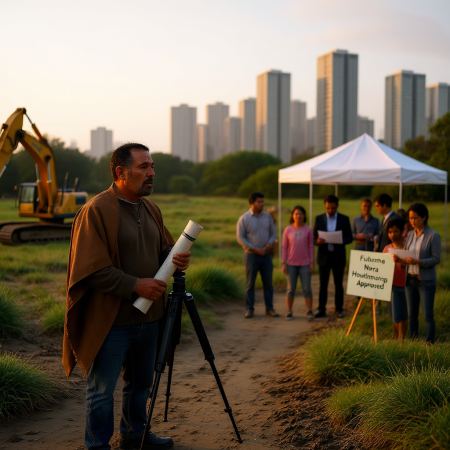
The challenges of land development for housing provision in New Zealand have become a national crisis — not because the country lacks space, but because it lacks the political will, institutional agility, and social consensus to turn land into homes at the pace and scale required. The challenges of land development are tangled in layers: Māori land rights, environmental protections, infrastructure deficits, NIMBY resistance, outdated planning laws, speculative investment, and a construction sector stretched thin. The challenges of land development don’t just delay houses — they delay lives.
Let’s walk through them — not with jargon, but with truth.THE SCALE OF THE PROBLEM: A NATION RUNNING OUT OF ROOM (OR IS IT?)
The challenges of land development begin with a paradox: New Zealand is vast — 268,000 square kilometers — with rolling hills, empty plains, and coastlines galore. Yet its people are squeezed into a handful of cities, mostly along the North Island’s spine. Auckland alone holds a third of the population. And as the population grows — projected to hit 6 million by 2030 — demand for housing skyrockets. Yet supply lags. According to Stats NZ, the country needs 47,000–59,000 new homes annually just to keep up. In recent years, it’s averaged barely half that. Why? Because land isn’t automatically “developable.” The challenges of land development kick in long before a bulldozer turns a wheel. Land must be zoned residential. It must be serviced with water, sewer, roads, power. It must pass environmental assessments. It must be purchased — often at inflated prices — from farmers, iwi, or speculators. And it must survive the gauntlet of public consultation, council hearings, and judicial reviews. The challenges of land development aren’t about scarcity of dirt — they’re about scarcity of permission. In Auckland, for example, the Unitary Plan theoretically unlocked 40,000 hectares for housing. But by 2023, less than 10% had been developed. The challenges of land development turned potential into paralysis.PLANNING LAWS: THE TANGLE THAT STRANGLES SUPPLY
The challenges of land development are perhaps most visible in New Zealand’s planning system — a labyrinth of rules, appeals, and delays that can stretch development timelines to a decade or more. The Resource Management Act 1991 (RMA) was once hailed as world-leading — designed to protect the environment while enabling development. But over time, it became a weapon of obstruction. Every rezoning, every subdivision, every infrastructure project faced objections — often from well-resourced residents fearing “overdevelopment,” loss of views, or traffic. Appeals to the Environment Court could take years. Costs ballooned. Developers walked away. The National Policy Statement on Urban Development (NPS-UD), introduced in 2020, tried to cut through the red tape — empowering councils to upzone, remove density restrictions, and fast-track projects. But implementation has been patchy. Many councils — understaffed, underfunded, politically cautious — dragged their feet. The challenges of land development remained embedded in institutional inertia. In 2023, the government began replacing the RMA with three new laws — the Natural and Built Environment Act, the Spatial Planning Act, and the Climate Adaptation Act. But rollout has been chaotic, with legal uncertainty and sector confusion. The challenges of land development didn’t vanish — they just changed shape.INFRASTRUCTURE DEFICIT: NO HOUSES WITHOUT PIPES AND WIRES
The challenges of land development don’t end when land is zoned — they intensify when you realize: houses need water. Sewage. Roads. Stormwater. Internet. Power. New Zealand’s infrastructure deficit is staggering. Local councils — responsible for 90% of water and transport infrastructure — are drowning in debt and depreciation. Auckland Council alone faces a $15 billion infrastructure backlog. When a developer wants to build 500 homes on greenfield land, they’re told: “Great — but you’ll need to pay for the pipes, the pump station, the road upgrades, and the traffic lights.” Costs can add $100,000+ per section — passed on to buyers. Worse, many councils impose “infrastructure contributions” — fees levied on new developments to fund city-wide upgrades. While fair in theory, in practice they price out affordable housing. The challenges of land development become the challenges of affordability. In fast-growing areas like Hamilton, Tauranga, or Queenstown, infrastructure simply can’t keep up. New subdivisions sit half-empty because there’s no sewer capacity. The challenges of land development aren’t just regulatory — they’re hydraulic, electrical, and fiscal.MĀORI LAND: RIGHTS, COMPLEXITY, AND OPPORTUNITY
The challenges of land development in New Zealand are uniquely shaped by Te Tiriti o Waitangi and the legacy of Māori land alienation. An estimated 1.5 million hectares of Māori freehold land sits underutilized — not due to lack of will, but due to legal complexity. Much of it is multiply owned — sometimes by hundreds of whānau — making decisions agonizingly slow. The Māori Land Court process is bureaucratic and costly. Many owners live overseas or are disconnected from governance. The challenges of land development here aren’t about opposition — they’re about fragmentation. Yet there’s immense potential. Iwi like Ngai Tahu, Tainui, and Ngāti Whātua Orakei are becoming major developers — building housing, commercial hubs, and mixed-use communities on their own terms. Projects like Kāinga Ora’s partnership with mana whenua in Tamaki Makaurau show how culturally grounded development can succeed. The challenges of land development, when approached with partnership and respect, can become pathways to intergenerational wealth and cultural revitalization. But without legal reform, funding, and capacity-building, much Māori land will remain dormant. The challenges of land development here are also challenges of equity.NIMBYISM AND COMMUNITY RESISTANCE: THE POLITICS OF PLACE
The challenges of land development often crash headlong into the politics of place — the fierce, emotional resistance of existing homeowners to change. “Not In My Backyard” — NIMBYism — is alive and well in New Zealand. In leafy suburbs from Remuera to Kelburn, residents rally against townhouses, apartments, or even duplexes. They fear “loss of character,” “parking chaos,” “school overcrowding.” Petitions are signed. Submissions flood council inboxes. Lawyers are hired. The challenges of land development become battles of attrition — where the loudest, wealthiest, and most connected voices win. This isn’t just snobbery — it’s baked into the system. Under the old RMA, objectors had near-veto power. Even under new rules, councils fear backlash — and delay or dilute developments. The challenges of land development are also challenges of democracy — when participatory planning becomes participatory obstruction. Yet attitudes are shifting. Younger generations, priced out of the market, are demanding density. Movements like “Yes In My Backyard” (YIMBY) are gaining traction. The challenges of land development may yet be overcome by a new social contract — one that values homes over hedges.LAND SPECULATION AND HOUSING AS INVESTMENT
The challenges of land development are turbocharged by speculation. For decades, New Zealand treated housing not as shelter, but as an asset class. Land banking — buying undeveloped land and sitting on it for years, waiting for values to rise — became a national pastime. Developers held land for 5–10 years before building, betting that scarcity would drive up prices. Investors bought sections not to live on, but to flip. This drove land prices to absurd levels. In Auckland, residential land values rose 700% between 2000 and 2020 — far outpacing incomes. The cost of land now makes up 50–70% of a new home’s price — up from 30% in the 1990s. The challenges of land development became the challenges of unaffordability. Government tried to cool speculation — with the Bright-Line Test, removal of interest deductibility, and the ban on foreign buyers. But land banking persists. The challenges of land development aren’t just technical — they’re economic, driven by a system that rewards hoarding over building.CONSTRUCTION CAPACITY: THE MISSING WORKFORCE
The challenges of land development don’t vanish when land is zoned, infrastructure funded, and consents granted — they meet a new wall: the lack of builders. New Zealand’s construction sector is stretched to breaking. Shortages of carpenters, plumbers, electricians, project managers. An aging workforce. Competition from Australia luring skilled Kiwis away. Immigration settings that don’t prioritize trades. The challenges of land development become the challenges of delivery. Even when developers have land and permits, they can’t find crews to build. Projects stall. Costs rise. Delays cascade. The Productivity Commission estimates the sector needs 50,000–60,000 more workers by 2028. The challenges of land development are also challenges of training, retention, and immigration policy. Prefabrication and modular housing offer hope — but scaling them requires investment, standards, and cultural shift. The challenges of land development won’t be solved by land alone — they need hammers, nails, and hands.ENVIRONMENTAL CONSTRAINTS: PROTECTING NATURE WHILE BUILDING HOMES
The challenges of land development are rightly shaped by New Zealand’s commitment to its environment — but sometimes, the balance tips too far. Sensitive habitats, coastal margins, floodplains, volcanic fields, and productive farmland are (rightly) protected. But the process of assessing and mitigating environmental impacts can be slow, costly, and inconsistent. A developer might spend $200,000 on ecological surveys — only to be told “no” because of a rare skink or a wetland buffer. Climate change adds another layer. Sea-level rise, increased flooding, liquefaction risk — all constrain where and how to build. The challenges of land development now include building for resilience — not just today, but for 2100. Yet smart planning can reconcile ecology and housing. Brownfield redevelopment. Infill housing. Green infrastructure. The challenges of land development aren’t about choosing between nature and homes — they’re about designing homes that belong in nature.REGIONAL IMBALANCE: AUCKLAND VS. THE REST
The challenges of land development aren’t evenly distributed — they’re concentrated where demand is highest, and weakest where need is greatest. Auckland, Wellington, Christchurch — these cities face intense pressure, soaring land costs, and infrastructure bottlenecks. But provincial towns — Whanganui, Gisborne, Westport — have land, lower costs, and willing councils. Yet people don’t move there — because jobs, schools, hospitals, and culture are concentrated in the big centers. The challenges of land development in the regions are the challenges of opportunity. Government programs like the Provincial Growth Fund tried to incentivize regional development — with mixed success. Remote work post-COVID offered hope — but broadband gaps and service deficits remain. The challenges of land development are also challenges of decentralization — of making “the regions” places people want to live; not just places they can afford.FINANCING AND AFFORDABILITY: WHO CAN ACTUALLY BUY?
The challenges of land development collapse at the final hurdle: affordability. Even when land is developed, infrastructure built, and houses constructed — who can buy them? Median house prices in Auckland hit $1.2 million in 2023. In Queenstown, $1.5 million. Wages haven’t kept pace. The average household income is around $100,000. The math doesn’t work. First-home buyers are locked out. Deposits are unattainable. Banks demand 20% down — impossible without parental help or inheritance. The challenges of land development become the challenges of intergenerational inequality. Government schemes like First Home Loan, First Home Grant, and Kāinga Ora’s progressive home ownership try to bridge the gap — but they’re drops in the ocean. The challenges of land development aren’t solved by supply alone — they need demand-side reform, wage growth, and wealth redistribution.THE ROLE OF CENTRAL GOVERNMENT VS. LOCAL COUNCILS
The challenges of land development are a dance — often a clumsy one — between central and local government. Wellington sets national policy — like the NPS-UD, the Housing Accord, or the Infrastructure Acceleration Fund. But councils control zoning, consenting, and local infrastructure. And many councils — facing ratepayer backlash, legal risk, or capacity limits — resist or delay. The government’s “Going for Housing Growth” targets — forcing councils to plan for 30 years of growth — sparked fury. Some councils sued. Others complied half-heartedly. The challenges of land development are also challenges of governance — of aligning incentives, sharing risk, and building trust. Kāinga Ora — the national housing agency — was meant to lead large-scale developments. But it’s struggled with delivery, cost overruns, and community engagement. The challenges of land development aren’t just local — they’re systemic.TECHNOLOGY AND INNOVATION: CAN TECH SAVE US?
The challenges of land development might yet be eased by technology — if embraced boldly. Digital consenting platforms. AI-driven zoning analysis. 3D-printed homes. Modular factories. Drone surveys. Blockchain land registries. These tools can cut time, cost, and error. Auckland Council’s “Digital Consents” pilot slashed approval times by 40%. Prefab factories in Tauranga and Christchurch are churning out high-quality, low-cost units. The challenges of land development are becoming challenges of adoption — of convincing risk-averse councils and developers to go digital. But tech alone won’t fix broken policy or community distrust. The challenges of land development need more than apps — they need culture change.WHAT’S WORKING? GLIMMERS OF HOPE
The challenges of land development aren’t total failure — there are sparks of progress. — Hamilton’s Peacocke development: 7,000 homes on 400 hectares, with schools, parks, and rapid busway — planned with community input and staged infrastructure. — Tamaki Regeneration: Kāinga Ora partnering with mana whenua to transform state housing into mixed-tenure, high-density, culturally rich communities. — Dunedin’s “Housing First” approach: Fast-tracking consents for affordable and social housing. — Queenstown’s “Choice in Housing” plan: Allowing granny flats, tiny homes, and medium-density without consent — boosting supply quietly. The challenges of land development can be overcome — when leadership, community, and innovation align.THE HUMAN COST: MORE THAN BRICKS AND MORTAR
The challenges of land development aren’t measured in hectares or consents — but in human lives. Families doubled up in garages. Seniors couch-surfing. Students working three jobs to pay rent. Teachers commuting two hours. Nurses sleeping in cars. The challenges of land development steal dignity, time, and hope. One mother in South Auckland told RNZ: “I applied for a Kāinga Ora home five years ago. My baby is in school now — and we’re still waiting.” The challenges of land development aren’t bureaucratic — they’re personal.THE WAY FORWARD: A CALL FOR COURAGE
The challenges of land development won’t be solved by tinkering — they need transformation. Here’s what must change:- Radical Planning Reform: Replace the RMA with a system that prioritizes housing — with fast-track lanes for affordable projects.
- Infrastructure Revolution: National funding for water, transport, and energy — decoupled from developer charges.
- Māori Land Unlocking: Simplify governance, fund capacity, and support iwi-led development.
- Speculation Crackdown: Tax land banking. Cap holding periods. Redirect gains to housing.
- Construction Surge: Train 60,000 workers. Fast-track migrant trades. Scale prefab.
- Regional Revival: Invest in jobs, broadband, and services outside big cities.
- Affordability Mandate: Require 20% affordable units in every large development.
- Community Co-Design: Involve residents early — not to block, but to build better.
- Climate-Proofing: Build only where safe — with green, resilient design.
- Political Courage: Stop pandering to NIMBYs. Start leading for the many.