THE AFTERMATH OF FINANCIAL CRISES
Introduction
The Aftermath of Financial Crises is rarely confined to balance sheets or stock tickers—it ripples through homes, workplaces, governments, and entire societies, often for years or even decades. While the immediate shock of a market crash or banking collapse captures headlines, the true cost unfolds in slow motion: job losses, eroded savings, stalled investments, and a deep erosion of public trust. The Aftermath of Financial Crises reshapes economies, redefines policy, and reorders lives in ways that are both profound and persistent. From the Great Depression of the 1930s to the Global Financial Crisis of 2008 and more recent regional shocks, history shows that recovery is never linear—and the scars often outlast the memory of the crisis itself.
Economic Contraction and Unemployment
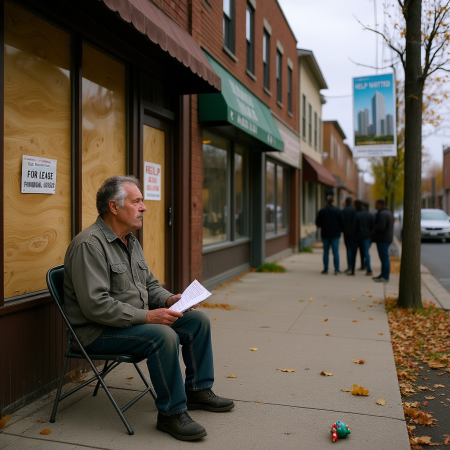
One of the most immediate and visible consequences of Financial Crises is economic contraction. As credit freezes, businesses cut back on spending, consumers pull in their belts, and investment plummets. Gross Domestic Product (GDP) often shrinks for multiple quarters, pushing economies into recession—or worse, depression. But perhaps the most human toll is measured in unemployment. Millions lose their jobs as firms downsize or shutter entirely.
In the U.S. after 2008, unemployment peaked at nearly 10%, with long-term joblessness becoming a new norm for many. Youth and low-skilled workers are especially vulnerable, facing not just temporary hardship but diminished lifetime earnings—a phenomenon economists call “scarring.” The Aftermath of Financial Crises thus begins not with recovery, but with widespread economic pain.
Household Wealth and Inequality
Financial crises disproportionately affect ordinary households. Home values collapse, retirement accounts shrink, and small businesses fail. During the 2008 crisis, U.S. households lost over $16 trillion in net worth—much of it tied to housing. While markets eventually rebound, asset recovery is uneven: wealthier individuals, who hold more diversified portfolios and benefit first from monetary stimulus, regain ground faster. Meanwhile, middle- and lower-income families—whose wealth is often tied to a single home—struggle for years. This dynamic exacerbates inequality, turning The Aftermath of Financial Crises into a powerful engine of social stratification. In many cases, the crisis doesn’t just deepen poverty—it entrenches it across generations.
Government Debt and Austerity Measures
To stabilize the economy, governments typically respond to financial crises with massive fiscal interventions: bailouts, stimulus packages, and expanded safety nets. While necessary, these measures balloon public debt. In the Eurozone after 2008, countries like Greece, Spain, and Ireland saw debt-to-GDP ratios soar, triggering sovereign debt crises. The political response in many nations was
austerity—deep cuts to public spending, pensions, and wages. Though intended to restore fiscal credibility, austerity often prolonged recessions by suppressing demand. In Greece, for example, GDP contracted by over 25% between 2008 and 2016. Thus, The Aftermath of Financial Crises frequently includes a painful policy dilemma: how to balance short-term relief against long-term fiscal sustainability.
Banking Sector Reforms and Regulation
Crises expose systemic weaknesses, and The Aftermath of Financial Crises almost always includes regulatory reckoning. After the 1929 crash, the U.S. created the Securities and Exchange Commission (SEC) and imposed the Glass-Steagall Act to separate commercial and investment banking. Similarly, the 2008 crisis led to the Dodd-Frank Act in the U.S. and Basel III capital requirements globally—aimed at making banks more resilient, transparent, and less prone to risky speculation. Stress tests, higher capital buffers, and “living wills” for orderly bank resolution became standard. While these reforms reduced systemic risk, critics argue they also increased compliance costs and favored large institutions over community banks. Still, regulatory evolution remains a defining feature of The Aftermath of Financial Crises.
Loss of Trust in Institutions
Perhaps the most enduring damage lies in the realm of trust. When banks collapse, governments bail out financiers but not homeowners, and regulators appear asleep at the wheel, public faith in institutions erodes. Surveys after 2008 showed sharp declines in trust toward banks, central banks, and even democratic governance in some countries. This disillusionment fuels political polarization, populism, and anti-establishment movements—from the Tea Party in the U.S. to far-right and far-left parties in Europe. Restoring credibility takes years, if it happens at all. In this sense, The Aftermath of Financial Crises is as much a crisis of legitimacy as it is of economics.
Global Spillovers and Contagion
In an interconnected world, financial crises rarely stay local. The 2008 U.S. subprime meltdown quickly spread to Europe, Asia, and emerging markets through trade links, capital flows, and financial exposure. Iceland’s banking system collapsed; Eastern European economies faced currency crises; commodity exporters saw demand evaporate. Even countries with sound fundamentals suffered collateral damage. This global contagion means that The Aftermath of Financial Crises is often a shared, though uneven, burden—highlighting the need for international coordination, which is frequently lacking in practice.
Housing Markets and Foreclosures
For many families, the most traumatic aspect of The Aftermath of Financial Crises is the loss of home. During the 2008 crisis, over 10 million U.S. households faced foreclosure. Neighborhoods once vibrant became ghost towns of vacant properties, dragging down property values and municipal tax revenues. Local governments, starved of funds, cut services like schools and policing, creating a vicious cycle of decline. While programs like the Home Affordable Modification Program (HAMP) aimed to help, they were often too slow or too narrow. The housing collapse didn’t just displace people—it fractured communities. This dimension of The Aftermath of Financial Crises underscores how financial instability becomes social instability.
Mental Health and Social Well-being
Beyond economics, The Aftermath of Financial Crises takes a heavy psychological toll. Studies consistently link recessions to increased rates of depression, anxiety, substance abuse, and even suicide. Job loss and financial insecurity create chronic stress, particularly among men in cultures where employment is tied to identity. Family tensions rise, domestic violence increases, and birth rates often decline. Public health systems, already strained, face growing demand with fewer resources. These hidden costs are rarely captured in GDP figures but are central to the lived reality of The Aftermath of Financial Crises.
Innovation and Structural Change
Not all consequences are negative. Crises can act as catalysts for innovation and restructuring. The dot-com bust of the early 2000s cleared the way for more sustainable tech business models. After 2008, fintech emerged to challenge traditional banking, offering peer-to-peer lending, mobile payments, and robo-advisors. Companies that survived often did so by becoming leaner, more digital, and more customer-focused. Governments, too, experimented with new tools—like quantitative easing or green stimulus. Thus, The Aftermath of Financial Crises can spur adaptation, though the benefits are rarely evenly distributed.
Central Bank Credibility and Monetary Policy
Central banks play a pivotal role in both causing and curing crises. In The Aftermath of Financial Crises, their credibility is tested. The Federal Reserve’s aggressive response in 2008—cutting rates to zero and launching quantitative easing—was credited with preventing a second Great Depression. But it also raised concerns about moral hazard and asset bubbles. In the Eurozone, the European Central Bank’s initial hesitation worsened the crisis, only reversing course with Mario Draghi’s famous “whatever it takes” pledge in 2012. Today, central banks face the challenge of normalizing policy without triggering new instability—a delicate balancing act born directly from The Aftermath of Financial Crises.
Political Realignment and Policy Shifts
Economic trauma reshapes politics. The Great Depression gave rise to the New Deal and a decades-long consensus on government intervention. The 2008 crisis, by contrast, fractured that consensus. In some countries, it fueled demands for stronger regulation and social protection (e.g., Bernie Sanders’ rise in the U.S.). In others, it bred resentment toward elites and globalization, paving the way for Brexit and Trumpism. Austerity in Southern Europe sparked mass protests and the rise of parties like Syriza in Greece. These shifts show that The Aftermath of Financial Crises is not just economic—it’s deeply political, often redrawing the ideological map for a generation.
Long-Term Growth and “Hysteresis”
Economists once believed recessions were temporary deviations from a stable growth path. But evidence from recent crises suggests otherwise. The concept of “hysteresis” holds that deep downturns can permanently lower an economy’s potential output—through lost skills, reduced investment, and discouraged workers exiting the labor force. The U.S. and Europe saw slower productivity growth after 2008, and many economies never fully regained their pre-crisis trajectory. This challenges the notion of automatic recovery and implies that The Aftermath of Financial Crises can inflict lasting damage on a nation’s economic capacity.
Lessons Learned—And Forgotten
History shows that societies often learn from crises—until they forget. The regulatory safeguards of the 1930s were gradually dismantled in the 1980s and 1990s, setting the stage for 2008. Similarly, post-2008 reforms have already faced rollback pressures (e.g., partial Dodd-Frank repeal in 2018). Complacency, lobbying, and the fading memory of pain create a cycle of boom, bust, and repeat. The true test of The Aftermath of Financial Crises is whether institutions institutionalize resilience—or merely paper over cracks until the next shock.
Emerging Markets and Vulnerability
While advanced economies dominate crisis narratives, emerging markets often suffer more acutely in The Aftermath of Financial Crises. With limited fiscal space, dollar-denominated debt, and volatile capital flows, countries like Argentina, Turkey, or Sri Lanka face currency crashes, inflation spikes, and IMF bailouts. Social safety nets are weaker, so the human cost is higher. Yet these nations also innovate—adopting digital currencies, mobile banking, or local currency bond markets to reduce dependence on foreign capital. Their experiences add a crucial global dimension to The Aftermath of Financial Crises.
Climate and Future Risks
Today, a new frontier looms: the potential for a “climate financial crisis.” As extreme weather events intensify and carbon assets risk becoming stranded, financial systems face unprecedented stress. Regulators are only beginning to model these risks. The lessons from past crises—about transparency, stress testing, and systemic thinking—are directly applicable. In this light, The Aftermath of Financial Crises offers a playbook not just for recovery, but for prevention in an age of planetary uncertainty.
Conclusion: Living with the Echoes
The Aftermath of Financial Crises is never truly “over.” Its echoes linger in underfunded pensions, cautious consumers, skeptical voters, and cautious regulators. It reshapes who gets ahead and who gets left behind. Yet it also offers moments of reckoning—opportunities to build fairer, more resilient systems. The difference between a crisis that heals and one that haunts lies in the choices made in its wake.
Also read: Housing Finance and Asian Financial Markets
