
Taxing Immovable Property Revenue Potential and Implementation
Introduction
Taxing Immovable Property Revenue Potential and Implementation represent one of the most underutilized yet promising avenues for sustainable public finance in both developing and developed economies. Immovable property—land, residential buildings, commercial real estate—offers a stable, visible, and non-mobile tax base that is inherently difficult to hide or relocate. Unlike income or corporate taxes, which can be evaded through complex financial structures or capital flight, property remains rooted in place, making it an ideal candidate for reliable local revenue generation.
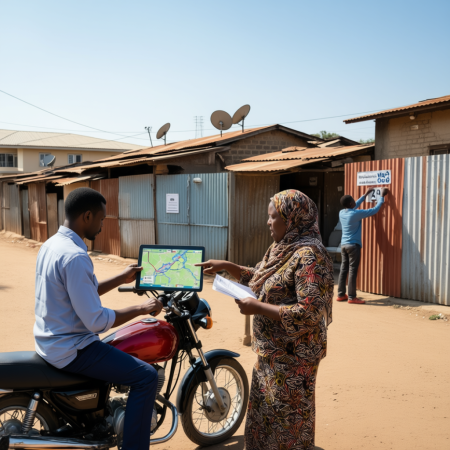
Yet, despite its theoretical appeal, the actual practice of Taxing Immovable Property Revenue Potential and Implementation remains fraught with administrative, political, and technical challenges. This summary explores why property taxation matters, its untapped fiscal capacity, the barriers to effective rollout, and how governments—especially in low- and middle-income countries—can unlock its full potential through smart design, technology, and political will. At a time when cities need funding for infrastructure, climate resilience, and social services, mastering Taxing Immovable Property Revenue Potential and Implementation is not optional—it’s essential.
The Case for Property Taxation
Property taxes are among the most economically efficient forms of taxation. They do not distort labor or investment decisions the way income or sales taxes can. Economists widely agree that land value taxation, in particular, encourages productive use of urban space—discouraging speculation and vacant lots while incentivizing development. Moreover, because property values often rise with public investments (e.g., new roads, transit, parks), property taxes create a virtuous cycle: public spending increases land values, which in turn generate more tax revenue to fund further improvements. This “value capture” mechanism makes Taxing Immovable Property Revenue Potential and Implementation a powerful tool for financing urban development. In advanced economies like the U.S. or Canada, property taxes fund up to 70% of local government budgets. In contrast, many African, Asian, and Latin American cities collect less than 0.5% of GDP from property taxes—despite owning vast real estate assets. This gap underscores the immense, unrealized Taxing Immovable Property Revenue Potential and Implementation across much of the world.Current Global Landscape
The disparity in property tax performance is stark. High-income countries typically collect 1–3% of GDP from immovable property taxes, while low-income countries average just 0.2–0.4%. In Sub-Saharan Africa, for example, cities like Nairobi or Lagos have millions of properties but tax rolls covering only a fraction—often limited to formal, high-value zones. Informal settlements, which house the majority of urban residents, are frequently excluded due to lack of titles, outdated maps, or political resistance. Even where laws exist, weak cadasters (land registries), manual assessment systems, and low enforcement capacity cripple collection. As a result, the promise of Taxing Immovable Property Revenue Potential and Implementation remains largely theoretical. Yet success stories exist: Rwanda modernized its cadaster using drones and mobile apps, doubling property tax revenue in five years. Georgia streamlined valuation and billing, achieving over 90% collection rates. These cases prove that with commitment, Taxing Immovable Property Revenue Potential and Implementation can be transformed from a paper exercise into a fiscal engine.Barriers to Effective Implementation
Several interrelated obstacles hinder progress. First, outdated or missing property records make it impossible to identify owners or assess values accurately. Many cities rely on colonial-era maps or incomplete registries. Second, valuation challenges persist without regular, transparent, and standardized assessments, tax bills appear arbitrary, fueling resistance. Third, political economy constraints loom large elites often resist property taxation, fearing higher bills or exposure of undeclared assets. Local officials may avoid enforcement to avoid voter backlash. Fourth, administrative fragmentation—with land registration, valuation, billing, and collection split across agencies—creates inefficiencies and accountability gaps. Finally, public mistrust undermines compliance: citizens are reluctant to pay if they see no link between taxes and service delivery. Overcoming these hurdles requires more than technical fixes; it demands institutional reform, communication, and trust-building—core to successful Taxing Immovable Property Revenue Potential and Implementation.Technology as an Enabler
Digital innovation is revolutionizing Taxing Immovable Property Revenue Potential and Implementation. Geographic Information Systems (GIS), satellite imagery, and drone mapping now allow cities to create accurate, low-cost cadasters—even in informal areas. Mobile apps enable field assessors to capture property data in real time. AI-powered valuation models can estimate market values using comparable sales, building characteristics, and neighborhood amenities. Online payment platforms (via mobile money, bank transfer, or USSD) simplify collection and reduce leakage. In Tanzania, the city of Dar es Salaam used aerial photography and machine learning to update its property register, identifying over 100,000 previously unlisted parcels. In India, the Bhulekh portal digitized land records across states, improving transparency. These tools dramatically lower the cost and complexity of Taxing Immovable Property Revenue Potential and Implementation, making it feasible even for resource-constrained municipalities.Designing Fair and Efficient Systems
Effective property taxation hinges on smart design. Key principles include:- Annual, market-based valuations (not historical or arbitrary values),
- Progressive rate structures (e.g., higher rates on luxury or vacant properties),
- Exemptions targeted to the genuinely poor (not blanket waivers for entire zones),
- Clear appeals process to ensure fairness,
- Ring-fencing revenues for visible local services (e.g., street lighting, waste collection) to build public trust.
Linking Revenue to Service Delivery
One of the most powerful drivers of compliance is demonstrating that taxes yield tangible benefits. Cities that explicitly link property tax revenues to neighborhood improvements—such as paved roads, clean water, or public parks—see higher payment rates. In Brazil, the IPTU (urban property tax) is often accompanied by participatory budgeting, where residents vote on how funds are spent. In South Africa, municipalities publish “tax-to-service” dashboards showing revenue allocation. This transparency transforms taxation from a coercive act into a social contract. For Taxing Immovable Property Revenue Potential and Implementation to succeed, citizens must see themselves as stakeholders—not just payers.The Role of Legal and Institutional Reform
Legal clarity is foundational. Many countries have outdated property tax laws that conflict with modern urban realities. Reforms should clarify:- Who owns what (through secure land tenure),
- How values are determined,
- Who is liable (owners vs. occupants),
- What enforcement mechanisms exist (fines, liens, auctions).