SUSTAINABLE URBAN HOUSING: DESIGN STANDARDS FOR NEW APARTMENTS
Introduction
Sustainable Urban Housing is not just an architectural trend — it’s a fundamental shift in how we think about shelter, community, and planetary responsibility. As more than half the global population now lives in cities — a figure expected to rise to nearly 70% by 2050 — the pressure on urban infrastructure, resources, and social systems intensifies. New apartment developments must rise to this challenge by embracing design standards that are ecologically intelligent, socially inclusive, and economically viable. Sustainable Urban Housing is the answer to outdated, resource-intensive building practices that no longer serve people or the planet.
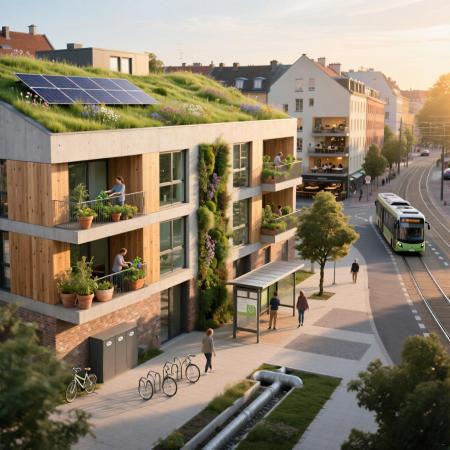
Why Sustainable Design Matters Now More Than Ever
Cities are engines of innovation and culture, but they’re also epicenters of consumption and emissions. Urban areas generate over 70% of global CO₂ emissions, and residential buildings account for nearly 40% of global energy use. Traditional apartment blocks — often sealed glass boxes or poorly insulated concrete towers — contribute heavily to this burden. Sustainable Urban Housing rethinks the basics: orientation, materials, water, energy, and human interaction. It’s not about adding green gadgets to old models. It’s about redesigning from the ground up — literally and philosophically — to create homes that give back more than they take.
Energy Efficiency: The Non-Negotiable Foundation
The first pillar of Sustainable Urban Housing is radical energy efficiency. New apartments must be designed to use as little energy as possible — ideally reaching net-zero or even net-positive status. This begins with passive design: orienting buildings to capture sunlight in winter and shade in summer, using thermal mass to stabilize indoor temperatures, and maximizing natural ventilation to reduce reliance on HVAC systems. Triple-glazed windows, super-insulated walls, and airtight construction are no longer luxuries — they’re baseline requirements. On-site renewables like rooftop solar or building-integrated photovoltaics then close the loop. The result? Lower bills, greater comfort, and resilience against blackouts and price spikes.
Water Wisdom: Every Drop Counts
Water scarcity is no longer a distant threat — it’s a daily reality in many urban centers. Sustainable Urban Housing treats water as the precious resource it is. Design standards must include low-flow fixtures, rainwater harvesting systems, and greywater recycling for toilet flushing and landscape irrigation. In advanced models, blackwater is treated on-site through compact, odorless bioreactors — turning waste into resource. Green roofs and permeable pavements manage stormwater naturally, reducing pressure on municipal systems and recharging groundwater. These aren’t futuristic fantasies — they’re proven, scalable technologies that pay for themselves in reduced utility costs and increased property resilience.
Materials That Matter: Building with Conscience
The construction industry is one of the planet’s largest polluters — responsible for 11% of global CO₂ emissions from materials alone (embodied carbon). Sustainable Urban Housing demands a materials revolution. That means specifying low-carbon alternatives: cross-laminated timber instead of concrete, recycled steel, reclaimed brick, bamboo, cork, and insulation made from agricultural waste or mycelium. Equally important is designing for disassembly — using bolts instead of glue, standardizing components, and labeling materials for future reuse. This circular approach keeps valuable resources out of landfills and slashes the carbon footprint of new developments. Transparency is key:
Environmental Product Declarations (EPDs) should be mandatory for all major building components.
Healthy Interiors: Where Wellbeing Is Built In
We spend 90% of our lives indoors. Yet many apartments are filled with toxic paints, synthetic carpets, and poor ventilation — silently undermining health. Sustainable Urban Housing prioritizes indoor environmental quality. That means zero-VOC finishes, advanced air filtration, humidity control, and generous access to daylight and nature views. Acoustic design is critical too — proper sound insulation between units reduces stress and conflict. Biophilic elements like indoor greenery, natural materials, and access to communal gardens don’t just look nice — they lower cortisol levels, improve focus, and foster emotional resilience. A healthy home isn’t a bonus — it’s a human right.
Site and Context: Building With, Not Against, Place
A truly sustainable apartment doesn’t exist in isolation. Its location and relationship to the surrounding environment are crucial. Sustainable Urban Housing favors infill development — building on vacant lots, parking lots, or underused parcels within existing urban fabric. This reduces sprawl, preserves greenfields, and leverages existing infrastructure. Site design should protect mature trees, restore native habitat, manage stormwater on-site, and provide habitat for pollinators and birds. Rooftop farms, vertical gardens, and bioswales aren’t decorative — they’re functional ecosystems that cool cities, clean air, and reconnect residents with nature.
Fostering Community: Beyond Four Walls
The most sustainable building is one that nurtures human connection. Too many apartments are designed as isolated pods — breeding loneliness and social fragmentation. Sustainable Urban Housing flips this by embedding shared spaces: courtyards for play and conversation, co-working lounges, tool libraries, guest rooms, and community kitchens. Secure bike storage, EV charging, and proximity to transit reduce car dependency. Mixed-income units, accessible design, and multigenerational layouts ensure diversity and inclusion. When people know their neighbors, communities become safer, more resilient, and more joyful. Design can — and must — cultivate belonging.
Affordability as a Core Principle
Sustainability without affordability is exclusionary — and therefore unsustainable. Sustainable Urban Housing must be accessible to all income levels. This requires policy tools like inclusionary zoning, community land trusts, and density bonuses. It also demands smart design: modular construction reduces waste and speeds timelines; energy-efficient systems lower monthly costs; durable materials reduce long-term maintenance. When utility bills drop by 50–80%, “affordable” takes on new meaning. Developers must shift from viewing affordability as a burden to seeing it as a value multiplier — socially, environmentally, and financially.
Climate Resilience: Preparing for What’s Next
The climate is changing — and cities are on the front lines. Sustainable Urban Housing must be designed for resilience. That means elevating structures in flood zones, using fire-resistant materials in wildfire-prone areas, incorporating passive cooling for heatwaves, and installing backup power for critical systems. Green infrastructure — like permeable surfaces and urban forests — buffers against extreme weather. Buildings should be adaptable: movable partitions, convertible units, and modular MEP (mechanical, electrical, plumbing) systems allow for future reconfiguration. Resilience isn’t optional — it’s insurance against collapse.
Technology: Smart, Not Complicated
Tech can amplify sustainability — if used wisely. Smart thermostats, real-time energy dashboards, and automated shading systems help optimize performance. But Sustainable Urban Housing avoids over-reliance on complex, proprietary systems that break down or become obsolete. Instead, it favors “appropriate technology” — solutions that are repairable, understandable, and maintainable by residents or local technicians. Open-source platforms, analog backups, and user training ensure tech serves people — not the other way around.
Certifications: Tools, Not Trophies
Standards like LEED, Passive House, BREEAM, and the Living Building Challenge provide valuable frameworks for Sustainable Urban Housing. But they shouldn’t be treated as finish lines. The goal isn’t a plaque on the wall — it’s a thriving, regenerative community. Certifications are most powerful when used as design guides, not marketing gimmicks. Local adaptation is essential: what works in Copenhagen may not suit Chennai. Climate, culture, materials, and labor markets must shape how standards are applied.
Policy: The Engine of Systemic Change
No amount of good design can overcome bad policy. Zoning codes that mandate parking minimums, ban mixed uses, or cap density actively sabotage sustainability. Governments must rewrite the rules: eliminate parking mandates, allow accessory dwelling units, incentivize transit-oriented development, and require Passive House-level energy performance for all new builds. Carbon taxes, green bonds, and expedited permitting for sustainable projects can accelerate adoption. Without policy alignment, Sustainable Urban Housing remains a boutique offering — not a movement.
The Business Case: Sustainability Pays
Contrary to myth, green buildings aren’t money pits. While upfront costs may be 5–15% higher, operational savings, higher occupancy rates, lower turnover, and increased asset value deliver strong ROI. Green-certified apartments rent faster and command premium rates. Insurance costs less for resilient buildings. As carbon regulations tighten and energy prices climb, inefficient buildings will become stranded assets. ESG (Environmental, Social, Governance) investing now directs trillions — developers who ignore this trend risk obsolescence. Sustainable Urban Housing isn’t charity — it’s smart business.
Culture Shift: From Compliance to Commitment
Technical solutions alone won’t save us. We need a cultural shift — among architects, developers, policymakers, and residents. Education is key: workshops, open houses, transparent “nutrition labels” for buildings, and resident co-design processes build literacy and ownership. When people help shape their homes, they care for them more. Narratives must shift too — from sustainability as sacrifice (“You can’t have AC!”) to abundance (“You get fresh air, lower bills, and a rooftop garden!”). Sustainable Urban Housing must feel desirable, not dutiful.
Global Models: Proof It’s Possible
Around the world, inspiring examples prove Sustainable Urban Housing works. Vauban, Germany — a car-free district where Passive House apartments cluster around tram lines and shared gardens. Bo01, Sweden — a neighborhood that produces more energy than it consumes. The Kendeda Building in Atlanta — a Living Building Challenge-certified marvel with composting toilets and a rooftop orchard. Cornell Tech’s House on Roosevelt Island — the largest Passive House tower in the world. These aren’t sci-fi — they’re replicable blueprints. They show that high-density, high-comfort, low-impact living is not just possible — it’s preferable.
Overcoming Barriers: NIMBYs, Costs, and Codes
Challenges remain. NIMBY opposition blocks dense, affordable, sustainable projects. Skilled labor shortages delay green construction. Fragmented supply chains raise material costs. But these are solvable. Public education campaigns can turn NIMBYs into YIMBYs (“Yes In My Backyard”). Vocational training can build a green workforce. Bulk purchasing cooperatives can stabilize material prices. The real barrier isn’t technical — it’s political will. We know what to do. We just need the courage to do it.
The Road Ahead: Making Sustainability Standard
The goal? Make Sustainable Urban Housing the default — not the exception. That means updating building codes to require Passive House energy levels, mandating green roofs in new developments, banning high-carbon materials like conventional concrete, and requiring 100% renewable energy for all new builds. It means treating housing as climate infrastructure — as vital as roads or sewers. And it means centering justice: ensuring that green upgrades don’t displace vulnerable communities but uplift them.
Conclusion: Building the World, We Need
Sustainable Urban Housing is more than a checklist of features. It’s a philosophy — one that sees homes as living systems, cities as ecosystems, and residents as stewards. It’s about designing not just for function, but for flourishing. Not just for today, but for seven generations ahead. The standards outlined here — for energy, water, materials, health, community, affordability, and resilience — are not aspirational. They are essential. And they are achievable.
Sustainable Urban Housing is the foundation of livable, equitable, climate-safe cities. It’s time to build it — everywhere, for everyone.
Also read: Affordable Housing Active Design Guidelines and Standards

Thank you for your blog. Keep writing.
Thanks.