
Bridging the gaps- Stakeholder-Based Strategies for Risk Reduction and Financing for the Urban Poor
Introduction
Stakeholder-based strategies for risk reduction and financing for the urban poor are not just policy options—they are urgent necessities in an era of rapid urbanization, climate volatility, and widening inequality. Today, over 1 billion people live in informal settlements across the Global South, often without secure tenure, basic services, or access to formal finance. These communities face layered risks: from flooding and fires to eviction, job loss, and health crises.
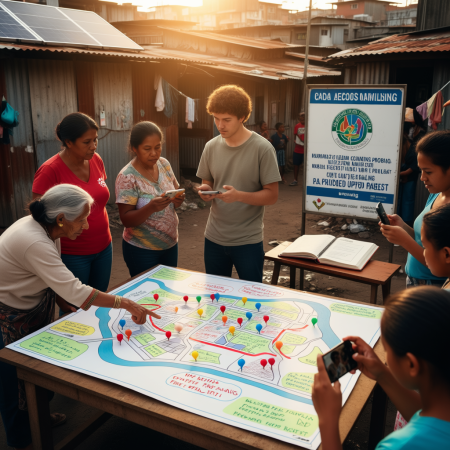
Traditional top-down approaches have repeatedly failed to address their complex realities. In response, a growing movement of cities, NGOs, community groups, and financial institutions is embracing stakeholder-based strategies for risk reduction and financing for the urban poor—centering the voices, knowledge, and agency of the poor themselves in designing resilient, inclusive solutions.
Understanding the Dual Challenge: Risk and Financial Exclusion
The urban poor live in a constant state of vulnerability. Their homes—often built on floodplains, steep slopes, or railway corridors—are physically exposed to environmental hazards. At the same time, they are socially and economically excluded from formal safety nets. Most lack bank accounts, insurance, or credit histories, forcing them to rely on informal lenders, savings groups, or sheer improvisation to cope with shocks. This dual burden—high exposure to risk and low access to financial tools—creates a vicious cycle: a single disaster can wipe out years of progress, pushing families deeper into poverty. Conventional disaster risk reduction (DRR) and financial inclusion programs often operate in silos, missing the opportunity to integrate protection with empowerment. Stakeholder-based strategies for risk reduction and financing for the urban poor break this pattern by linking physical resilience with financial resilience through collaborative, participatory design.Who Are the Key Stakeholders?
The power of stakeholder-based strategies for risk reduction and financing for the urban poor lies in their inclusivity. Effective initiatives engage a diverse ecosystem of actors:- Urban poor communities and grassroots organizations (e.g., slum dwellers’ federations like Slum Dwellers International)
- Local governments (municipalities, city planners, disaster management units)
- National policymakers (housing, finance, and climate ministries)
- Financial institutions (banks, microfinance providers, fintechs, insurers)
- NGOs and development agencies (technical support, funding, advocacy)
- Academia and researchers (data, monitoring, innovation)
Community-Led Data Collection: The Foundation of Trust
One of the most transformative elements of these strategies is community-driven data. Traditional risk assessments often overlook informal settlements due to lack of official records. But when residents themselves conduct door-to-door surveys—recording household size, income sources, housing materials, drainage issues, and evacuation routes—they generate hyperlocal, actionable intelligence. In India, the Mahila Housing SEWA Trust partners with women’s collectives to map heat stress and flooding in slums, then use that data to negotiate with city authorities for cool roofs or stormwater drains. In Thailand, the Baan Mankong program uses community-collected data to secure government-backed housing loans. This data not only informs infrastructure upgrades but also builds credibility with banks and insurers—proving that the urban poor are reliable, organized partners. Thus, stakeholder-based strategies for risk reduction and financing for the urban poor begin with knowledge sovereignty: the right of communities to define their own risks and solutions.Innovative Financing Mechanisms
Traditional finance rarely reaches the urban poor due to perceived risk, lack of collateral, and high transaction costs. Stakeholder-based strategies for risk reduction and financing for the urban poor respond with creative, layered financing models:- Community Savings Groups: Federations like the National Slum Dwellers Federation (NSDF) in India pool small daily savings into collective funds. These can be used for emergency loans, home improvements, or as collateral for larger bank loans.
- Municipal-Community Co-Financing: Cities match community savings with public funds. In the Philippines, the People’s Disaster Risk Reduction and Management Fund allows barangays (villages) to access local government budgets for community-designed resilience projects.
- Catastrophe Bonds and Microinsurance: Partnerships between insurers, NGOs, and governments offer parametric insurance—payouts triggered by objective events (e.g., rainfall levels)—to cover post-disaster recovery. In Kenya, microinsurance linked to mobile money helps vendors rebuild after fires.
- Blended Finance: Development finance institutions (e.g., IFC, AfDB) de-risk investments by guaranteeing loans to banks that serve informal settlements. This unlocks private capital for housing, sanitation, or green infrastructure.
Integrating Risk Reduction and Financial Services
The most successful stakeholder-based strategies for risk reduction and financing for the urban poor integrate physical and financial tools. For example:- Resilient housing microloans: In Bangladesh, Habitat for Humanity offers loans for cyclone-resistant homes, paired with disaster preparedness training.
- Savings-for-resilience accounts: In Peru, financial cooperatives help families save specifically for rainy-day repairs, with automatic top-ups after extreme weather alerts.
- Digital platforms: Apps like Ushahidi or OpenStreetMap let communities report hazards in real time, while fintechs link these alerts to instant micro-grants or insurance payouts.
The Role of Local Government
Municipalities are pivotal enablers—or barriers—to inclusion. Progressive cities recognize that informal settlements are not “problems to remove” but neighborhoods to upgrade. They adopt stakeholder-based strategies for risk reduction and financing for the urban poor by:- Legalizing land tenure (even provisionally) to enable investment
- Allocating city budgets for participatory slum upgrading
- Creating one-stop shops where residents can access permits, loans, and disaster support
- Training city staff in community engagement
Challenges and Barriers
Despite progress, significant obstacles remain:- Political short-termism: Mayors may prioritize visible projects over long-term resilience.
- Fragmented governance: Housing, finance, and disaster agencies rarely coordinate.
- Digital divides: Poor connectivity or low literacy can exclude the most vulnerable from digital finance.
- Gender gaps: Women often control household finances but face barriers to land ownership or formal ID.
Scaling What Works: From Pilot to Policy
Many promising initiatives remain small-scale. To scale, they need:- Legal recognition of community organizations as legitimate partners
- National policy frameworks that mandate participatory budgeting and inclusive DRR
- Blended capital pools that blend public, private, and community resources
- Learning networks (e.g., Cities Alliance, Urban Poor Funders Group) to share best practices
Measuring Impact Beyond Infrastructure
True success isn’t just new drainage or stronger roofs—it’s increased agency, reduced anxiety, and financial security. Leading programs now track:- % of households with emergency savings
- Reduction in post-disaster displacement
- Women’s participation in decision-making
- Access to formal credit or insurance
I like this website very much so much fantastic information.
Thanks.