
Architects As Social Innovators: Shaping Sustainable Communities For Equity And Justice
Introduction
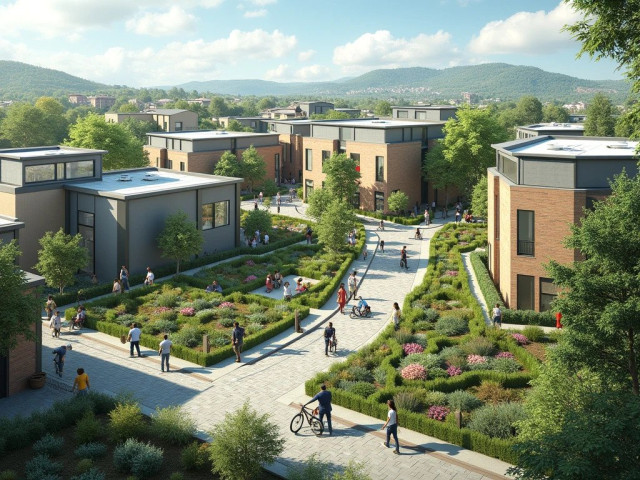
Sustainable Communities represent an integrated paradigm in architecture, planning, and social policy where environmental stewardship, social equity, and economic viability intersect. The concept transcends mere physical infrastructure, emphasizing community resilience, inclusivity, participatory decision-making, cultural identity, and environmental harmony. In the contemporary context of rapid urbanization, climate change, and widening socio-economic gaps, the design and development of Sustainable Communities have become central to shaping more equitable and just societies. This summary explores that role, showing how architects and planners are redefining their profession to actively create Sustainable Communities that promote social justice, community engagement, and environmental sustainability.
Shaping Sustainable Communities for Equity and Justice highlights this transformative role of architects, illustrating a broader evolution within architectural practice from designing buildings to shaping Sustainable Communities where people can thrive socially, environmentally, and economically.
Conceptual Foundations of Sustainable Communities
2.1 Defining Sustainable Communities
Sustainable Communities are environments designed to meet present needs while safeguarding the ability of future generations to meet their own. They integrate ecological sustainability with social equity and economic resilience. In this context:
-
Ecological sustainability means reducing environmental impacts through efficient use of resources, energy-saving design strategies, and green infrastructure.
-
Social sustainability emphasizes inclusivity, empowerment, cultural identity, and equitable access to services and opportunities.
-
Economic sustainability ensures long-term viability through diverse economic opportunities, affordable housing, and infrastructure that supports livelihoods.
This holistic approach aligns with global frameworks such as the United Nations Sustainable Development Goals (SDGs), especially SDG 11, which calls for inclusive, safe, resilient, and Sustainable Communities and cities.
2.2 Sustainability Beyond Buildings
Traditionally, architectural practices focused on aesthetics and structural design. However, sustainable design discourse has expanded to include the broader human and environmental impact of buildings and the communities they shape. Sustainable Communities incorporate green design principles (like passive cooling or renewable energy), but also prioritize social engagement, public spaces, accessibility, and equitable access to infrastructure.
This shift reflects the recognition that buildings alone do not create sustainable places; community dynamics, ecological processes, and socio‐economic systems are equally crucial. Thus, architects and planners now operate at the intersection of design, environmental science, sociology, and policy to support community health and sustainability.
Architects as Change Agents for Sustainable Communities
3.1 Evolving Professional Roles
The ACASH PDF underscores a changing architectural profession where architects act as social innovators professionals who leverage design, technology, and interdisciplinary collaboration to address systemic challenges and build Sustainable Communities.
Architects’ traditional roles are expanding to include:
-
Participatory Design: Engaging directly with residents to co-create environments that reflect community needs, values, and aspirations.
-
Interdisciplinary Collaboration: Working with urban planners, engineers, environmental scientists, policymakers, and civil society actors to deliver integrative solutions.
-
Policy Advocacy: Influencing urban policy to support equitable resource allocation, inclusive zoning laws, and sustainable infrastructure.
These shifts demonstrate how architects are increasingly key players in shaping not just buildings, but the social and spatial fabric of Sustainable Communities.
3.2 Social Innovation Theory and Sustainable Communities
Social innovation theory the idea that new ideas, practices, and models can better address societal needs is central to understanding architects’ work in Sustainable Communities. It emphasizes:
-
Creating solutions that enhance community well-being.
-
Developing design practices that foster inclusion and shared ownership.
-
Bridging gaps between technical solutions and human experiences.
Architects act as social innovators by generating participatory frameworks that empower communities to shape their own environments.
Principles of Designing Sustainable Communities
4.1 Inclusive and Participatory Engagement
A core principle of Sustainable Communities is active involvement of residents in planning and design processes. Participatory engagement improves project relevance, ensures cultural sensitivity, and fosters community ownership. For example, the Quinta Monroy Housing Project in Chile engaged residents in design decisions, resulting in homes and environments that supported both individual needs and communal interactions.
Participation fosters trust and strengthens the social fabric critical for resilient communities. It also means acknowledging local knowledge residents’ lived experiences provide vital insights that enhance the sustainability of community projects.
4.2 Interdisciplinary Collaboration
Complex challenges associated with sustainability such as climate change, equitable access to resources, and urban density, require input from multiple disciplines. Architects working in Sustainable Communities must collaborate with:
-
Urban planners to integrate land use and mobility planning.
-
Environmental scientists to apply ecological design strategies.
-
Social scientists to understand community dynamics.
-
Policymakers to enable supportive governance frameworks.
This collaboration ensures holistic outcomes that balance environmental, social, and economic considerations.
Adaptive and Resilient Design
Sustainable Communities must accommodate change — from demographic shifts to environmental stresses. Adaptive design allows buildings and public spaces to evolve over time. The Quinta Monroy incremental housing model exemplifies adaptability, whereby basic homes were designed for future expansion as families’ needs and resources evolved.
Resilience also involves building systems that can withstand environmental pressures from flooding to extreme heat by using contextual strategies like passive cooling, green infrastructure, and local materials.
4.4 Social Justice and Equity
Equity is a defining characteristic of Sustainable Communities. Architectural efforts emphasize:
-
Affordable housing that does not compromise quality.
-
Public spaces and amenities accessible to all.
-
Policies that reduce exclusion and foster equal opportunity.
Designing for equity requires recognizing historic patterns of marginalization and applying restorative strategies that support community empowerment and economic inclusion.
Case Studies: Sustainable Communities in Practice
5.1 Quinta Monroy Housing Project: Participatory Housing
One of the most influential examples presented in the ACASH research is the Quinta Monroy Housing Project in Iquique, Chile. Designed by ELEMENTAL, this project reframed housing not as a finished product but as a process that communities shape over time. Residents received basic structures with space to expand, enabling economic flexibility and personalization.
This approach fostered community solidarity and physical environments that reflect resident participation a core value of Sustainable Communities. The project demonstrates that sustainable design must adapt to realities of affordability and resident agency.
5.2 Community-Led Design in Global Contexts
Globally, many designers and architects adopt social engagement as a central tenet of building Sustainable Communities:
-
Collocate (United States) uses community engagement and advocacy to advance design justice, transforming public spaces to reflect local narratives and economic opportunities.
-
Hsieh Ying-chun’s work in Taiwan and Southeast Asia reconstructs housing after disaster while emphasizing local culture, employment, and ecological sustainability — all pillars of Sustainable Communities.
-
Marjetica Potrč’s participatory infrastructure projects (like water and sanitation systems co-designed with residents) illustrate how community partnerships support environmental and social sustainability.
5.3 Community Examples: Conservation and Cohesion
The East Lake Commons Conservation Community in Atlanta, USA, exemplifies a Sustainable Community that blends inclusive planning with environmental responsibility. Awarded global recognition, it illustrates how residential communities can integrate green spaces, social cohesion, and long-term sustainability.
Education and Policy for Sustainable Communities
6.1 Architectural Education and Sustainable Communities
To shape future Sustainable Communities, architectural education must evolve. Curricula now increasingly include:
-
Social justice and participatory design.
-
Environmental psychology and community dynamics.
-
Systems thinking and sustainability assessment tools.
This prepares architects to think holistically and to engage diverse stakeholders effectively.
6.2 Policy Frameworks for Supporting Sustainable Communities
Policies can enable or hinder the development of Sustainable Communities. Effective governance frameworks include:
-
Incentives for inclusive housing.
-
Regulations that encourage green infrastructure.
-
Mechanisms for community participation in planning.
Architects increasingly advocate for policies that align built environments with community well-being, equity, and sustainability objectives.
Challenges to Creating Sustainable Communities
Despite progress, obstacles remain:
7.1 Economic Limitations
Building Sustainable Communities often requires upfront investment in participatory processes, green technologies, and adaptive infrastructure. In many regions, economic constraints limit the extent of sustainable design implementation.
7.2 Institutional Barriers
Fragmented governance, rigid regulations, and risk-averse financing structures can slow progress. To overcome these, architecture and planning professionals must work collectively with policymakers and community actors.
7.3 Measuring Social Impact
Unlike environmental metrics (e.g., energy use), social well-being and community cohesion are harder to quantify. Developing standardized tools to assess social outcomes is an ongoing challenge.
Future Directions for Sustainable Communities
8.1 Embracing Digital Technology
Advanced design tools (including AI and simulation) can help forecast community needs and improve participatory processes, making Sustainable Communities more responsive and inclusive.
8.2 Scaling Community Engagement
Expanding participatory frameworks beyond pilot projects requires institutional support, incentives, and capacity-building across sectors.
8.3 Integrating Resilience and Justice
A future model of Sustainable Communities integrates resilience to environmental shocks with social justice ensuring communities are equitable, safe, and ecologically responsive.
Conclusion: Sustainable Communities for an Equitable Future
Sustainable Communities are not simply a design trend, they are a necessity for equitable and resilient urban futures. Architects and allied professionals are redefining their roles, acting as social innovators who bridge technical expertise with community knowledge and justice-oriented practices. Through inclusive participation, interdisciplinary collaboration, adaptive design, and policy engagement, they shape environments that sustain both people and the planet.
From participatory housing models like the Quinta Monroy Project to community-engaged infrastructure, the global practice of building Sustainable Communities demonstrates that sustainability must be deeply rooted in human relationships, cultural context, and collective agency. Advancing this approach will require stronger educational frameworks, supportive policy environments, and continued innovation.
By centring equity, ecological responsibility, and human dignity, Sustainable Communities offer a roadmap for cities and regions seeking to overcome systemic inequities and create spaces where all residents can flourish.
Also Read: Housing Opportunities Made Easy