
Risk Management Concepts in Developing Low-Cost Housing Projects
Introduction
Risk Management Concepts in Developing Low-Cost Housing Projects are essential to ensuring that affordable housing initiatives succeed without compromising quality, budget, or timelines. As governments and private developers worldwide strive to address the global housing shortage—particularly for low- and middle-income populations—the complexity of delivering cost-effective, sustainable, and scalable housing solutions continues to grow. These projects operate under significant constraints: limited funding, tight regulatory frameworks, volatile construction markets, and high social expectations.
Without a proactive and systematic approach to uncertainty, even well-intentioned housing programs can falter. That’s where Risk Management Concepts in Developing Low-Cost Housing Projects come into play—not as an optional add-on, but as a foundational strategy woven into every phase of planning, design, construction, and occupancy.
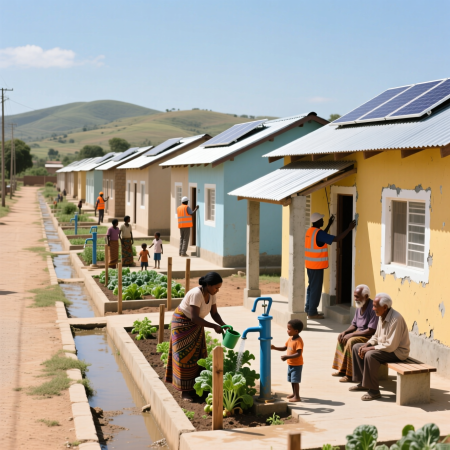
Defining the Landscape of Risk in Affordable Housing
Low-cost housing differs fundamentally from conventional real estate development. Profit margins are minimal or nonexistent, public scrutiny is high, and success is measured not just in financial terms but in social impact. Consequently, risks take on heightened significance. A minor delay in approvals, a spike in raw material costs, or a misstep in community engagement can derail an entire project. Risk Management Concepts in Developing Low-Cost Housing Projects provide a structured methodology to anticipate, evaluate, and respond to these uncertainties before they escalate into crises. These concepts encompass a range of practices—from identifying potential threats early to implementing robust monitoring systems. They are not about eliminating risk entirely (an impossible goal) but about managing it intelligently to protect project objectives. In the context of affordable housing, this means safeguarding affordability, ensuring structural safety, maintaining schedule adherence, and upholding community trust.Core Components of Risk Management Concepts in Developing Low-Cost Housing Projects
- Risk Identification
The first step in applying Risk Management Concepts in Developing Low-Cost Housing Projects is comprehensive risk identification. This involves engaging all stakeholders—government agencies, financiers, architects, contractors, local communities, and future residents—to catalog potential threats. Common risks include:
- Land tenure and acquisition disputes
- Regulatory and permitting delays
- Inflation or volatility in construction material prices
- Shortages of skilled labor
- Environmental or geotechnical challenges
- Political interference or policy shifts
- Community resistance or lack of buy-in
- Risk Assessment and Prioritization Not all risks carry equal weight. Risk Management Concepts in Developing Low-Cost Housing Projects emphasize evaluating each identified risk based on its likelihood and potential impact. Tools such as risk matrices, Monte Carlo simulations, or SWOT analyses help teams prioritize which risks demand immediate attention. For example, a sudden 30% increase in steel prices may be more urgent to address than a low-probability natural disaster in a stable region. This prioritization allows constrained resources to be allocated efficiently—a crucial advantage in budget-sensitive low-cost housing.
- Risk Mitigation Planning
Once risks are assessed, mitigation strategies must be developed. Risk Management Concepts in Developing Low-Cost Housing Projects advocate for proactive, not reactive, responses. Mitigation might include:
- Pre-negotiating fixed-price contracts with suppliers to hedge against inflation
- Using standardized, modular designs to reduce construction time and errors
- Partnering with local NGOs to foster community acceptance
- Securing multiple funding sources to avoid dependency on a single grant or loan
- Conducting thorough geotechnical surveys before breaking ground
- Risk Transfer and Financial Instruments In some cases, risks can be transferred to third parties. Insurance policies, performance bonds, or public-private partnerships (PPPs) are common tools within Risk Management Concepts in Developing Low-Cost Housing Projects. For instance, a contractor’s performance bond guarantees completion even if the original builder defaults. Similarly, weather-indexed insurance can protect against climate-related delays. While transferring risk often incurs costs, it can be a wise investment when the alternative is project failure.
- Monitoring and Continuous Review Risk is dynamic. A risk that seems minor during planning may become critical during construction. Therefore, Risk Management Concepts in Developing Low-Cost Housing Projects stress the importance of ongoing monitoring. Regular risk review meetings, key performance indicators (KPIs), and digital dashboards enable real-time tracking of emerging threats. This adaptive approach ensures that the risk management plan evolves alongside the project.
Common Risk Categories in Low-Cost Housing Development
Understanding the types of risks involved further clarifies why Risk Management Concepts in Developing Low-Cost Housing Projects are indispensable:- Financial Risks: Budget overruns due to inflation, currency fluctuations, or unexpected costs (e.g., utility connections). Low-cost projects often lack contingency buffers, making them especially vulnerable.
- Regulatory and Legal Risks: Zoning changes, environmental compliance issues, or slow municipal approvals can stall progress for months.
- Technical and Design Risks: Poor soil conditions, inadequate infrastructure planning, or substandard materials can compromise safety and durability.
- Social and Community Risks: Lack of community consultation may lead to protests, vandalism, or rejection of the housing unit's post-completion.
- Operational Risks: Contractor insolvency, labor strikes, or supply chain disruptions can halt construction.
- Environmental and Climate Risks: Flooding, landslides, or extreme heat may affect site suitability or long-term habitability—especially in informal settlement areas.