A REVIEW OF SOME OF AFRICA’S HOUSING FINANCE MARKET
Introduction
Africa's housing finance market is a complex and evolving landscape shaped by rapid urbanization, demographic growth, and persistent housing deficits across the continent. With over 1.3 billion people and a population projected to double by 2050, Africa faces one of the most significant housing challenges globally. The demand for decent, secure, and affordable housing far exceeds supply, and the financial systems designed to support homeownership and rental development remain underdeveloped in many countries.
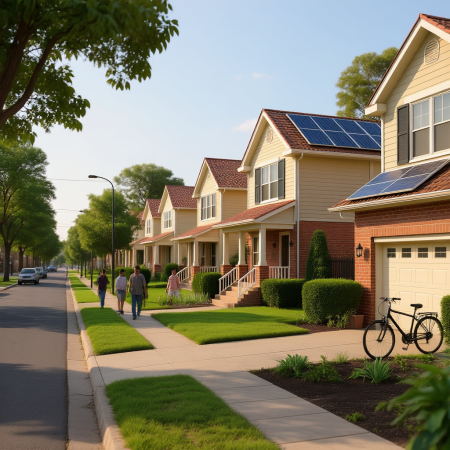
Africa's housing finance market, while showing signs of growth and innovation, still struggles with structural inefficiencies, limited access to credit, and inadequate regulatory frameworks. Addressing these challenges is essential not only for improving living conditions but also for unlocking economic growth, promoting financial inclusion, and building resilient cities.
Roots of the Housing Deficit
Africa's housing finance market operates within the context of a massive and growing housing shortfall. It is estimated that the continent faces a deficit of over 50 million housing units, with the gap widening each year due to population growth and rural-to-urban migration. Cities such as Lagos, Nairobi, Kinshasa, and Johannesburg are expanding rapidly, yet formal housing development cannot keep pace. As a result, more than 60% of urban dwellers live in informal settlements or slums, often without secure tenure, basic services, or access to formal financing. Africa's housing finance market is therefore not only about enabling homeownership but also about addressing systemic urban planning and infrastructure issues.
Limited Access to Mortgage Finance
One of the most significant constraints within Africa's housing finance market is the extremely low penetration of mortgage lending. On average, mortgage debt as a percentage of GDP in sub-Saharan Africa is less than 5%, compared to over 50% in many developed economies. This reflects a combination of factors: low levels of formal income, high interest rates, short loan tenures, and stringent lending requirements.
Most banks require down payments of 20–30%, which are unaffordable for the majority of the population. Additionally, credit bureaus are underdeveloped, making it difficult for lenders to assess risk, and many potential borrowers lack the formal documentation needed to qualify for loans. Africa's housing finance market thus remains inaccessible to the vast majority of the population, particularly low- and middle-income households.
Role of Informal Finance and Savings
In the absence of robust formal housing finance systems, many Africans rely on informal mechanisms to fund home construction and improvements. Rotating savings and credit associations (ROSCAs), known locally by various names such as
susu in West Africa or
stokvels in South Africa, play a crucial role. These community-based systems allow individuals to pool resources and take turns accessing lump sums, which are often used for building or expanding homes. While informal, these methods are trusted, flexible, and culturally embedded. Africa's housing finance market must recognize and integrate such systems rather than dismiss them, as they represent a vital form of financial resilience and grassroots capital accumulation.
Public Sector Involvement and Policy Frameworks
Governments across Africa have begun to acknowledge the importance of strengthening Africa's housing finance market. Several countries, including Nigeria, Kenya, Rwanda, and South Africa, have launched national housing programs aimed at increasing supply and improving access to finance. These initiatives often involve public-private partnerships, subsidies, and the establishment of dedicated housing funds or development banks. For example, Nigeria’s Federal Mortgage Bank and Kenya’s Affordable Housing Program under the Big Four Agenda seek to expand mortgage availability and reduce construction costs. However, implementation challenges—such as corruption, bureaucratic delays, and funding shortfalls—often limit their impact. Africa's housing finance market requires not just policy intent but also effective execution and institutional capacity.
The Rise of Mortgage-Backed Securities and Secondary Markets
A key feature of mature housing finance systems is the existence of secondary mortgage markets, where loans are bundled and sold as securities to investors. This helps free up capital for lenders and reduces reliance on volatile bank deposits. In Africa, such markets are largely absent or in their infancy. South Africa is a notable exception, with a relatively developed
mortgage-backed securities market and a long history of home financing. Efforts are underway in countries like Kenya and Ghana to establish similar frameworks, supported by institutions like the World Bank and African Development Bank. Developing a viable secondary market is critical to scaling Africa's housing finance market and attracting institutional investment such as pension funds and insurance companies.
Affordable Housing and Innovative Construction
A major barrier to expanding Africa's housing finance market is the high cost of construction. Traditional building methods are slow and expensive, relying on imported materials and skilled labor. To address this, several countries are experimenting with innovative, low-cost construction technologies such as prefabricated homes, compressed earth blocks, and 3D printing. These methods can reduce build time by up to 70% and cut costs significantly. When paired with accessible financing, they offer a scalable solution to the housing crisis. Africa's housing finance market must support these innovations through targeted lending products, risk-sharing mechanisms, and regulatory support for alternative building standards.
Role of Microfinance and Non-Bank Lenders
While traditional banks dominate the formal housing finance space, non-bank financial institutions and microfinance organizations are playing an increasingly important role in Africa's housing finance market. Institutions like Habitat for Humanity’s microfinance programs and local credit unions offer small home improvement loans, land purchase financing, and incremental building support. These products are tailored to low-income clients who may not qualify for mortgages but still seek to improve their living conditions. By focusing on flexibility and community engagement, these lenders fill a critical gap. Africa's housing finance market benefits from this pluralistic approach, where multiple actors serve different segments of the population.
Urbanization and the Pressure on Housing Systems
Africa is urbanizing faster than any other region in the world. By 2050, two-thirds of Africans are expected to live in cities. This rapid urban growth places immense pressure on housing systems and infrastructure. Without adequate planning and investment, urban expansion leads to sprawling informal settlements with poor sanitation, insecure tenure, and limited access to services. Africa's housing finance market must evolve in tandem with urban development strategies. This includes integrating land titling reforms, improving access to serviced plots, and supporting transit-oriented development. Financing must not only support home ownership but also enable the creation of complete, sustainable neighborhoods.
Land Tenure and Property Rights
A foundational challenge for Africa's housing finance market is the issue of land tenure. In many countries, a large proportion of urban land is held under customary or informal ownership, making it difficult to use as collateral for loans. Without clear, legally recognized property rights, banks are reluctant to lend, and individuals cannot leverage their most valuable asset. Land registration systems are often fragmented, slow, and corrupt. Reforming land administration is therefore a prerequisite for expanding Africa's housing finance market. Countries like Rwanda and Ethiopia have made significant progress in digitizing land records and issuing title deeds, which has improved access to credit and encouraged investment in housing.
Private Sector Investment and Real Estate Development
The private sector is a key driver of housing supply and innovation within Africa's housing finance market. Real estate developers, construction firms, and property managers are increasingly active, particularly in major cities. However, they often focus on high-end or middle-income housing, where returns are more predictable. Affordable housing remains a high-risk, low-margin segment that deters many investors.
To attract private capital, governments and development partners are exploring blended finance models—combining public grants or guarantees with private investment—to reduce risk and improve project viability. Africa's housing finance market needs more such de-risking instruments to unlock private sector participation at scale.
Technology and Fintech Disruption
Digital innovation is beginning to transform Africa's housing finance market. Mobile money platforms, digital credit scoring, and online property marketplaces are making it easier for people to save, borrow, and buy homes. Fintech companies are leveraging alternative data—such as mobile phone usage and utility payments—to assess creditworthiness and offer micro-loans for home improvements. Platforms like
Laka in Kenya and
RentSmallSmall in Nigeria use technology to streamline rental payments and property management. These innovations increase transparency, reduce transaction costs, and expand financial inclusion. Africa's housing finance market stands to gain significantly from continued investment in digital infrastructure and regulatory support for fintech.
Regional Variations and Success Stories
Africa's housing finance market is not monolithic; it varies widely across regions and countries. North Africa, particularly Egypt and Morocco, has more developed mortgage systems and higher homeownership rates. In contrast, much of West and Central Africa lags behind due to weaker financial systems and political instability. East Africa shows promise, with Kenya and Rwanda implementing progressive reforms. South Africa remains the most advanced, with a well-established banking sector and a functioning mortgage market, though it still faces challenges related to inequality and spatial segregation. Africa's housing finance market thus requires tailored solutions that reflect local economic, legal, and cultural contexts.
Challenges of Inflation and Currency Instability
Macroeconomic instability poses a major challenge to Africa's housing finance market. High inflation, currency depreciation, and volatile interest rates make long-term lending risky. Most mortgages in Africa are offered in local currencies, but when those currencies lose value, banks face increased default risks. Some countries have attempted to introduce indexed loans or dollar-denominated mortgages, but these can exclude the poor and increase vulnerability to exchange rate shocks. Developing stable, long-term funding sources—such as housing bonds or pension fund investments—is essential for insulating Africa's housing finance market from macroeconomic volatility.
Youth and First-Time Homebuyers
Africa has the youngest population in the world, with over 60% under the age of 25. This demographic presents both an opportunity and a challenge for Africa's housing finance market. Young people are entering the housing market later than previous generations due to unemployment, low wages, and high entry costs. Yet, they represent a growing segment with long-term potential. Tailored financial products—such as rent-to-own schemes, shared equity models, and youth savings incentives—can help bridge the gap. Africa's housing finance market must adapt to serve this emerging generation, which will shape urban landscapes for decades to come.
Gender and Housing Finance
Gender inequality also affects access to housing finance across Africa. Women are less likely than men to own property, access credit, or have formal income records—especially in rural areas. Cultural norms, inheritance laws, and lack of legal protection often prevent women from securing land or obtaining loans in their own names. However, empowering women in housing finance has broad social and economic benefits. Studies show that when women control housing assets, they invest more in children’s education and health. Africa's housing finance market must adopt gender-responsive policies, such as joint titling, women-targeted loan programs, and financial literacy initiatives.
The Role of International Development Partners
International organizations play a critical role in shaping Africa's housing finance market. The World Bank, UN-Habitat, African Development Bank, and various bilateral donors provide funding, technical assistance, and policy guidance. They support initiatives ranging from slum upgrading to mortgage market development and land reform. Their involvement helps build institutional capacity and attract private investment. However, long-term sustainability depends on domestic ownership and local innovation. Africa's housing finance market must balance external support with homegrown solutions that reflect African realities.
Environmental Sustainability and Climate Resilience
As Africa's housing finance market grows, it must also address environmental challenges. Urban construction contributes to deforestation, pollution, and carbon emissions. At the same time, many African cities are vulnerable to climate change impacts such as flooding, droughts, and extreme heat. Sustainable building practices—such as using local materials, rainwater harvesting, and energy-efficient design—should be integrated into housing finance products. Green mortgages or incentives for eco-friendly construction can encourage responsible development. Africa's housing finance market has a unique opportunity to leapfrog outdated models and build climate-resilient cities from the ground up.
The Way Forward
Africa's housing finance market stands at a crossroads. The challenges are immense, but so are the opportunities. Closing the housing gap could unlock trillions of dollars in economic activity, create millions of jobs, and improve quality of life for hundreds of millions. Success will require coordinated action across sectors: governments must reform land and financial systems, banks must innovate and expand access, developers must prioritize affordability, and communities must be empowered to participate in the process. Africa's housing finance market must be inclusive, sustainable, and forward-looking.
Conclusion
Africa's housing finance market is more than just a financial system—it is a cornerstone of social and economic development. It determines who can own a home, where people live, and how cities grow. While progress has been made in some countries, much work remains to ensure that housing finance serves all Africans, not just the elite. By expanding access, embracing innovation, and aligning with broader development goals, Africa's housing finance market can become a powerful engine of transformation. The time to act is now.
Also read: African Housing Investment Landscape
