
QUEENSLAND HOUSING STRATEGY 2017–2027
Introduction
Queensland Housing Strategy is a decade-long blueprint launched in 2017 to guide the state’s approach to housing affordability, accessibility, and sustainability through 2027. Designed to address growing challenges in urban and regional housing markets, this comprehensive plan reflects the Queensland Government’s commitment to ensuring that all residents—regardless of income, background, or location—can access safe, secure, and suitable housing. At its core, the Queensland Housing Strategy recognizes that housing is not just a commodity, but a fundamental human need that underpins health, employment, education, and social inclusion.
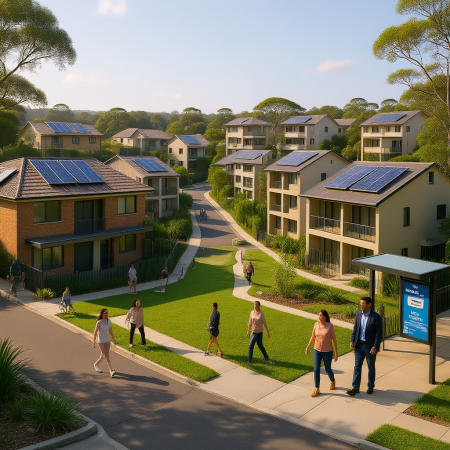
A Vision for Inclusive Housing: Goals of the Queensland Housing Strategy
The Queensland Housing Strategy is built on a clear vision: “Everyone in Queensland has a safe, affordable place to call home.” To achieve this, the strategy outlines five overarching goals:- Improve housing affordability
- Increase supply of social and affordable housing
- Support vulnerable populations
- Promote sustainable and resilient communities
- Strengthen cross-sector collaboration
Affordability and Market Pressures in the Queensland Housing Strategy
Housing affordability remains one of the most pressing issues in Queensland, particularly in major urban centers like Brisbane, the Gold Coast, and Sunshine Coast. Over the past decade, median house prices have risen faster than incomes, pushing ownership out of reach for many first-time buyers and young families. Renters, especially low-income households, are also feeling the strain, with many spending more than 30% of their income on rent. The Queensland Housing Strategy directly tackles these challenges by advocating for a mix of policy tools, including:- Incentives for developers to include affordable units in new projects
- Expansion of shared equity and rent-to-own schemes
- Targeted stamp duty concessions for first-home buyers
- Support for community housing providers to increase supply
Social and Affordable Housing: A Pillar of the Queensland Housing Strategy
A major component of the Queensland Housing Strategy is the expansion and improvement of social and affordable housing. Social housing—owned or managed by the government or non-profit providers—serves low-income individuals, seniors, people with disabilities, and those experiencing or at risk of homelessness. At the time of the strategy’s launch, demand for social housing far exceeded supply, with over 40,000 households on the waitlist. The Queensland Housing Strategy committed to reducing this backlog through new construction, refurbishment of existing stock, and innovative financing models. One key initiative under the Queensland Housing Strategy is the Community Housing Infrastructure Program, which funds community housing providers to build new dwellings and upgrade infrastructure. Another is the Affordable Housing Partnership Program, which brings together government, private investors, and non-profits to co-fund affordable developments. These partnerships are critical because they leverage private capital while ensuring public accountability. The Queensland Housing Strategy recognizes that government alone cannot meet the growing demand—collaboration is essential. Moreover, the strategy promotes mixed-tenure developments, where social, affordable, and market-rate homes are built together. This helps reduce stigma, fosters inclusive communities, and ensures that affordable housing is integrated into well-serviced neighborhoods with access to schools, jobs, and public transport.Supporting Vulnerable Populations Through the Queensland Housing Strategy
The Queensland Housing Strategy places a strong emphasis on protecting and supporting vulnerable groups, including:- People experiencing homelessness
- Domestic and family violence survivors
- Older adults
- Youth at risk of homelessness
- Aboriginal and Torres Strait Islander peoples
Urban Planning and Sustainable Communities in the Queensland Housing Strategy
The Queensland Housing Strategy goes beyond bricks and mortar—it also shapes how communities are designed and sustained. The plan promotes compact, connected, and resilient urban development that reduces sprawl, lowers infrastructure costs, and supports public transport use. Key planning principles include:- Encouraging higher-density housing near transport hubs
- Protecting green spaces and biodiversity
- Supporting infill development over greenfield expansion
- Promoting walkable neighborhoods with access to services
Innovation and Technology in the Queensland Housing Strategy
To meet ambitious housing targets, the Queensland Housing Strategy embraces innovation in construction and service delivery. Traditional building methods are often slow and costly, so the government is exploring alternative approaches such as:- Modular and prefabricated housing
- 3D-printed homes
- Smart home technologies
- Digital platforms for tenant services
Partnerships and Collaboration in the Queensland Housing Strategy
No single agency can solve the housing crisis alone. The Queensland Housing Strategy emphasizes the importance of collaboration between government, local councils, non-profits, private developers, and financial institutions. One of the most successful models is the Queensland Housing Trust, which pools public land and funding to accelerate affordable housing development. The trust works with community housing providers to deliver mixed-income projects on government-owned sites. Public-private partnerships (PPPs) are also encouraged under the Queensland Housing Strategy. For example, developers may be granted planning concessions in exchange for including affordable units or contributing to a housing fund. Local governments play a vital role too. The Queensland Housing Strategy provides grants and technical support to councils for local housing planning, inclusionary zoning, and homelessness prevention programs. These partnerships ensure that the Queensland Housing Strategy is not just a top-down directive but a shared responsibility across sectors and communities.Monitoring and Evaluation in the Queensland Housing Strategy
To ensure accountability and continuous improvement, the Queensland Housing Strategy includes a robust monitoring and evaluation framework. The government publishes annual progress reports tracking key indicators such as:- Number of new social and affordable homes built
- Reduction in homelessness
- Wait times for social housing
- Levels of rental stress
- Regional housing supply
Challenges and Criticisms of the Queensland Housing Strategy
While the Queensland Housing Strategy is widely praised for its ambition and comprehensiveness, it has faced challenges in implementation. Some of the key criticisms include:- Pace of delivery: The rate of new social housing construction has not kept up with demand.
- Funding constraints: Budget allocations have been inconsistent, affecting long-term planning.
- Regional disparities: Remote and rural areas often receive less attention than urban centers.
- Affordability thresholds: Some “affordable” units are still out of reach for the lowest-income households.
The Future of the Queensland Housing Strategy
As the strategy approaches its 2027 deadline, the government is already considering its successor. Early discussions suggest that future priorities may include:- Scaling up social housing investment
- Expanding support for renters
- Strengthening climate resilience
- Integrating housing with health and transport policy