
PAKISTAN: URBAN LAND REFORMS
Introduction
Urban Land Reforms in Pakistan have emerged as a critical yet long-neglected component of the country’s broader development agenda. As Pakistan undergoes rapid urbanization—with over 38% of its population now residing in cities and the urban share projected to surpass 50% by 2050—the pressure on land, housing, and infrastructure has reached unprecedented levels. Yet, the urban land governance system remains mired in colonial-era legal frameworks, opaque land records, speculative practices, and deep-rooted inequities.
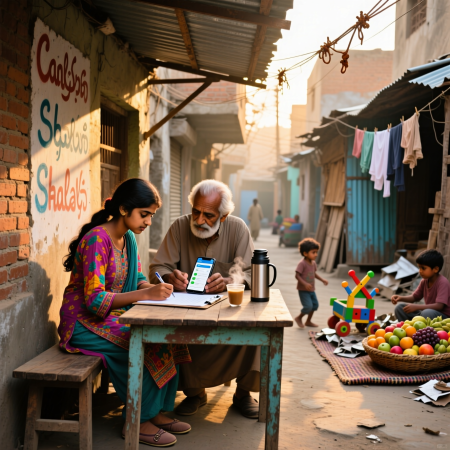
Urban Land Reforms offer a transformative opportunity to address these systemic challenges by reimagining how urban land is owned, managed, distributed, and utilized. These reforms are not merely technical adjustments, but a socio-political recalibration aimed at fostering inclusive growth, reducing spatial inequality, and promoting sustainable urban development.
Historical Context: From Colonial Legacies to Post-Independence Stagnation
The roots of Pakistan’s contemporary urban land crisis lie in its colonial past. Under British rule, land administration systems—such as the Punjab Land Revenue Act of 1967 (which itself inherited structures from the 1887 Act)—were designed to facilitate revenue extraction rather than equitable access or efficient urban planning. Post-independence, successive governments prioritized agrarian land reforms, largely ignoring the urban domain. While the 1972 Land Reforms under Zulfikar Ali Bhutto capped rural landholdings, urban land remained untouched. The 1976 Urban Immovable Property Tax and attempts to regulate speculative landholding were either poorly enforced or quickly diluted due to elite resistance. Consequently, urban land markets became dominated by powerful real estate developers, feudal-turned-urban-elites, and informal land mafias, all of whom benefited from regulatory ambiguity and weak state oversight.Why Urban Land Reforms Matter Today
Urban Land Reforms in Pakistan are no longer a policy option—they are an urgent necessity. Major cities like Karachi, Lahore, and Rawalpindi are grappling with severe housing shortages, with an estimated deficit of over 10 million urban housing units nationwide. Millions live in informal settlements (katchi abadis), often lacking secure tenure, basic services, and legal recognition. Meanwhile, vast tracts of state-owned land lie underutilized or are illegally occupied, while private landowners hoard undeveloped plots awaiting speculative gains.
This inefficient and inequitable allocation of urban land stifles economic productivity, exacerbates social fragmentation, and fuels environmental degradation. Urban Land Reforms can unlock underused land, curb speculation, regularize informal settlements, and ensure that urban growth benefits all citizens—not just the privileged few.
Core Components of Effective Urban Land Reforms
Meaningful Urban Land Reforms in Pakistan must address multiple interconnected dimensions:- Land Tenure Security: Over 40% of urban residents live in informal settlements without legal titles. Reforms must provide pathways to formalization through simplified documentation, community-based land adjudication, and recognition of customary or de facto occupancy rights. Tenure security is foundational—it enables investment in housing, access to credit, and participation in local governance.
- Modernization of Land Administration: Pakistan’s land records remain fragmented, paper-based, and prone to fraud. Digitizing land registries, integrating cadastral maps with geographic information systems (GIS), and creating a unified national land database are essential. Punjab’s ongoing digitization initiatives offer a promising model, but need scaling and standardization across provinces.
- Progressive Land and Property Taxation: Current property tax systems are regressive, outdated, and yield minimal revenue (often less than 0.5% of GDP). Urban Land Reforms should introduce area-based, value-adjusted property taxes that discourage land hoarding and generate municipal revenue for public services. Linking tax compliance to development permissions can incentivize formalization.
- Public Land Management: Federal and provincial governments control vast urban land parcels, yet lack transparent allocation mechanisms. Establishing a Public Land Asset Registry and mandating competitive, merit-based allocation for housing, schools, hospitals, or green spaces can prevent elite capture and enhance public welfare.
- Regulation of Land Markets: Curbing speculative behavior requires enforcing anti-hoarding laws, imposing holding taxes on vacant urban plots, and promoting mixed-use, high-density zoning that discourages sprawl. Strengthening the role of urban planning authorities—such as the Lahore Development Authority or the Karachi Metropolitan Corporation—is vital.
Challenges and Political Economy Constraints
Despite growing consensus on the need for Urban Land Reforms in Pakistan, implementation faces formidable obstacles. The most significant is political resistance from powerful interest groups—including real estate tycoons, military-linked housing schemes (e.g., DHA, Bahria Town), and urban elites—who benefit from the status quo. Land is not just an economic asset but a source of social status and political power. Attempts to tax or regulate it are often met with fierce lobbying, legal challenges, or bureaucratic sabotage. Additionally, weak institutional capacity at the local government level, fragmented legal frameworks across provinces, and limited public awareness hinder reform efforts. Cultural attitudes that view land as an intergenerational heirloom rather than a productive asset further complicate policy intervention.Recent Initiatives and Missed Opportunities
In recent years, some steps toward Urban Land Reforms have been taken, though often piecemeal. The National Housing Policy (2021) acknowledges the need for land reform but lacks concrete mechanisms. The Naya Pakistan Housing Program aims to build affordable units but struggles with land acquisition and allocation bottlenecks—precisely the issues Urban Land Reforms are meant to solve. Sindh’s regularization of katchi abadis through the Sindh Katchi Abadi Authority (SKAA) is commendable, yet remains reactive rather than proactive. Similarly, Punjab’s digitization of land records under the Punjab Land Record Authority (PLRA) improves transparency but does not address underlying inequities in land distribution. Without integrating these initiatives into a coherent national Urban Land Reforms framework, their impact will remain limited.Lessons from Global and Regional Experiences
Pakistan can draw valuable insights from other countries that have undertaken successful Urban Land Reforms. In Thailand, the Baan Mankong program empowered communities to collectively negotiate land titles and infrastructure upgrades. South Africa’s post-apartheid land reform included urban components like the Prevention of Illegal Eviction Act, which prioritized in situ upgrading over relocation. In Latin America, Colombia’s progressive property taxation in Bogotá funded public transport and social housing. Crucially, these examples show that effective Urban Land Reforms combine legal changes with community participation, institutional innovation, and political will. Pakistan must adapt these models to its own socio-legal context—particularly by engaging local governments, civil society, and informal settlement dwellers as co-architects of reform.The Role of Technology and Innovation
Digital tools can be powerful enablers of Urban Land Reforms in Pakistan. Mobile-based land registration, blockchain for immutable title records, drone-mapped cadastral surveys, and open-data land portals can reduce corruption, lower transaction costs, and enhance accessibility—especially for women and marginalized groups who face disproportionate barriers in land documentation. However, technology alone is insufficient without accompanying legal and institutional reforms. Moreover, digital divides must be addressed to ensure inclusivity.Gender Dimensions of Urban Land Reforms
Women in Pakistan are systematically excluded from land ownership due to patriarchal norms, discriminatory inheritance practices, and bureaucratic hurdles. Urban Land Reforms must explicitly promote gender equity by mandating joint titling, simplifying inheritance procedures, and ensuring women’s participation in land governance bodies. Secure land rights for women correlate strongly with improved household welfare, children’s education, and resilience to economic shocks—making this not just a social justice issue but a development imperative.Environmental Sustainability and Climate Resilience
As climate change intensifies—manifested in urban flooding, heat islands, and water scarcity—Urban Land Reforms must integrate environmental safeguards. This includes reserving land for green belts, wetlands, and floodplains; enforcing setback regulations; and discouraging construction in ecologically sensitive zones. Reforms that promote compact, transit-oriented development can reduce carbon footprints and enhance urban resilience.A Way Forward: Key Recommendations
To advance Urban Land Reforms in Pakistan, the following steps are essential:- Develop a National Urban Land Policy: A unified, cross-provincial framework that harmonizes laws, sets reform priorities, and allocates resources.
- Strengthen Local Governments: Devolve land administration powers to municipalities with capacity-building support.
- Launch a Public Awareness Campaign: Demystify land rights and build citizen demand for reform.
- Pilot Integrated Reform Zones: Test comprehensive packages (tenure, taxation, planning) in select cities before national rollout.
- Establish an Independent Land Reform Commission: To oversee implementation, monitor progress, and shield reforms from political interference.