
New Business Model for Affordable Housing in Malaysia
Introduction
New business model — it’s not just a buzzword. In the context of affordable housing in Malaysia, it’s a lifeline. A revolution. A necessary reimagining of how homes are designed, financed, built, and delivered to the people who need them most. For decades, Malaysia’s housing market has danced between ambition and stagnation — promising “homes for all,” yet delivering skyrocketing prices, stalled projects, and growing urban inequality.
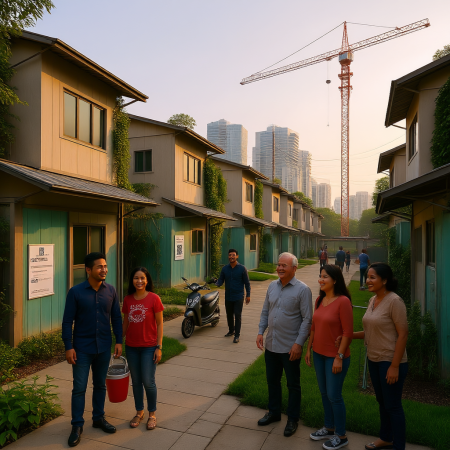
The middle and lower-income groups — the very backbone of the nation — are being priced out of their own futures. But now, a new business model is emerging. Not as a magic bullet, but as a systemic, scalable, and socially intelligent framework that could finally bridge the gap between policy intent and lived reality. This new business model is not about charity — it’s about sustainability, innovation, and inclusion. And it’s arriving just in time.
What’s Broken in Malaysia’s Current Housing System?
Before we celebrate the new, we must understand what’s failing. Malaysia’s affordable housing crisis is not born of scarcity — it’s born of structure. The current model relies heavily on private developers incentivized by profit, government subsidies that often miss the mark, and rigid bureaucratic processes that delay delivery and inflate costs. The result? A glut of unsold “affordable” units that aren’t actually affordable — priced beyond the reach of B40 and even M40 households — while land sits idle and construction lags. According to the National Property Information Centre (NAPIC), as of 2023, Malaysia had over 35,000 unsold residential properties priced below RM300,000 — the official “affordable” bracket. Yet, millions still can’t access them. Why? Location, poor quality, hidden costs, or simply lack of financing. The system is misaligned. Developers chase margins. Banks chase creditworthiness. Governments chase KPIs. And ordinary Malaysians? They chase keys to a home that never arrives. This is why a new business model is not optional — it’s urgent. The old playbook — subsidies, quotas, and goodwill — is exhausted. A new business model must rewire incentives, harness technology, empower communities, and embed affordability into the DNA of housing development — not as an afterthought, but as the core objective.Why Malaysia Needs a New Business Model Now
Malaysia’s urban population is growing. By 2030, over 85% of Malaysians will live in cities. Young professionals, gig workers, single-parent families, and rural migrants are all seeking stability — and that begins with shelter. But home ownership rates are declining, especially among those under 40. The dream of “rumah mampu milik” is fading into myth for too many. Add to this the economic aftershocks of the pandemic, inflation, rising construction costs, and interest rate hikes — and you have a perfect storm. The traditional developer-led, bank-financed, government-subsidized triangle is cracking under pressure. What’s needed is a new business model that is agile, inclusive, and financially viable without relying on endless public bailouts. This new business model must also respond to cultural and demographic shifts. Smaller households. Remote work. Demand for walkable neighborhoods. Desire for green spaces. Expectations of digital access. The homes of tomorrow must reflect the lives of today — and the current system isn’t listening. A new business model doesn’t just build houses — it builds ecosystems.Core Principles of the New Business Model
So, what does this new business model actually look like? It’s not one thing — it’s a constellation of innovations working in sync. Here are its foundational pillars:- Cross-Subsidy and Value Capture Developers build a mix of market-rate and affordable units — but instead of treating affordable units as loss leaders, they capture value from high-end sales, commercial spaces, or land appreciation to cross-subsidize the affordable segment. Think of it as “profit-sharing for social good.” This new business model turns equity into economics.
- Community-Led Development Empower residents — especially in low-cost areas — to co-design, co-finance, and co-manage their housing. Through cooperatives or community land trusts, residents gain ownership stakes and decision-making power. This new business model flips the script: from passive recipients to active stakeholders.
- Modular and Industrialized Building Technology (IBT) Prefabricated walls, 3D-printed components, and standardized designs slash construction time and cost by up to 30%. A new business model embraces IBT not as a gimmick, but as a necessity — delivering quality faster, cleaner, and cheaper.
- Rent-to-Own and Flexible Financing Instead of demanding 90% bank loans upfront, this new business model offers progressive ownership. Tenants pay monthly installments that build equity — no massive down payment, no credit score tyranny. Partner with fintechs, micro-lenders, and even employer payroll systems to make it work.
- Public-Private-People Partnerships (PPPP) Move beyond PPP. Add “People.” Let communities sit at the table with developers and local councils. Co-create masterplans. Share risks. Align incentives. This new business model thrives on collaboration — not competition.
- Land Optimization and Transit-Oriented Development (TOD) Use underutilized public land — near MRT stations, bus terminals, or abandoned lots — for high-density, mixed-income housing. Reduce car dependency. Increase accessibility. A new business model sees land not as a commodity, but as a connector.
- Digital Platforms for Transparency and Access A centralized portal where applicants can track unit availability, financing options, construction progress, and even report maintenance issues. No more queues, no more middlemen. This new business model is tech-enabled, not tech-dominated.
- Green and Resilient Design Affordable doesn’t mean flimsy. Solar panels, rainwater harvesting, passive cooling, and durable materials reduce long-term costs and environmental impact. A new business model builds for climate — not just for compliance.
Real-World Examples Lighting the Way
Malaysia doesn’t need to start from scratch. Seeds of this new business model are already sprouting — we just need to water them. Take Projek Perumahan Rakyat (PPR) — often criticized for poor maintenance and social stigma. But what if PPR evolved? What if residents formed management cooperatives? What if ground-floor units became micro-business hubs? What if solar panels cut utility bills? That’s the new business model in action — upgrading not just buildings, but systems. Then there’s RUMAWIP in Kuala Lumpur — a program where developers allocate 30% of units in new projects for middle-income buyers at capped prices. It’s a form of inclusionary zoning — a key component of the new business model. But it needs refinement: better enforcement, wider income brackets, and stronger post-sale support. In Penang, Penang Transport Master Plan (PTMP) includes TOD-linked affordable housing — building vertically near transit nodes to reduce sprawl and increase access. That’s the new business model thinking spatially, not just structurally. Private players are stepping up too. S P Setia’s “Setia Refined Living” concept uses modular construction and smart design to deliver smaller, smarter, more affordable units without compromising quality. That’s the new business model proving that “affordable” doesn’t mean “cheap.” And let’s not forget Yayasan Hasanah’s “Rumah Selangorku Plus” pilot — which added financial literacy, community spaces, and job-link programs to housing projects. Because a home is more than four walls — it’s a launchpad. That’s the new business model understanding holistic need. Even startups are entering the ring. BinaRumah, a digital platform, connects small contractors with landowners and future homeowners to co-create custom affordable homes using IBT — cutting out layers of cost. That’s the new business model leveraging tech for democratization. These are not isolated experiments. They are proof of concept. They show that a new business model is not theoretical — it’s operational. It just needs scale, policy backing, and public trust.Barriers Standing in the Way
Of course, no transformation comes without friction. Malaysia’s path to a new business model for affordable housing is littered with obstacles — some structural, some political, some cultural. First: Land politics. Who controls the land? State governments? Federal agencies? Private tycoons? Until land use is depoliticized and strategically allocated for public good, the new business model will hit invisible walls. Second: Financing gaps. Banks remain risk-averse. Microfinance is underdeveloped. Islamic finance products for affordable housing are underutilized. Without innovative, inclusive financing, the new business model stalls at the doorstep. Third: Regulatory red tape. Approval processes take years. IBT faces resistance from traditional contractors. Zoning laws are outdated. The new business model needs regulatory sandboxes — safe spaces to test, fail, and iterate. Fourth: Stigma and mindset. “Affordable housing = low quality.” That perception kills demand and depresses investment. The new business model must rebrand affordability — not as a compromise, but as smart, modern, dignified living. Fifth: Lack of data and transparency. Who needs housing? Where? At what income level? What design preferences? Without real-time, granular data, the new business model is flying blind. Sixth: Fragmented governance. Housing policy is split across ministries, states, agencies, and local councils. Coordination is weak. The new business model demands a unified national housing authority with teeth. None of these barriers are insurmountable. But they require political courage, private sector creativity, and public pressure to dismantle. The new business model won’t thrive in a vacuum — it needs an ecosystem of support.Policy Recommendations to Accelerate the New Business Model
To turn pilot sparks into a national flame, Malaysia needs bold, targeted policy shifts. Here’s what must happen:- Establish a National Affordable Housing Innovation Fund Seed capital for developers, startups, and communities experimenting with the new business model — modular tech, rent-to-own, co-ops, green design. De-risk innovation.
- Mandate Inclusionary Zoning Nationwide Require all new developments above a certain size to allocate 20–30% for affordable units — with clear definitions, income caps, and enforcement. Make the new business model the law, not the exception.
- Create Fast-Track Approval Lanes for IBT Projects Cut approval times from years to months for projects using certified industrialized building systems. Speed is part of affordability.
- Launch a National Housing Data Observatory Real-time dashboard tracking supply, demand, pricing, demographics, and construction progress. Let data drive the new business model — not guesswork.
- Reform Land Allocation Policies Prioritize idle public land for affordable housing under the new business model — with long-term leases, not freehold giveaways. Capture land value for public benefit.
- Introduce Tax Incentives and Viability Gap Funding Offer developers GST exemptions, profit reinvestment allowances, or direct subsidies if they meet affordability, sustainability, and community participation targets. Reward the right behavior.
- Build Capacity for Community Housing Models Train residents, NGOs, and local governments in cooperative housing, financial literacy, and property management. Empowerment is core to the new business model.
- Pilot “Housing as a Service” (HaaS) Programs Where the government or private operator maintains, upgrades, and manages housing in exchange for monthly fees — reducing burden on low-income owners. The new business model as a subscription, not a burden.
The Role of Technology and Innovation
Technology is not the hero of this story — people are. But tech is the amplifier. The enabler. The equalizer. Imagine an app where a young couple can design their future affordable home — choosing layouts, materials, payment plans — all within their budget. Then track construction via drone-captured progress videos. Then pay their monthly installment via e-wallet — which also builds their ownership equity. That’s the new business model, powered by tech. Blockchain can secure land titles and prevent fraud. AI can optimize floor plans for natural light and ventilation. Drones can monitor construction quality. IoT sensors can manage water and energy use in real time. All of this reduces cost, increases transparency, and improves quality of life. But tech must serve equity — not exclude. Digital literacy programs, multilingual interfaces, and offline access points are essential. The new business model must be tech-inclusive, not tech-elitist.The Human Impact: Why This Matters
Behind every policy, every model, every brick — are people. Families. Dreams. A teacher shouldn’t have to commute three hours to work because she can’t afford to live near her school. A nurse shouldn’t sleep in a rented room with five others because home ownership is a fantasy. A young couple shouldn’t delay marriage or children because housing is out of reach. The new business model isn’t about units — it’s about dignity. Stability. Belonging. When people have secure, affordable housing, children do better in school. Parents are healthier. Communities are safer. Economies grow stronger. This is the multiplier effect of housing done right. And Malaysia — with its talent, resources, and vision — has every reason to lead in this space. The new business model is not charity. It’s smart economics. It’s nation-building.The Future: Scaling the New Business Model Nationally
The goal? By 2030, Malaysia should be a global benchmark for affordable housing innovation — where “Romah Mampu Milik” is not a slogan, but a lived reality for 90% of households. To get there, we need:- A National Affordable Housing Taskforce — chaired at the PM level, with private sector, civil society, and state representation.
- Standardized Metrics — define “affordable” by income-to-price ratio, not arbitrary price caps.
- Demonstration Zones — designate 3–5 cities as “Affordable Housing Labs” to test and showcase the new business model in action.
- Public Awareness Campaigns — rebrand affordable housing as aspirational, sustainable, and community-driven.
- International Knowledge Exchange — learn from Singapore’s HDB, Vienna’s social housing, or Colombia’s social urbanism — then adapt, don’t copy.
Conclusion: The Time for a New Business Model Is Now
Malaysia stands at a crossroads. One path leads to deeper inequality, urban decay, and broken promises. The other leads to inclusive growth, social cohesion, and renewed hope. The difference? A new business model for affordable housing. This new business model is not a luxury — it’s a necessity. Not an experiment — it’s an evolution. Not a cost — it’s an investment. In people. In potential. In the future.The ingredients are here: political will (sometimes), private innovation (growing), community energy (untapped), and technological tools (ready). What’s missing is alignment. Coordination. Courage.
Let’s stop building housing for balance sheets — and start building it for human beings. Let’s stop treating affordability as a problem — and start seeing it as an opportunity. Let’s stop waiting for miracles — and start engineering them. Also read: An Overview of Housing Purchase and Delivery System in Malaysia