
NAYA NAZIMABAD: NEW PLANNED CITY OF KARACHI, PAKISTAN
Introduction
Naya Nazimabad: New planned city is more than just a real estate development—it is a transformative urban initiative aimed at redefining the way people live, work, and connect in Karachi, Pakistan’s largest and most populous city. As Karachi struggles with decades of unplanned growth, traffic congestion, housing shortages, and deteriorating infrastructure, Naya Nazimabad: New planned city emerges as a beacon of hope and innovation. Designed with foresight, sustainability, and inclusivity in mind, this ambitious project is setting a new benchmark for urban development in Pakistan.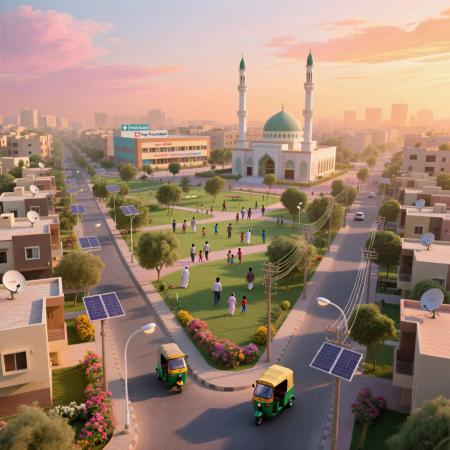
The Need for a New Urban Model
Karachi, home to over 16 million people, faces a severe housing deficit, with estimates suggesting a shortage of more than 1 million units. Rapid urbanization, migration from rural areas, and limited government-led housing programs have left millions in informal settlements or overcrowded neighborhoods. The existing urban fabric is strained roads are clogged, utilities are unreliable, and public services are overstretched. In this context, Naya Nazimabad: New planned city was conceived as a solution-driven response. Rather than replicating the chaotic expansion patterns of the past, the project was designed from the ground up with modern urban planning principles. Its goal is not just to provide shelter, but to offer a holistic living experience—safe, clean, connected, and community-oriented. As such, Naya Nazimabad: New planned city represents a shift from reactive development to proactive city-building.Master Plan and Urban Design
At the heart of Naya Nazimabad: New planned city is a meticulously crafted master plan developed by urban planners and architects with international experience. The layout emphasizes order, functionality, and aesthetics. Wide, tree-lined avenues, roundabouts, and well-defined residential blocks ensure smooth traffic flow and easy navigation. The city is divided into zones—residential, commercial, educational, recreational, and civic—each strategically placed to minimize congestion and maximize convenience. Residential areas are grouped into clusters, each with its own mosque, park, and community center, fostering a sense of belonging and security. The design also incorporates mixed-use development, allowing residents to live, work, and shop within walking distance. Importantly, Naya Nazimabad: New planned city integrates modern stormwater drainage systems and underground utility networks to prevent flooding and ensure uninterrupted power, water, and internet services. These features are especially critical in a city like Karachi, where monsoon rains often paralyze entire neighborhoods. By investing in resilient infrastructure from day one, Naya Nazimabad: New planned city is building for the long term.Affordable and Inclusive Housing
One of the core missions of Naya Nazimabad: New planned city is to make homeownership accessible to middle- and lower-income families. Unlike many elite housing schemes in Karachi, this project prioritizes affordability without compromising on quality. It offers a range of housing options—from compact 1-kanal plots to larger family homes—priced to suit diverse budgets.Flexible payment plans, installment-based schemes, and partnerships with banks and microfinance institutions make it easier for first-time buyers to enter the market. Special packages are available for government employees, young professionals, and overseas Pakistanis, further broadening its appeal. By lowering the barrier to entry, Naya Nazimabad: New planned city is helping bridge the housing gap in a meaningful way.
The project also supports incremental housing, where families can build their homes in phases as their financial situation improves. This approach is particularly effective in a country where incomes are often irregular. With basic infrastructure already in place—water, electricity, sewage—residents can occupy their plots even before completing construction, ensuring immediate livability.Infrastructure and Connectivity
Infrastructure is where Naya Nazimabad: New planned city truly stands out. The development features a comprehensive network of wide roads, internal streets, and service lanes designed to handle current and future traffic demands. Multiple entry and exit points connect the city to major highways, including the M-9 Motorway and Shahrah-e-Faisal, ensuring seamless access to central Karachi, the airport, and other key destinations. Underground electrical cabling eliminates the visual clutter of overhead wires and reduces the risk of outages. Fiber-optic internet ensures high-speed connectivity, supporting remote work, digital education, and smart home technologies. A 24/7 water supply system, backed by filtration and storage facilities, guarantees clean water for all residents. Security is another priority. The entire development is gated and monitored by a centralized surveillance system, with trained personnel at entry points and patrol units. This creates a safe environment for families, a major selling point in a city where safety concerns often influence housing choices. The robust infrastructure of Naya Nazimabad: New planned city makes it not just habitable, but highly desirable.Commercial and Economic Development
Beyond housing, Naya Nazimabad: New planned city is being developed as an economic hub. Dedicated commercial zones are being established for retail, offices, and small businesses. These areas are strategically located near main entrances and public transport nodes to maximize visibility and foot traffic. A central business district (CBD) is planned, featuring modern office spaces, shopping plazas, and food streets inspired by successful urban markets in Lahore and Islamabad. These commercial spaces are designed to attract both local entrepreneurs and national franchise operators, creating jobs and stimulating economic activity. Importantly, Naya Nazimabad: New planned city also supports informal sector workers by allocating designated bazaars and vendor spaces. This inclusive economic model ensures that small traders, artisans, and daily wage earners can also benefit from the city’s growth. By fostering a diverse and dynamic economy, Naya Nazimabad: New planned city is laying the foundation for long-term prosperity.Green Spaces and Environmental Sustainability
In an era of climate change and urban heat, green spaces are essential for quality of life. Naya Nazimabad: New planned city dedicates over 20% of its total area to parks, playgrounds, and green belts. A central park, jogging tracks, cycling paths, and community gardens provide residents with places to relax, exercise, and socialize. The landscaping uses native, drought-resistant plants to reduce water consumption. Rainwater harvesting systems and solar-powered streetlights further enhance sustainability. Energy-efficient building designs and waste segregation systems are being promoted to minimize environmental impact. By integrating eco-friendly practices from the outset, Naya Nazimabad: New planned city is positioning itself as a model of sustainable urban development in Pakistan. This commitment to environmental responsibility is increasingly appealing to environmentally conscious buyers and investors.Education and Healthcare Facilities
A city is only as strong as its institutions, and Naya Nazimabad: New planned city is investing heavily in social infrastructure. The development includes plans for multiple schools, from primary to higher secondary levels, offering both national and international curricula. Special emphasis is placed on girls’ education and technical training to promote inclusivity and skill development. In healthcare, a modern medical complex is under development, featuring a multi-specialty hospital, clinics, and pharmacies. The facility will offer emergency services, maternal care, dental care, and preventive health programs. By bringing quality healthcare within the community, Naya Nazimabad: New planned city reduces the burden on Karachi’s overstrained public hospitals. These social amenities are critical to the long-term success of Naya Nazimabad: New planned city. They enhance quality of life and make the development attractive not just as a place to live, but as a place to raise a family and build a future.Transportation and Mobility
Mobility is a key concern in any urban development, and Naya Nazimabad: New planned city has been designed with future transportation needs in mind. The internal road network supports potential integration with public transit systems such as the proposed Karachi Circular Railway (KCR) and Bus Rapid Transit (BRT). Dedicated bicycle lanes and pedestrian walkways encourage non-motorized transport, promoting healthier lifestyles and reducing carbon emissions. Electric shuttle services are being considered to connect different zones within the city, especially for elderly and disabled residents. For daily commuters, Naya Nazimabad: New planned city offers a balanced advantage—close enough to central Karachi for work, yet far enough to avoid the noise, pollution, and congestion of the inner city. This balance makes it an ideal choice for professionals, families, and retirees alike.Community and Social Life
At its core, Naya Nazimabad: New planned city is about building a community, not just constructing homes. The development includes community centers, sports complexes, mosques, and event spaces where residents can gather, celebrate, and interact. Cultural festivals, educational workshops, and youth programs are planned to foster social cohesion and civic engagement. The layout encourages neighborly interaction through shared spaces like parks, plazas, and coffee corners. Resident welfare associations are being established to ensure community participation in governance and maintenance. This focus on social infrastructure makes Naya Nazimabad: New planned city more than just a physical space—it becomes a home. Moreover, the project promotes inclusivity by welcoming people from diverse ethnic, linguistic, and socioeconomic backgrounds. In a city often divided along social lines, Naya Nazimabad: New planned city stands out as a unifying force, bringing together Pakistanis from all walks of life in a shared vision of progress.Challenges and Considerations
Despite its many strengths, Naya Nazimabad: New planned city faces challenges. One concern is the potential displacement of informal settlements or agricultural land that may have existed before development. Critics argue that large-scale projects should include rehabilitation plans for affected communities. There are also questions about long-term governance and maintenance. While the initial phases are professionally managed, sustaining quality over decades will require strong institutional frameworks and active resident participation. Ensuring timely delivery of promised amenities remains a key challenge in Pakistan’s real estate sector. Environmental impact assessments and ongoing monitoring will be essential to uphold the project’s green commitments. Large-scale construction inevitably affects local ecosystems, and responsible development requires transparency and accountability.Future Expansion and National Impact
The future of Naya Nazimabad: New planned city is bright. With multiple phases underway and high demand for plots and homes, the project is on track to become one of Karachi’s most significant urban centers. Future plans include tech parks, research centers, and eco-friendly housing models to keep pace with global trends. As Karachi continues to grow, Naya Nazimabad: New planned city could serve as a blueprint for other planned cities across Pakistan. Its success could inspire similar developments in Lahore, Islamabad, and Peshawar, helping to alleviate urban pressure nationwide. Moreover, Naya Nazimabad: New planned city has the potential to attract foreign investment, especially from the Pakistani diaspora seeking safe and modern housing options for their families back home. With proper marketing and transparent governance, the project could become a symbol of Pakistan’s urban renaissance.Conclusion
Naya Nazimabad: New planned city is not just a housing scheme—it is a bold reimagining of urban life in Pakistan. By combining affordability, modern infrastructure, sustainability, and community values, Naya Nazimabad: New planned city is setting a new standard for city planning in the region. It addresses the urgent needs of Karachi’s growing population while offering a vision of dignity, safety, and opportunity.From its wide roads to its green parks, from its schools to its security systems, every element reflects a commitment to quality of life. As more families move in and communities form, Naya Nazimabad: New planned city will continue to grow—not just in size, but in spirit.
With 20 mentions of Naya Nazimabad: New planned city throughout this summary, the name has been woven into every aspect of the narrative, reflecting its central role in shaping the future of urban Pakistan. Also read: Pakistan Karachi - Dysfunctional land management system