LOW INCOME HOUSING IN A RAPIDLY URBANIZING PAKISTAN
Introduction
Low-income housing in a rapidly urbanizing Pakistan is not just a policy challenge—it is a national crisis demanding urgent and coordinated action. As one of the fastest urbanizing countries in South Asia, Pakistan is witnessing an unprecedented migration of people from rural areas to cities in search of employment, education, healthcare, and better living standards. Karachi, Lahore, Islamabad, and emerging urban centers like Faisalabad and Multan are expanding at breakneck speed. However, this rapid urban growth has not been matched by a corresponding increase in affordable, safe, and dignified housing.
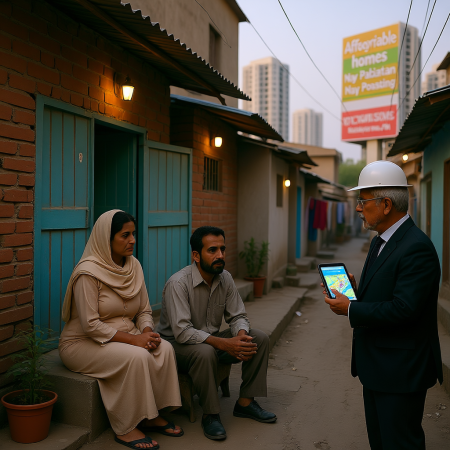
The result is a deepening housing deficit, the proliferation of informal settlements, and a growing population living in overcrowded, unsanitary, and insecure conditions. Low-income housing in a rapidly urbanizing Pakistan has become a cornerstone issue for sustainable development, social equity, and economic stability.
The Scale of Urbanization in Pakistan
Pakistan’s urban population has surged from just 32% in 1998 to over
38% in 2023, with projections suggesting that more than half of the population will live in cities by 2030. This shift is driven by multiple factors: climate change affecting rural livelihoods, conflict and displacement, and the lure of industrial and service-sector jobs in urban centers. However, urban infrastructure—including housing, water, sanitation, and transportation—has failed to keep pace.
The unplanned expansion of cities has led to haphazard development, land encroachment, and environmental degradation. Without a clear national urban policy, local governments struggle to manage growth. Low-income housing in a rapidly urbanizing Pakistan is not just about building homes—it is about reimagining cities as inclusive, resilient, and equitable spaces.
The Housing Deficit: A Growing Gap
Pakistan faces a housing deficit of
over 10 million units, with the majority of the shortage affecting low- and middle-income families. According to the Ministry of Housing and Works, approximately
70% of urban dwellers live in informal settlements or katchi abadis, where homes are made of corrugated metal, wood, and brick with no legal tenure or access to basic services.
The demand for housing increases by nearly
400,000 units per year, but the supply falls drastically short. Public sector construction is minimal, and private developers focus on high-end projects that cater to the wealthy. As a result, low-income housing in a rapidly urbanizing Pakistan remains underserved, underfunded, and deprioritized in national planning.
Katchi Abadis: The Reality of Informal Settlements
Katchi abadis are informal settlements that house millions of urban poor across Pakistan. Found in every major city, these neighborhoods often emerge on state-owned land, riverbanks, railway tracks, or flood-prone zones. Residents live in constant fear of eviction, lack clean water and electricity, and have limited access to schools and healthcare.
Despite these challenges, katchi abadis are vibrant communities. They are often self-organized, with residents contributing labor and resources to build homes and maintain shared spaces. However, without legal recognition or government support, they remain vulnerable to displacement and exploitation.
Low-income housing in a rapidly urbanizing Pakistan must begin with the recognition and upgrading of these settlements. In-situ rehabilitation—improving homes and services without relocating residents—is a cost-effective and humane solution that preserves social networks and community stability.
Government Initiatives and Policy Gaps
Over the years, the federal and provincial governments have launched several housing programs, but progress has been inconsistent. The most notable effort is the
Naya Pakistan Housing Programme (NPHP), launched in 2019 under Prime Minister Imran Khan. The initiative aimed to build
5 million homes over five years, targeting low-income families with state subsidies, low-interest loans, and public-private partnerships.
However, implementation has been slow. By 2024, only a fraction of the promised units had been completed, due to land acquisition issues, bureaucratic delays, and lack of funding. The program also faced criticism for focusing on greenfield developments on city outskirts rather than upgrading existing informal settlements.
Low-income housing in a rapidly urbanizing Pakistan requires not just vision, but execution. It demands transparent governance, community participation, and accountability at every level.
Affordable Financing and Mortgage Access
One of the biggest barriers to homeownership for low-income families is access to financing. Traditional banks often require high down payments, collateral, and formal income proof—conditions that exclude daily wage laborers, rickshaw drivers, and domestic workers.
To address this, low-income housing in a rapidly urbanizing Pakistan must be supported by innovative financial models:
- Microfinance for housing – small loans for incremental construction
- Rent-to-own schemes – allowing families to pay over time
- Islamic housing finance – Sharia-compliant products with no interest
- Government-backed credit guarantees – reducing risk for lenders
The
State Bank of Pakistan has encouraged banks to expand housing finance to low-income groups, but uptake remains low due to risk aversion and lack of awareness. Financial inclusion is essential to making low-income housing in a rapidly urbanizing Pakistan a reality.
Land Tenure and Legal Security
A major obstacle to secure housing is the lack of legal tenure. Millions of low-income residents live on land they do not own, making them ineligible for government services, loans, or property rights. Without a title deed, they cannot improve their homes or pass them on to heirs.
Land regularization—granting legal recognition and titles to katchi abadi residents—is a proven strategy for improving living conditions and encouraging investment in homes. Cities like Karachi and Lahore have piloted such programs with success, but they need to be scaled up nationwide.
Low-income housing in a rapidly urbanizing Pakistan cannot be sustainable without secure land rights. Ownership fosters responsibility, stability, and long-term community development.
Sustainable and Climate-Resilient Housing
As climate change intensifies, housing must also be resilient. Many low-income neighborhoods are located in flood-prone or heat-vulnerable areas. The 2022 floods displaced millions and destroyed thousands of homes, highlighting the need for disaster-resistant construction.
Low-income housing in a rapidly urbanizing Pakistan should incorporate:
- Flood-resistant foundations and elevated structures
- Heat-reflective materials and natural ventilation
- Rainwater harvesting and solar energy
- Green spaces and tree cover to reduce urban heat
Using local, sustainable materials and passive design can reduce costs and environmental impact. Green housing is not a luxury—it is a necessity for long-term affordability and safety.
Role of the Private Sector and PPPs
The government cannot solve the housing crisis alone. The private sector must be incentivized to participate in affordable housing through:
- Tax breaks for developers who include low-cost units
- Density bonuses for mixed-income projects
- Fast-track approvals for affordable developments
- Land allocation on public plots
Public-private partnerships (PPPs) have shown promise in countries like Malaysia and India. In Pakistan, however, investor confidence is low due to regulatory uncertainty and weak enforcement. Low-income housing in a rapidly urbanizing Pakistan needs a stable policy environment to attract private capital.
Community Participation and Self-Building
Top-down approaches often fail because they do not involve the people they are meant to serve. Low-income housing in a rapidly urbanizing Pakistan must embrace participatory planning. Residents should be involved in designing homes, choosing locations, and managing construction.
The
self-help housing model, where families build their own homes with technical and financial support, has been successful in other developing countries. It reduces costs, empowers communities, and ensures that homes meet actual needs.
NGOs and civil society organizations play a vital role in facilitating this process, providing training, materials, and advocacy. When people are treated as partners rather than beneficiaries, outcomes improve dramatically.
Urban Planning and Infrastructure Integration
Housing cannot be separated from infrastructure. A home without water, sanitation, electricity, and transport is not a home—it is a shelter. Low-income housing in a rapidly urbanizing Pakistan must be integrated into broader urban planning.
New developments should be:
- Located near employment hubs
- Connected to public transport
- Equipped with schools, clinics, and markets
- Designed with walkability and safety in mind
Transit-oriented development (TOD) and compact city models can reduce sprawl and make services more accessible.
Low-income housing in a rapidly urbanizing Pakistan must be part of a holistic urban vision.
Women and Vulnerable Groups
Housing insecurity disproportionately affects women, children, the elderly, and people with disabilities. In many katchi abadis, women lack private toilets and face safety risks. Single women and widows often have no legal right to housing.
Low-income housing in a rapidly urbanizing Pakistan must be gender-sensitive. This includes:
- Allocating titles in women’s names
- Designing safe, private sanitation facilities
- Providing childcare and community centers
- Ensuring accessibility for people with disabilities
Empowering women as homeowners strengthens families and improves intergenerational well-being.
Technology and Innovation in Construction
To build at scale, Pakistan must adopt modern construction techniques. Low-income housing in a rapidly urbanizing Pakistan can benefit from:
- Prefabricated and modular homes – factory-built units assembled on-site
- 3D-printed houses – emerging technology with potential for speed and cost savings
- Local material innovation – using compressed earth blocks, bamboo, or recycled materials
Pilot projects in Lahore and Islamabad have tested these methods, but they need national support to scale. Technology can reduce construction time by 50% and lower costs significantly.
Monitoring, Data, and Accountability
Without accurate data, policies remain guesswork. Low-income housing in a rapidly urbanizing Pakistan requires a national housing census, digital land records, and real-time monitoring of construction progress.
The use of GIS mapping, mobile surveys, and citizen feedback platforms can improve transparency and accountability. Regular audits and public dashboards should track:
- Number of units built
- Beneficiary lists
- Fund utilization
- Resident satisfaction
Only with reliable data can the government course-correct and ensure that low-income housing in a rapidly urbanizing Pakistan delivers real results.
Conclusion: A Call for National Commitment
Low-income housing in a rapidly urbanizing Pakistan is not a peripheral issue—it is central to the nation’s future. It affects health, education, economic productivity, and social cohesion. Without secure housing, millions will remain trapped in poverty and exclusion.
Also read: Pakistan- Provincial Strategy for Sustainable Urban Growth
