
Low-Income Housing Alternative Strategies for Building Construction
Introduction
Low-Income Housing Alternative Strategies for Building Construction are increasingly recognized as essential solutions to one of the most pressing urban development challenges worldwide: meeting the housing needs of low-income communities. Traditional construction methods often fall short due to high costs, extended timelines, and inefficient use of resources. In response, alternative strategies for low-income housing construction have gained momentum as practical, sustainable, and cost-effective approaches. These strategies aim to bridge the gap between affordability and quality by introducing innovative materials, modern construction techniques, efficient financing models, and thoughtful design approaches.
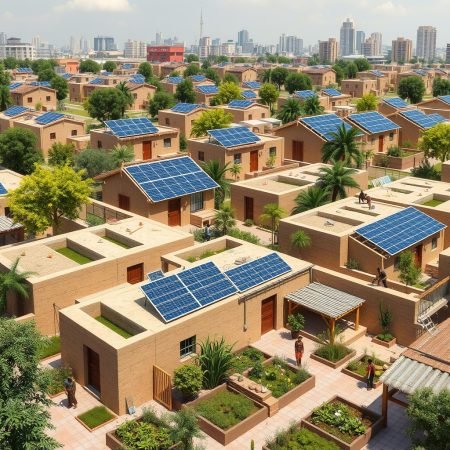
Understanding the Need for Low-Income Housing: Alternative Strategies for Building Construction
The demand for affordable housing has surged in recent years, driven by rapid urbanization, population growth, and economic disparities. Governments and private developers are increasingly recognizing that traditional building practices are not sufficient to meet this growing demand. This realization has led to a shift toward exploring low-income housing alternative strategies for building construction that can deliver durable, safe, and affordable homes without compromising on sustainability or efficiency. One of the key drivers behind these alternative strategies is the need to reduce both material and labor costs. By leveraging new technologies, prefabrication methods, and locally sourced materials, it becomes possible to construct housing units faster and at a lower overall cost. Additionally, these strategies often align with environmental goals, such as reducing carbon footprints and promoting green building practices.Modular and Prefabricated Construction: A Core Strategy in Low-Income Housing Alternative Strategies for Building Construction
Modular and prefabricated construction methods have emerged as central components of low-income housing alternative strategies for building construction. These methods involve assembling building components off-site under controlled factory conditions before transporting them to the construction site for final assembly. The benefits include reduced labor costs, shorter project timelines, and minimized waste generation. Prefabrication allows for greater precision in manufacturing building elements, which leads to better quality control and fewer construction errors. It also reduces the reliance on skilled labor, which is often scarce in many developing regions. As a result, modular construction has become a preferred option in large-scale affordable housing projects around the world. In addition, modular housing can be designed to be scalable and adaptable. Units can be expanded over time as families grow or financial resources allow. This flexibility makes modular construction an ideal fit within the broader framework of low-income housing alternative strategies for building construction, ensuring that housing remains both accessible and adaptable to changing needs.Use of Sustainable and Locally Sourced Materials in Low-Income Housing Alternative Strategies for Building Construction
Another significant aspect of low-income housing alternative strategies for building construction is the emphasis on using sustainable and locally available materials. Traditional construction often relies heavily on imported or energy-intensive materials like concrete and steel, which can be prohibitively expensive for low-income housing projects. Alternative materials such as compressed earth blocks, bamboo, recycled plastics, and rammed earth offer cost-effective and environmentally friendly alternatives. These materials not only reduce construction costs but also contribute to local economies by supporting small-scale producers and artisans. Moreover, they tend to have better thermal properties, improving indoor comfort and reducing energy consumption for heating and cooling. For instance, in many African and South Asian countries, the use of compressed stabilized earth blocks (CSEBs) has proven to be a viable substitute for conventional bricks. These blocks are made from locally available soil mixed with a small amount of cement, making them both affordable and eco-friendly. Their adoption exemplifies how low-income housing alternative strategies for building construction can integrate traditional knowledge with modern engineering principles.Community Participation and Co-Design in Low-Income Housing Alternative Strategies for Building Construction
A less technical but equally important element of low-income housing alternative strategies for building construction is the inclusion of community participation in the planning and development process. Engaging future residents in the design and decision-making stages ensures that the housing meets their specific cultural, social, and functional needs. Co-design processes empower communities by giving them a voice in shaping their living environments. This participatory approach not only improves satisfaction with the final product but also fosters a sense of ownership and responsibility among residents. It can also lead to more efficient use of space and resources, as local knowledge often highlights practical considerations that might otherwise be overlooked. In some cases, community-led housing initiatives have successfully implemented cooperative models where residents contribute labor or funding toward construction. These models further reduce costs and build social cohesion, reinforcing the idea that low-income housing alternative strategies for building construction should not only focus on physical structures but also on strengthening community ties.Leveraging Technology and Digital Tools in Low-Income Housing Alternative Strategies for Building Construction
Technology plays a transformative role in advancing low-income housing alternative strategies for building construction. Innovations such as 3D printing, Building Information Modeling (BIM), and digital fabrication tools are revolutionizing how housing is designed and built. 3D printing, for example, allows entire walls or even complete houses to be printed using concrete mixtures in a matter of days. This drastically cuts down on labor requirements and material waste. Countries like Mexico and the United States have already demonstrated successful 3D-printed housing projects aimed at low-income populations. Similarly, BIM enables architects and engineers to create detailed digital models of buildings, optimizing designs for cost, efficiency, and sustainability before construction begins. This level of precision helps avoid costly mistakes during the building phase and ensures that resources are used efficiently key objectives within low-income housing alternative strategies for building construction. Digital platforms also facilitate access to financing, supply chains, and training for builders and developers working in low-income housing. Mobile apps and online marketplaces can connect stakeholders with affordable materials, microfinance options, and construction education, further enhancing the viability of alternative strategies.Policy and Financing Support for Low-Income Housing Alternative Strategies for Building Construction
For low-income housing alternative strategies for building construction to gain widespread acceptance, supportive policies and adequate financing mechanisms are essential. Governments play a critical role in creating an enabling environment through zoning laws, building codes, subsidies, and tax incentives that encourage the use of alternative construction methods. Public-private partnerships have also proven effective in scaling up affordable housing initiatives. By collaborating with NGOs, developers, and international agencies, governments can pool resources and expertise to implement large-scale housing programs that incorporate innovative building strategies.Microfinance and community-based savings schemes provide another avenue for funding low-income housing. These systems enable individuals and groups to save collectively and access small loans for home improvements or construction. When combined with alternative building methods, such financial tools make homeownership more attainable for economically disadvantaged populations.
Moreover, regulatory reforms that recognize and legitimize non-traditional building materials and methods are crucial. Many current building codes were developed with conventional materials in mind and may inadvertently restrict the use of more sustainable or affordable alternatives. Updating these codes to reflect modern innovations is a necessary step in mainstreaming low-income housing alternative strategies for building construction.