LOW-COST HOUSING SOLUTIONS/SCHEMES FINANCED BY HBFCL PAKISTAN
Introduction
Low-cost housing solutions/schemes are at the forefront of addressing Pakistan’s growing shelter crisis, where rapid urbanization, population growth, and economic inequality continue to strain living conditions for millions. With a housing deficit exceeding 10 million units, low-income families are disproportionately affected, often forced to live in overcrowded slums or informal settlements. To bridge this gap, the House Building Finance Company Limited (HBFCL) has emerged as a key driver in promoting low-cost housing solutions/schemes across both urban and rural areas.
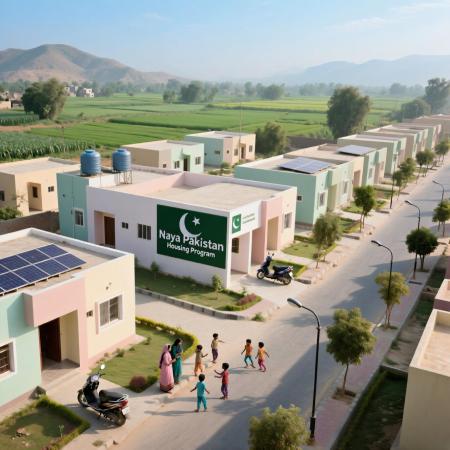
These initiatives are specifically designed to make homeownership accessible to lower-income groups by providing affordable financing, simplified application procedures, and government-backed incentives. By emphasizing inclusivity, environmental sustainability, and long-term community development, HBFCL’s low-cost housing solutions/schemes offer a strategic and scalable response to one of Pakistan’s most urgent socio-economic challenges.
Low-cost housing solutions/schemes and financial inclusion
One of the primary barriers to homeownership in Pakistan is a lack of access to formal credit. Traditional banks often require high down payments, strong credit histories, and extensive documentation—conditions that exclude a large portion of the population. HBFCL addresses this gap through its targeted low-cost housing solutions/schemes, which are tailored to the financial realities of low- and middle-income families.
These programs offer long-term loans with subsidized interest rates, flexible repayment terms, and relaxed eligibility criteria. For instance, monthly installments are structured to remain within 30–40% of a borrower’s income, ensuring affordability and reducing the risk of default. This financial inclusivity is central to the success of low-cost housing solutions/schemes, enabling even daily wage earners and informal sector workers to qualify for home financing.
Expanding access through public-private partnerships
HBFCL does not operate in isolation. The effectiveness of low-cost housing solutions/schemes is amplified through strategic collaborations with real estate developers, construction firms, and local governments. These public-private partnerships help reduce costs through bulk procurement of materials, shared infrastructure development, and faster project execution. In cities like Lahore and Islamabad, joint ventures have led to the creation of planned housing communities under low-cost housing solutions/schemes, complete with roads, water supply, electricity, and sanitation. This integrated approach prevents the emergence of isolated, underserved settlements—a common flaw in earlier housing projects. Moreover, private sector involvement brings innovation, efficiency, and quality control to low-cost housing solutions/schemes, ensuring that beneficiaries receive durable, well-designed homes.
Sustainability and resilience in design
Modern low-cost housing solutions/schemes go beyond mere affordability—they incorporate principles of environmental sustainability and disaster resilience. HBFCL encourages the use of energy-efficient materials such as compressed stabilized earth blocks (CSEB), fly ash bricks, and insulated roofing in its housing projects. These materials reduce construction costs, lower carbon emissions, and improve thermal comfort. Additionally, many units under low-cost housing solutions/schemes include features like solar water heaters, rainwater harvesting systems, and passive cooling designs.
In flood-prone areas such as Sindh and southern Punjab, homes are built on elevated foundations with flood-resistant materials. In earthquake-prone zones like northern Khyber Pakhtunkhwa, reinforced concrete frames and flexible joints are used to enhance structural safety. These design adaptations ensure that low-cost housing solutions/schemes are not only affordable but also resilient to climate change and natural disasters.
Technology and digital transformation
Technology has played a transformative role in improving the efficiency and transparency of low-cost housing solutions/schemes. HBFCL has introduced online application portals, mobile verification systems, and digital loan tracking to streamline the process. Applicants can now submit documents, check their status, and receive disbursements without visiting physical branches—reducing delays and minimizing opportunities for corruption. Geographic Information Systems (GIS) are used to identify suitable land, assess environmental risks, and plan infrastructure networks. Drones and 3D modeling assist in monitoring construction progress, ensuring quality and timeliness. These technological advancements have significantly enhanced the delivery of low-cost housing solutions/schemes, making them more accessible and accountable.
Rural outreach and inclusive development
While much of the focus has been on urban centers, HBFCL has also extended low-cost housing solutions/schemes to rural Pakistan, where housing conditions are often dire. Mobile outreach units and collaborations with local cooperatives allow HBFCL to reach remote villages in Sindh, Baluchistan, and Khyber Pakhtunkhwa. These rural low-cost housing solutions/schemes are adapted to local climates and cultural preferences, using traditional materials like mud, bamboo, and thatch where appropriate. In arid regions, designs emphasize shade, ventilation, and water conservation. In colder mountainous areas, insulation and heating efficiency are prioritized. This context-sensitive approach ensures that low-cost housing solutions/schemes are not imposed from above but developed in harmony with local needs and traditions.
Women’s empowerment and social impact
An important yet often overlooked benefit of low-cost housing solutions/schemes is their positive impact on gender equality. When homes are registered in women’s names—as encouraged under HBFCL’s policies—women gain greater financial autonomy and security. Studies show that female-headed households in low-cost housing solutions/schemes report improved safety, better hygiene, and higher school enrollment for girls. Stable housing also reduces the burden of caregiving and allows women to pursue education or income-generating activities. By promoting joint or female ownership in low-cost housing solutions/schemes, HBFCL contributes to broader social transformation, challenging patriarchal norms and fostering inclusive development.
Economic benefits and job creation
The construction of homes under low-cost housing solutions/schemes generates significant economic activity. Each project creates direct and indirect employment for masons, carpenters, electricians, plumbers, and transport workers—many of whom come from low-income backgrounds. According to the Pakistan Institute of Development Economics (PIDE), every billion rupees invested in low-cost housing solutions/schemes generates approximately 3,000 person-years of employment. This
multiplier effect extends to industries such as cement, steel, ceramics, and furniture, stimulating demand and supporting small businesses. In this way, low-cost housing solutions/schemes act as engines of local economic growth, particularly in times of national recession or high unemployment.
Integration with national development goals
HBFCL’s low-cost housing solutions/schemes align closely with Pakistan’s national development agenda and international commitments. The Naya Pakistan Housing Program (NPHP), launched in 2019, aims to build one million homes through low-cost housing solutions/schemes, with a focus on affordability, sustainability, and smart urban planning. This initiative supports Sustainable Development Goal 11 (Sustainable Cities and Communities) by promoting inclusive, safe, and resilient urbanization. Moreover, by reducing slum populations and improving living standards, low-cost housing solutions/schemes contribute to poverty reduction, public health, and social stability. The federal and provincial governments have supported these efforts through land allocation, tax exemptions on construction materials, and regulatory reforms to fast-track project approvals.
Monitoring, evaluation, and continuous improvement
To ensure accountability and effectiveness, HBFCL conducts regular monitoring and evaluation of its low-cost housing solutions/schemes. Independent agencies assess construction quality, loan disbursement timelines, and beneficiary satisfaction. Feedback is used to refine policies and improve service delivery. For example, early reports of water shortages in some housing colonies led to the installation of solar-powered water pumps in later phases. Similarly, community requests for better street lighting prompted upgrades in infrastructure planning. This adaptive, feedback-driven approach ensures that low-cost housing solutions/schemes remain responsive to real-world challenges and continuously improve over time.
Challenges and the path forward
Despite progress, several challenges remain in scaling up low-cost housing solutions/schemes. Land acquisition is often delayed due to legal disputes or speculative pricing. Bureaucratic inefficiencies and corruption can slow down project implementation. In some cases, beneficiaries face difficulty in accessing utilities or transportation, undermining the long-term viability of housing colonies. Additionally, inflation and rising construction costs threaten the affordability of affordable housing projects, requiring ongoing government subsidies to maintain price stability. Addressing these challenges will require stronger coordination between federal and provincial authorities, stricter oversight, and greater community participation in planning.
The future of low-cost housing solutions/schemes
Looking ahead, the future of low-cost housing solutions/schemes in Pakistan depends on sustained political will, institutional innovation, and public engagement. Expanding the scope to include rental housing, co-operative ownership models, and transitional shelters could further broaden access. Integrating smart technologies—such as IoT-enabled utilities, digital community platforms, and renewable energy systems—can enhance convenience and sustainability. Moreover, involving local communities in the design and management of low-cost housing solutions/schemes fosters ownership and reduces resistance to relocation. With continued investment and policy support, low-cost housing solutions/schemes can become a permanent and transformative feature of Pakistan’s urban and rural landscape.
Conclusion
In conclusion, low-cost housing solutions/schemes represent a vital pathway toward achieving housing for all. Through the leadership of HBFCL and the support of government, private sector, and civil society, these initiatives have the potential to uplift millions of families, stimulate economic growth, and build more equitable cities. While challenges remain, the progress made so far demonstrates that low-cost housing solutions/schemes are not just a social welfare program but a strategic investment in Pakistan’s future. As the country continues to grow and urbanize, the importance of affordable, sustainable, and inclusive housing cannot be overstated. Through strategic investment and sustained effort, inclusive housing projects can serve as a foundation for long-term national progress.
Also read: Quarterly Housing Finance Review
