
Low-Cost Housing Improvement for Nakuru Town Kenya
Introduction
Low-cost housing improvements are urgently needed in Nakuru, as the city, Kenya’s fourth largest and a rapidly growing urban hub in the Rift Valley, grapples with a deepening housing crisis. Surging population growth—driven by rural-urban migration, economic opportunities, and natural increase—has caused demand for decent, affordable shelter to far exceed supply. Thousands of residents currently live in informal settlements marked by severe overcrowding, poor sanitation, limited access to clean water, and homes built with substandard materials. In this challenging context, low-cost housing improvements for Nakuru offer a practical, sustainable pathway to improving living conditions, advancing inclusive urban development, and building long-term economic resilience for vulnerable communities.
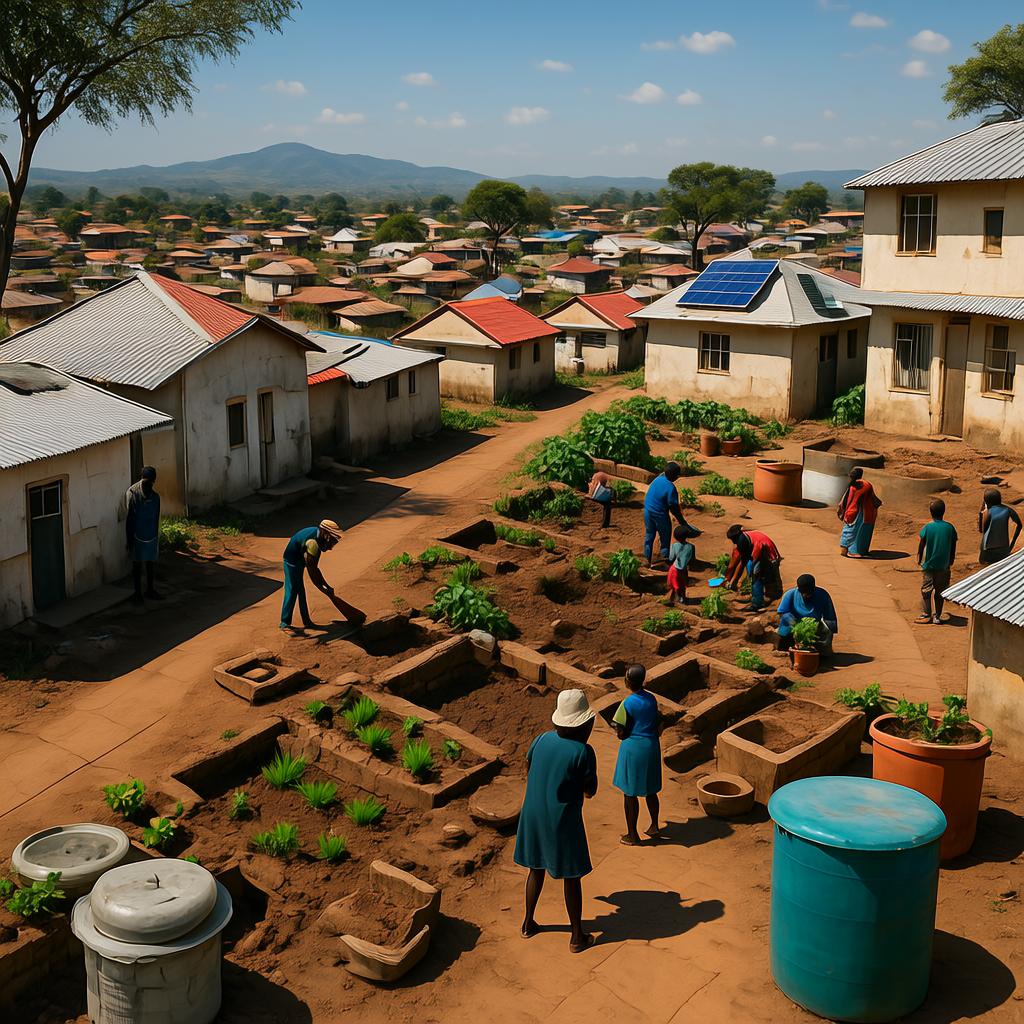
Low-cost housing improvements for Nakuru are not merely about constructing new homes but about upgrading existing dwellings and neighborhoods in a way that is affordable, environmentally responsible, and socially inclusive. These interventions focus on enhancing structural safety, improving access to essential services, and empowering communities to take ownership of their living environments. Given the financial constraints faced by both residents and local authorities, low-cost housing improvements for Nakuru must rely on innovative design, locally available materials, community participation, and supportive policy frameworks.
This summary explores the multifaceted nature of low-cost housing improvements for Nakuru, examining the challenges, opportunities, strategies, and real-world examples that demonstrate how such initiatives can transform lives and reshape the urban landscape.The Housing Crisis in Nakuru
Nakuru’s housing deficit is both a symptom and a driver of broader urban inequality. According to recent estimates, over 60% of the city’s population resides in informal settlements such as Kivuli, Laini Saba, and Mbata. These areas are marked by makeshift shelters constructed from corrugated iron sheets, mud, and scrap materials. Many homes lack basic amenities: electricity, running water, and proper sewage systems. Residents often share communal toilets and water points, which are frequently overused and poorly maintained. The root causes of this crisis are complex. Rapid urbanization has strained infrastructure and planning systems, while limited government investment in social housing has left a vacuum filled by informal development. Moreover, land tenure insecurity discourages investment in home improvements. Many residents live on land they do not legally own, making them vulnerable to eviction and reluctant to upgrade their homes. Low-cost housing improvements for Nakuru offer a practical response to these challenges. Instead of large-scale demolition and resettlement—which are often costly and disruptive—these improvements focus on incremental upgrades. This approach recognizes that many residents already have strong social networks and economic activities tied to their neighborhoods. By improving housing conditions in situ, low-cost housing improvements for Nakuru preserve community cohesion while enhancing quality of life.Principles of Low-Cost Housing Improvements for Nakuru
Effective low-cost housing improvements for Nakuru are guided by several core principles. First and foremost is affordability. Any intervention must be financially viable for low-income households, who often earn less than $2 per day. This means using cost-effective materials such as compressed earth blocks, recycled aggregates, and bamboo, which are cheaper than conventional bricks and cement. Second, sustainability is a key consideration. Low-cost housing improvements for Nakuru must minimize environmental impact by using energy-efficient designs, rainwater harvesting systems, and passive cooling techniques. For example, homes can be oriented to maximize natural light and ventilation, reducing the need for artificial lighting and air conditioning. Third, community participation is essential. Residents must be involved in the planning, design, and implementation of housing upgrades. This ensures that solutions are culturally appropriate, meet real needs, and foster a sense of ownership. When communities are engaged, low-cost housing improvements for Nakuru are more likely to be maintained and expanded over time. Fourth, scalability and replicability are crucial. Successful pilot projects should be designed so they can be replicated across different neighborhoods. This requires standardized building techniques, training for local builders, and partnerships with NGOs and government agencies. Finally, integration with basic services is non-negotiable. Low-cost housing improvements for Nakuru must go hand in hand with improvements in water, sanitation, waste management, and transportation. A well-built home is of little value if residents still have to walk long distances for clean water or face health risks from open sewers.Innovative Building Techniques and Materials
One of the most promising aspects of low-cost housing improvements for Nakuru is the use of innovative construction methods that reduce costs without compromising safety or durability. For instance, compressed stabilized earth blocks (CSEBs) are gaining popularity. Made from local soil mixed with a small amount of cement and compressed in a manual press, CSEBs are up to 30% cheaper than traditional fired bricks and have a much lower carbon footprint. Another technique is the use of ferrocement roofing, which is lighter and more affordable than concrete slabs. Ferrocement involves a thin layer of cement mortar reinforced with wire mesh, making it ideal for low-cost housing improvements for Nakuru where structural loads need to be minimized. Additionally, recycled materials such as plastic bottles filled with sand can be used as insulation or wall infill, reducing construction costs and helping manage waste. In some pilot projects, old tires have been repurposed as foundation elements or garden borders, demonstrating how creativity can drive sustainability. Prefabricated components are also being explored. These allow for faster construction and quality control, especially when produced in local workshops. For example, pre-cast wall panels or roof trusses can be assembled on-site by trained community members, reducing labor costs and construction time. These innovations are not just technical solutions—they are enablers of empowerment. By training local masons, carpenters, and women’s groups in these techniques, low-cost housing improvements for Nakuru create employment opportunities and build local capacity. This economic multiplier effect strengthens the community far beyond the physical structures themselves.Role of Government and Policy Support
While community-led initiatives are vital, low-cost housing improvements for Nakuru cannot succeed without supportive government policies and funding mechanisms. The Kenyan government has made commitments to affordable housing through its “Big Four” Agenda, which includes a target of building 500,000 affordable homes by 2027. However, progress has been uneven, and many programs have focused on new construction rather than upgrading existing informal settlements. To make low-cost housing improvements for Nakuru truly effective, national and county governments must prioritize in-situ upgrading. This includes securing land tenure through land regularization programs, which give residents legal recognition of their occupancy rights. Secure tenure encourages investment in home improvements and reduces the fear of eviction. Additionally, the government can provide subsidies, low-interest loans, or matching grants to help households finance upgrades. For example, a homeowner might receive a grant covering 50% of the cost of a new roof or toilet, with the remainder paid in installments. Such schemes have been successful in other African cities like Kigali and Cape Town. Regulatory reforms are also needed. Building codes should be adapted to accommodate low-cost materials and incremental construction. Currently, many residents avoid formal approval processes because they are too expensive or complex. Simplifying permits and inspections can bring informal construction into the legal framework without imposing undue burdens. Furthermore, inter-agency coordination is essential. Housing improvements must be integrated with urban planning, transport, health, and education services. For instance, upgrading a settlement should include paving access roads, installing streetlights, and connecting homes to the municipal water grid. This holistic approach ensures that low-cost housing improvements for Nakuru deliver comprehensive benefits.Community-Led Initiatives and Social Impact
Some of the most successful examples of low-cost housing improvements for Nakuru have been driven by community-based organizations (CBOs) and self-help groups. These grassroots movements understand local needs better than external agencies and can mobilize collective action more effectively. For example, the Nakuru Slum Dwellers Association has partnered with NGOs like Muungano wa Wanavijiji (Federation of the Urban Poor) to implement incremental housing upgrades. Through savings groups, members pool small amounts of money to fund home improvements. These funds are then used to purchase materials or hire local builders to install better roofs, floors, or sanitation facilities. Women play a particularly important role in these initiatives. In many cases, they are the primary managers of household resources and are most affected by poor housing conditions. Empowering women through training in construction skills and financial literacy not only improves housing outcomes but also advances gender equality. The social impact of low-cost housing improvements for Nakuru extends beyond physical structures. Improved housing leads to better health outcomes by reducing exposure to dampness, mold, and disease vectors. Children are more likely to attend school when they live in stable, secure homes. Families experience less stress and greater dignity when they are not constantly worried about eviction or structural collapse. Moreover, upgraded neighborhoods become more attractive to investors and service providers. Once basic infrastructure is in place, small businesses can flourish, and property values may rise—benefiting residents who own their homes or have secure leases.Partnerships and Funding Models
Achieving widespread low-cost housing improvements for Nakuru requires collaboration among multiple stakeholders. Government agencies, international donors, NGOs, private sector companies, and academic institutions all have roles to play. Public-private partnerships (PPPs) are particularly promising. For example, a construction company might donate materials or technical expertise in exchange for tax incentives or branding opportunities. Microfinance institutions can offer tailored loan products for home improvements, while impact investors may fund social housing projects with long-term returns. International organizations such as UN-Habitat and the World Bank have supported slum upgrading programs in Kenya, providing both funding and technical guidance. These programs often emphasize community participation and capacity building, aligning well with the goals of low-cost housing improvements for Nakuru. Local universities can contribute through research and innovation. Students and faculty in architecture, engineering, and urban planning can design prototype homes, test new materials, and evaluate the impact of upgrades. This creates a pipeline of knowledge and talent that supports sustainable development.Crowdfunding and digital platforms are emerging as new tools for financing low-cost housing improvements for Nakuru. Online campaigns can raise small donations from a global audience, while mobile money systems like M-Pesa make it easy to collect and disburse funds transparently.