Low-Cost Affordable Quality Housing: The Factors of Concern India
Introduction
Low-cost affordable quality housing remains one of India’s most pressing developmental challenges. Home to over 1.4 billion people, the country faces a colossal housing deficit, exacerbated by rapid urbanization, population growth, and stark economic disparities. The gap between housing demand and supply is widest in the low-cost affordable quality housing segment, where millions of urban poor and rural households live in substandard, insecure, or informal dwellings—deprived of basic dignity, safety, and sanitation.
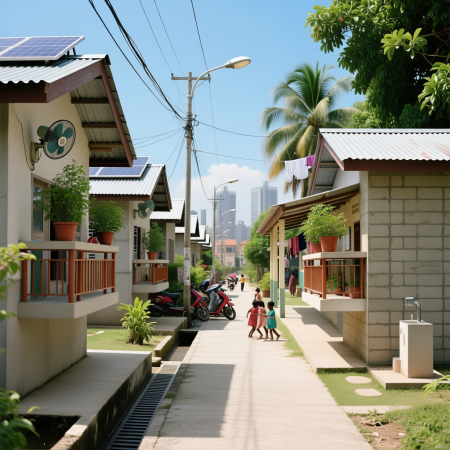
In response, the Indian government launched the Pradhan Mantri Awas Yojana (PMAY) to fast-track access to low-cost affordable quality housing for all. This summary explores these critical concerns that shape the present and future of low-cost affordable quality housing in India
1. Land Availability and Cost: The Foundational Hurdle
Land is the single most critical input in housing development, and its scarcity and high cost in urban centers pose a formidable barrier to low-cost affordable quality housing. In cities like Mumbai, Delhi, and Bengaluru, land prices have skyrocketed, making it nearly impossible for developers to construct homes within the affordability range of low- and middle-income groups. Even on the urban peripheries, where land is relatively cheaper, issues of unclear titles, fragmented ownership, and lack of basic infrastructure deter investment in low-cost affordable quality housing.
Moreover, land-use regulations often restrict the conversion of agricultural or industrial land for residential purposes, further limiting supply. Without strategic land pooling, public land allocation, or innovative land-value capture mechanisms, the dream of low-cost affordable quality housing remains elusive for millions. Addressing land bottlenecks through policy reforms and transparent land banks is essential to scale up low-cost affordable quality housing projects nationwide.
2. Construction Costs and Material Innovation
Even when land is secured, the cost of construction materials and labor can erode the affordability of housing. Traditional building methods using brick, cement, and steel are expensive and time-consuming. To make
low-cost affordable quality housing viable, there is an urgent need to adopt alternative, locally sourced, and eco-friendly materials such as compressed stabilized earth blocks (CSEB), bamboo, fly ash bricks, and precast concrete panels.
Innovations in construction technology—like 3D printing, modular construction, and prefabrication—can significantly reduce both time and cost while maintaining structural integrity and quality. However, the adoption of these technologies in India remains limited due to lack of awareness, skilled labor, and standardized codes. Scaling such innovations is crucial to delivering low-cost affordable quality housing that is not only affordable but also durable and resilient.
3. Financing Gaps and Access to Credit
Access to finance is another major constraint in the low-cost affordable quality housing ecosystem. While banks and housing finance companies have expanded their reach, many low-income households—especially those in the informal sector—lack the documentation, credit history, or collateral required to secure home loans. Even when loans are available, high interest rates and stringent repayment terms make them unaffordable.
Government subsidies under PMAY help bridge part of this gap, but they often fall short of covering the full cost, especially in high-cost urban areas. Microfinance institutions and cooperative housing models offer alternative pathways, but their scale is limited. Strengthening financial inclusion, promoting rental housing finance, and creating blended finance models that combine public subsidies with private capital are vital to expanding access to low-cost affordable quality housing.
4. Regulatory and Bureaucratic Challenges
India’s housing sector is burdened by complex, overlapping, and often outdated regulations. Obtaining building permits, environmental clearances, and occupancy certificates can take months or even years, increasing project costs and discouraging private developers from entering the low-cost affordable quality housing segment. Floor Area Ratio (FAR) restrictions, mandatory setbacks, and parking requirements further reduce the buildable area, making projects economically unviable at low price points.
Streamlining approval processes through single-window systems, digitizing land records, and relaxing certain norms for low-cost affordable quality housing (such as reduced FAR requirements or simplified compliance) can significantly accelerate delivery. Regulatory reforms must be tailored to incentivize developers to prioritize low-cost affordable quality housing without compromising on safety or quality.
5. Infrastructure Deficits and Location Constraints
Low-cost affordable quality housing is not just about four walls and a roof—it must be integrated with essential infrastructure like water supply, sanitation, electricity, roads, public transport, schools, and healthcare. Unfortunately, many affordable housing projects are located on the urban fringes, far from employment centers and civic amenities. This spatial mismatch increases commuting costs and time, undermining the very purpose of affordability.
Investing in last-mile connectivity and decentralized infrastructure is critical. Transit-oriented development (TOD) models, which locate low-cost affordable quality housing near mass transit corridors, can enhance accessibility and reduce household expenses. Public-private partnerships can play a key role in co-developing infrastructure alongside housing to ensure that low-cost affordable quality housing is truly livable and sustainable.
6. Quality vs. Cost: Striking the Right Balance
One of the most persistent myths is that low-cost affordable quality housing must mean substandard construction. In reality, affordability and quality are not mutually exclusive—but achieving both requires careful design, material selection, and construction oversight. Poorly built homes may be cheap upfront but incur high maintenance costs and pose safety risks, especially during natural disasters.
Adopting
performance-based building codes, third-party quality audits, and community participation in monitoring can ensure that low-cost affordable quality housing meets minimum standards of durability, ventilation, thermal comfort, and disaster resilience. Training masons and contractors in new techniques is equally important. After all, low-cost affordable quality housing should empower residents, not trap them in unsafe environments.
7. Tenure Security and Legal Recognition
For many urban poor living in slums or informal settlements, the lack of legal tenure is a constant source of anxiety. Without secure land rights, residents are reluctant to invest in improving their homes, and governments hesitate to provide infrastructure. Upgrading informal settlements through in-situ redevelopment—where residents retain occupancy rights—is a more humane and cost-effective approach than relocation.
Policies that recognize and formalize informal housing, coupled with community land trusts or cooperative ownership models, can provide the tenure security needed to foster investment in low-cost affordable quality housing. Legal recognition not only protects residents but also integrates them into the formal urban fabric, enhancing social equity.
8. Environmental Sustainability and Climate Resilience
As climate change intensifies, low-cost affordable quality housing must be designed to withstand extreme weather events like floods, heatwaves, and cyclones. This requires climate-responsive architecture—using passive cooling, rainwater harvesting, solar energy, and flood-resistant foundations. Green building practices should not be seen as luxury add-ons but as essential components of resilient low-cost affordable quality housing.
Moreover, sustainable construction reduces long-term operational costs for residents, making housing more affordable over its lifecycle. Integrating environmental considerations into national housing standards will ensure that low-cost affordable quality housing contributes to India’s climate goals while protecting vulnerable populations.
9. Social Inclusion and Community Design
Housing is deeply intertwined with social identity and community life. Poorly planned low-cost affordable quality housing projects can lead to social segregation, stigmatization, and lack of community cohesion. Inclusive design that incorporates mixed-income neighborhoods, shared public spaces, and cultural sensitivity fosters a sense of belonging and dignity.
Engaging future residents in the planning process ensures that low-cost affordable quality housing meets their actual needs—whether it’s space for home-based enterprises, childcare facilities, or places of worship. When communities co-create their housing solutions, the outcomes are more sustainable and socially harmonious.
10. Role of Public-Private Partnerships (PPPs)
Given the scale of India’s housing deficit—estimated at over 10 million units in urban areas alone—government alone cannot deliver low-cost affordable quality housing. Private developers bring capital, efficiency, and innovation, but they need viable business models. Incentives such as additional FAR, faster approvals, tax breaks, and assured demand through government offtake agreements can attract private players to the low-cost affordable quality housing segment.
Successful PPPs require clear contracts, risk-sharing mechanisms, and strong monitoring frameworks to ensure that affordability and quality are not compromised. When structured well, PPPs can dramatically accelerate the pace and scale of low-cost affordable quality housing delivery.
11. Technology and Digital Enablement
Digital tools are transforming the housing sector. Geographic Information Systems (GIS) can identify suitable land parcels for low-cost affordable quality housing. Building Information Modeling (BIM) optimizes design and reduces waste. Mobile apps can facilitate subsidy applications, track construction progress, and enable grievance redressal.
Moreover, fintech platforms are expanding access to micro-mortgages and rental payment systems. Embracing digitalization across the housing value chain—from planning to occupancy—can enhance transparency, reduce corruption, and improve the efficiency of low-cost affordable quality housing programs.
12. Skilled Workforce and Capacity Building
The construction sector in India suffers from a shortage of skilled labor, especially in new building techniques relevant to low-cost affordable quality housing. Traditional masons may not be trained in using alternative materials or energy-efficient designs. Investing in vocational training, certification programs, and on-site demonstrations is essential to build a workforce capable of delivering high-quality, affordable homes.
Government schemes like the Skill India Mission must align with housing goals to create a pipeline of trained professionals dedicated to low-cost affordable quality housing. Empowering local artisans not only improves construction quality but also generates employment.
13. Rental Housing: An Overlooked Dimension
While ownership dominates housing policy, rental housing is a critical component of low-cost affordable quality housing, especially for migrant workers, students, and young professionals. However, India’s rental market is largely informal, unregulated, and insecure. Tenants face arbitrary evictions, high deposits, and poor maintenance.
The Model Tenancy Act, 2021, aims to formalize rentals, but implementation remains patchy. Encouraging institutional rental housing—through REITs, public housing corporations, or private operators—can provide safe, affordable, and well-managed rental options. Low-cost affordable quality housing must include dignified rental choices to meet diverse urban needs.
14. Monitoring, Evaluation, and Feedback Loops
Ensuring that low-cost affordable quality housing meets its intended goals requires robust monitoring systems. Are homes actually occupied by the target beneficiaries? Are they structurally sound? Do they have access to water and sanitation? Without data-driven evaluation, policies risk becoming performative rather than transformative.
Establishing independent oversight bodies, leveraging citizen feedback through mobile platforms, and conducting post-occupancy evaluations can help refine programs and scale what works. Continuous learning is key to improving the delivery of low-cost affordable quality housing.
15. Cultural Perceptions and Aspirations
Finally, the success of low-cost affordable quality housing depends on how it is perceived by society. Many view affordable housing as “poor housing,” leading to stigma and resistance from neighboring communities. Changing this narrative requires showcasing successful, aesthetically pleasing, and well-integrated projects that demonstrate that low-cost affordable quality housing can be aspirational.
Public awareness campaigns, design competitions, and community showcases can shift mindsets and build social acceptance for inclusive urban development centered on low-cost affordable quality housing.
Conclusion: A Holistic Path Forward
Delivering low-cost affordable quality housing in India is not merely a construction challenge—it is a multidimensional puzzle requiring coordinated action across policy, finance, technology, and society. While progress has been made through schemes like PMAY, persistent gaps in land, finance, regulation, infrastructure, and quality assurance must be addressed with urgency and innovation.
The vision of “Housing for All” can only be realized when low-cost affordable quality housing becomes the norm—not the exception. This demands political will, private sector engagement, community participation, and a relentless focus on both affordability and dignity. By tackling the factors of concern holistically, India can transform its housing landscape and ensure that every citizen has access to a safe, secure, and sustainable home.
Also read: Poor Quality Housing
