PAKISTAN: LAND REGISTRATION INFORMATION SYSTEM AND ONE-WINDOW TITLE CONFIRMATION
Introduction
Pakistan: Land registration information system marks a transformative shift in how land rights are recorded and verified in a country where property is among the most valuable and contested assets. For decades, land transactions were governed by a fragmented, paper-based process prone to manipulation, delays, and corruption. Outdated records, manual updates, and reliance on local intermediaries eroded public trust and fueled legal disputes. In response, the government has launched a comprehensive digital reform through the Pakistan: Land registration information system, designed to replace inefficient legacy practices with a secure, transparent, and citizen-friendly platform for land governance.
Pakistan: Land registration information system and the legacy of manual records
Before digitization, land records in Pakistan were maintained in physical registers managed by local revenue officials known as
patwaris. These records — including the
jamabandi (record of rights),
fard, and
mutation register — were handwritten, rarely updated, and often stored in poorly secured offices. Access depended on intermediaries who frequently demanded bribes for basic services. This lack of transparency enabled fraud, forged documents, and illegal land grabs. The Pakistan: Land registration information system was introduced to dismantle this opaque structure and replace it with a tamper-proof digital alternative that ensures accuracy, accessibility, and accountability.
Pakistan: Land registration information system and digitization efforts
The journey toward a modern land administration framework began in the early 2010s, with pilot digitization projects in Punjab. Millions of physical land records were scanned, indexed, and uploaded into centralized databases. Geospatial mapping was used to link cadastral data with plot boundaries, reducing ambiguity in ownership. Over time, these efforts evolved into province-wide systems such as Punjab’s
Land Record Management Information System (LRMIS) and Sindh’s
Sindh Land Record Automation Project (SLRAP). Together, they form the backbone of the Pakistan: Land registration information system, enabling citizens to access land records online, verify ownership, and initiate transactions remotely.
Pakistan: Land registration information system and One-Window Title Confirmation
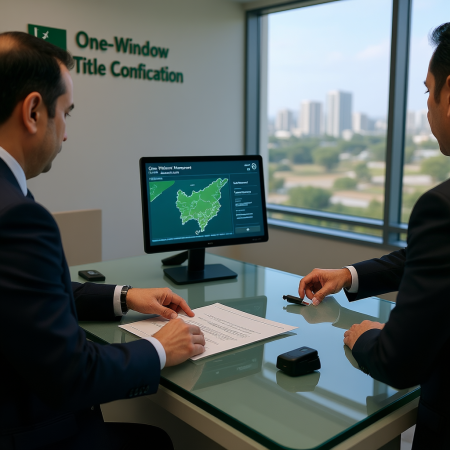
One of the most transformative innovations within the Pakistan: Land registration information system is the One-Window Title Confirmation mechanism. Previously, confirming land ownership required visits to multiple offices — revenue, survey, stamp, and registration — often spread across different cities. The process could take weeks or months and was riddled with unofficial payments. The One-Window model consolidates these services into a single service center, where applicants submit documents once, pay all fees electronically, and receive verified title confirmation within days. This integration is a hallmark of the Pakistan: Land registration information system, significantly improving efficiency and reducing opportunities for corruption.
Pakistan: Land registration information system and transparency
A major advantage of the Pakistan: Land registration information system is the unprecedented level of public transparency it enables. Citizens can now check land ownership status online using basic identifiers like the
khasra number or owner’s name. This openness empowers buyers to verify titles before purchase, helps banks assess mortgage eligibility, and allows courts to resolve disputes with accurate data. Every access and modification are logged, creating a digital audit trail that deters unauthorized changes. By making land records publicly verifiable, the Pakistan: Land registration information system strengthens trust in property rights and reduces reliance on middlemen.
Pakistan: Land registration information system and fraud prevention
Land fraud — including forged deeds, duplicate registrations, and illegal mutations — has long plagued Pakistan’s property market. The Pakistan: Land registration information system combats this through digital authentication, biometric verification, and encrypted databases. Once a transaction is recorded, it cannot be altered without proper authorization and a traceable digital footprint. In Punjab, for example, the LRMIS uses digital signatures and role-based access controls to ensure data integrity. As a result, incidents of land grabbing and document forgery have declined, and public confidence in the system continues to grow.
Pakistan: Land registration information system and economic growth
Secure land titles are essential for economic development. When ownership is clearly documented, individuals are more likely to invest in their property, use it as collateral for loans, or engage in formal leasing. The Pakistan: Land registration information system enables this by providing reliable, instantly verifiable records. Financial institutions are increasingly accepting digital title confirmations for mortgage processing, expanding access to housing finance. Small farmers can now obtain agricultural loans using their land as security. In this way, the Pakistan: Land registration information system acts as a catalyst for financial inclusion and rural development.
Pakistan: Land registration information system and women’s land rights
Women in Pakistan often face barriers to inheriting or asserting ownership of land due to social norms and weak documentation. The Pakistan: Land registration information system supports gender equity by ensuring that female heirs are formally recorded in digital records. In some regions, women are issued biometric-linked land cards that confirm their ownership independently. These measures empower women economically, reduce vulnerability, and promote household stability. By integrating gender-sensitive practices, the Pakistan: Land registration information system contributes to broader social reform.
Pakistan: Land registration information system and dispute resolution
Land-related disputes account for over 60% of civil cases in Pakistan’s courts, leading to years of delays and backlogs. The Pakistan: Land registration information system helps reduce this burden by providing judges and litigants with accurate, up-to-date records. Digital mutation trails and ownership histories can be accessed instantly, enabling faster rulings. Some provinces are integrating e-courts with the land registry, allowing evidence to be submitted electronically. As the system becomes more comprehensive, the number of land disputes is expected to decline significantly.
Pakistan: Land registration information system and urban planning
In fast-growing cities like Lahore, Karachi, and Islamabad, unplanned development and illegal colonies have created complex ownership issues. The Pakistan: Land registration information system supports urban governance by providing accurate cadastral maps and ownership data. Municipal authorities can identify encroachments, plan infrastructure, and regularize informal settlements with greater precision. For example, in Lahore’s Katchi Abadi regularization program, digital land records were used to verify occupancy and issue legal titles. This integration enhances transparency and service delivery in urban management.
Pakistan: Land registration information system and investment climate
A reliable land registry improves Pakistan’s investment climate. Investors — whether in real estate, agriculture, or industry — require certainty about ownership before committing capital. The Pakistan: Land registration information system reduces risk by offering instant title verification and reducing due diligence time. International development agencies and credit rating firms have acknowledged these reforms as positive steps toward better governance. By aligning with global standards, the Pakistan: Land registration information system makes Pakistan a more attractive destination for domestic and foreign investment.
Pakistan: Land registration information system and provincial implementation
While the vision is national, implementation of the Pakistan: Land registration information system is currently managed at the provincial level. Punjab leads in digitization, followed by Sindh and Khyber Pakhtunkhwa. Balochistan is in the early stages of rollout. This decentralized approach allows provinces to adapt the system to local needs but also creates challenges for data interoperability. Efforts are underway to establish a unified national land portal that links provincial databases, ensuring seamless access across regions.
Pakistan: Land registration information system and public awareness
For the Pakistan: Land registration information system to succeed, public trust and awareness are essential. Many rural citizens remain unfamiliar with digital services or lack internet access. To bridge this gap, provincial governments are conducting outreach campaigns, setting up mobile help desks, and training local officials. The goal is to position the information system not as a bureaucratic tool, but as a means of empowerment and protection for ordinary citizens.
Pakistan: Land registration information system and future enhancements
The future of the Pakistan: Land registration information system includes advanced features such as GPS and drone-based surveying, blockchain-backed record integrity, and mobile app integration. Plans are also underway to link land records with national ID (CNIC) databases for biometric verification. These innovations will further enhance security, speed, and accessibility, moving Pakistan toward a fully digital land administration ecosystem.
Conclusion: A foundation for modern governance
The Pakistan: Land registration information system represents a landmark shift in how land rights are managed in the country. By replacing manual, corruptible processes with a transparent, digital framework, it is restoring public trust, reducing conflict, and unlocking economic potential. The One-Window Title Confirmation service exemplifies how technology can simplify complex procedures and deliver real value to citizens. As the system expands and integrates across provinces, this system will continue to serve as a cornerstone of good governance, financial inclusion, and sustainable development.
Also read: The land issue in Karachi Pakistan
