
KNOWLEDGE INFLUENCES ON PERCEPTION OF INNOVATION DRIVERS FOR SUSTAINABLE HOUSING DEVELOPMENT MODELS
Introduction
Knowledge influences on perception in the development of sustainable housing models, where innovation—ranging from energy-efficient designs to circular construction practices—must be not only technically sound but also socially accepted. While technological advancements and policy mandates are essential, the adoption of these innovations ultimately hinges on how stakeholders perceive their value. When individuals and institutions have access to accurate, relevant, and well-communicated knowledge, their perception shifts from skepticism to acceptance.
These dynamic reveals that knowledge influences on perception by shaping whether new housing solutions are seen as viable, desirable, or necessary. Understanding this connection is crucial for fostering informed decision-making and accelerating the transition toward sustainable development.
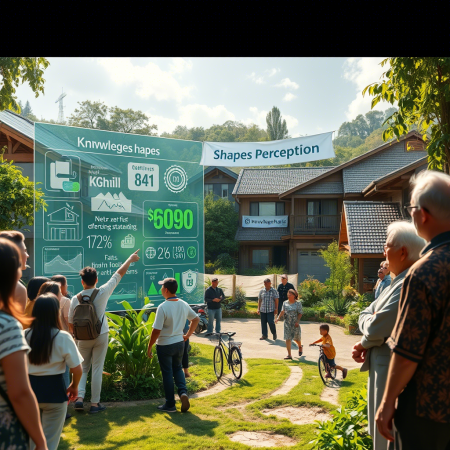
Knowledge influences on perception through education and professional training
One of the most powerful ways knowledge influences on perception is through formal education and training in architecture, engineering, urban planning, and construction. Professionals who are taught sustainable design principles during their academic years are more likely to view innovation as integral rather than optional. Universities that embed sustainability into core curricula help normalize green building practices, ensuring that graduates enter the workforce with a mindset oriented toward environmental responsibility. For example, students exposed to real-world case studies—such as the carbon-neutral neighborhoods in Freiburg or the solar-powered communities in Denmark—develop a positive perception of innovation as both practical and impactful. This early exposure fosters a long-term appreciation for sustainable solutions. Thus, knowledge influences on perception by shaping professional identity and decision-making frameworks. Certification programs like LEED, BREEAM, and Passivhaus further reinforce this effect. These credentials not only validate technical competence but also signal leadership in sustainability. Professionals who earn them often become change agents within their organizations, advocating for greener practices. In this way, knowledge influences on perception across teams and firms, promoting wider adoption of innovation. However, access to such education remains unequal. In low-income countries or underserved regions, training in sustainable construction is often limited. This knowledge gap leads to a perception that green housing is expensive, complex, or irrelevant to local needs. Therefore, expanding equitable access to education ensures that knowledge influences on perception in a fair and inclusive manner.Knowledge influences on perception through public awareness and media narratives
Beyond experts, the general public plays a crucial role in driving demand for sustainable housing. Homebuyers, renters, and community members must understand the benefits of innovation for widespread adoption to occur. Knowledge influences on perception through public awareness campaigns, documentaries, news reporting, and social media content. When people are informed about the long-term cost savings, improved indoor air quality, and reduced environmental impact of green homes, their attitude toward innovation becomes more favorable. For instance, media coverage of net-zero energy homes or affordable eco-villages helps demystify sustainable living and makes it relatable. Influencers and sustainability advocates who share personal experiences with green housing further humanize the concept, making it feel achievable. However, misrepresentation can distort perception. If sustainable housing is consistently portrayed as a luxury for the wealthy, it may be dismissed by middle- and low-income households. Similarly, exaggerated claims or lack of transparency about costs and maintenance can breed distrust. Therefore, knowledge influences on perception only when communication is honest, balanced, and inclusive. Digital platforms offer powerful tools for knowledge dissemination. Interactive websites, YouTube tutorials, and virtual home tours allow users to explore sustainable features firsthand. These experiences transform abstract ideas into tangible benefits, reinforcing positive perception. As such, knowledge influences on perception by making innovation visible, understandable, and desirable.Knowledge influences on perception through cultural context and local values
Culture plays a significant role in how innovation is received. Knowledge influences on perception differently depending on local traditions, beliefs, and lived experiences. In many regions, traditional building methods—such as using bamboo, earth, or stone—are inherently sustainable. When modern green technologies are introduced, they must be framed as complementary rather than superior, to avoid cultural resistance. For example, in parts of Africa and South Asia, earthen homes have been used for centuries due to their thermal comfort and low environmental impact. Introducing new materials like insulated concrete blocks may be met with suspicion if not properly explained. However, when knowledge is shared in culturally resonant ways—such as through community elders, local workshops, or storytelling—knowledge influences on perception positively, encouraging innovation without erasing heritage. Language also matters. Technical terms like “thermal envelope” or “embodied carbon” may alienate non-experts. Translating these concepts into everyday language helps bridge the gap between expert knowledge and public understanding. When communities feel included in the conversation, knowledge influences on perception by fostering ownership and trust in new housing models.Knowledge influences on perception through interdisciplinary collaboration
Sustainable housing is not a challenge for architects alone—it requires collaboration across disciplines. Engineers, environmental scientists, economists, sociologists, and policymakers each bring unique insights. Knowledge influences on perception when these perspectives are integrated into a shared vision. For instance, while an engineer may focus on structural efficiency, a sociologist might highlight user comfort and social equity. When both viewpoints are considered, the resulting design is not only technically sound but also socially acceptable. This holistic approach prevents innovation from being perceived as cold, impersonal, or disconnected from real human needs.Yet, collaboration requires effective communication. Without shared understanding, professionals may operate in silos, leading to fragmented outcomes. Joint workshops, cross-sector research, and co-design processes help align knowledge and expectations. In this way, knowledge influences on perception by building consensus and mutual respect across fields.
Moreover, interdisciplinary teams are better equipped to anticipate unintended consequences—such as gentrification from green redevelopment or displacement due to rising property values. By addressing these issues early, they ensure that innovation serves the public good. Thus, knowledge influences on perception toward more ethical and inclusive solutions.Knowledge influences on perception through policy and regulatory guidance
Governments shape perception not only through laws but also through the knowledge they provide. Building codes, zoning regulations, and financial incentives (e.g., tax credits for solar panels) signal societal priorities. When these policies are backed by clear, accessible information, knowledge influences on perception by legitimizing sustainable innovation. For example, cities like Amsterdam and Vancouver have implemented mandatory green roof policies supported by public guides, cost-benefit analyses, and technical support. This combination of regulation and education helps builders and homeowners understand why the policy exists and how to comply. As a result, innovation is perceived not as a burden but as a supported transition. On the other hand, policies that lack explanation or public engagement can breed resistance. If a new energy standard is introduced without training or resources, it may be seen as arbitrary or unfair. Therefore, knowledge influences on perception only when regulations are accompanied by transparent communication and capacity-building. Additionally, governments can act as knowledge hubs by funding research, publishing best practices, and showcasing pilot projects. These efforts not only generate new insights but also build public confidence in sustainable housing as a realistic and beneficial path forward.Knowledge influences on perception through digital tools and data access
Technology has revolutionized how knowledge is shared. Digital platforms—such as Building Information Modeling (BIM), online sustainability databases, and carbon calculators—allow stakeholders to access real-time, data-driven insights. Knowledge influences on perception by replacing guesswork with evidence. Developers can now simulate energy performance, compare material lifecycles, and estimate costs before breaking ground. This transparency reduces uncertainty and makes innovation feel less risky. For example, a builder considering cross-laminated timber (CLT) can use digital tools to assess fire safety, structural strength, and carbon savings—turning abstract benefits into concrete facts. Virtual reality (VR) and augmented reality (AR) further enhance perception. Potential buyers can walk through a 3D model of a sustainable home, experiencing natural lighting, ventilation, and smart features before construction begins. These immersive experiences help people feel the value of innovation, making it more appealing. However, digital access is not universal. In rural or low-income areas, limited internet connectivity or low digital literacy can exclude communities from these knowledge resources. To ensure equity, digital tools must be paired with offline alternatives and training programs. Only then can knowledge influences on perception across all segments of society.Knowledge influences on perception through trust and transparency
Even with abundant knowledge, perception can be hindered by distrust. Greenwashing—where companies falsely claim environmental benefits—undermines credibility. When consumers discover that a “green” building uses unsustainable materials or performs poorly, it damages the reputation of all sustainable innovations. Therefore, knowledge influences on perception only when information is verified and transparent. Third-party certifications, open data platforms, and independent audits help ensure accountability. When stakeholders can trust the knowledge they receive, they are more likely to support and invest in sustainable housing. Public participation also builds trust. When communities are involved in planning and decision-making, they gain firsthand knowledge of the benefits and trade-offs. This experiential learning strengthens perception more than top-down messaging ever could. Hence, knowledge influences on perception through inclusive and transparent processes.Knowledge influences on perception through real-world examples and demonstration projects
Seeing is believing. Pilot projects and demonstration homes provide tangible proof of innovation’s value. When people can visit a net-zero house, touch sustainable materials, and speak with residents, their perception shifts from abstract to real. For example, the BedZED development in the UK showed that eco-housing could be both affordable and community oriented. Similarly, Singapore’s Punggol Eco-Town demonstrated how smart technology, and green design could coexist in high-density urban settings. These projects serve as living laboratories, generating knowledge that shapes public and professional perception. When such examples are well-documented and widely shared, knowledge influences on perception at scale. Case studies, videos, and guided tours extend their impact beyond local boundaries, inspiring replication and adaptation in other regions.Knowledge influences on perception in shaping the future of sustainable housing
Looking ahead, the role of knowledge in shaping perception will only grow. Climate urgency, resource scarcity, and urbanization demand rapid innovation in housing. But technology alone cannot drive change—people must be willing to adopt it. To strengthen knowledge influences on perception, we must:- Expand education in sustainability at all levels
- Invest in culturally relevant public outreach
- Support interdisciplinary research and collaboration
- Leverage digital tools for wider access
- Ensure policies are transparent and inclusive
- Promote real-world demonstrations and participatory design