
PAKISTAN – ISLAMIC BANKS LEADING IN HOUSING FINANCE
Introduction
In Pakistan, a quiet but powerful transformation is reshaping the housing finance landscape — Islamic Banks leading in Housing Finance have emerged as the most trusted and rapidly growing force in helping millions of citizens achieve homeownership through Sharia-compliant solutions. As religious values, financial inclusion, and economic development converge, Islamic banks are not just offering an alternative to conventional banking — they are redefining what it means to buy a home in a Muslim-majority country.
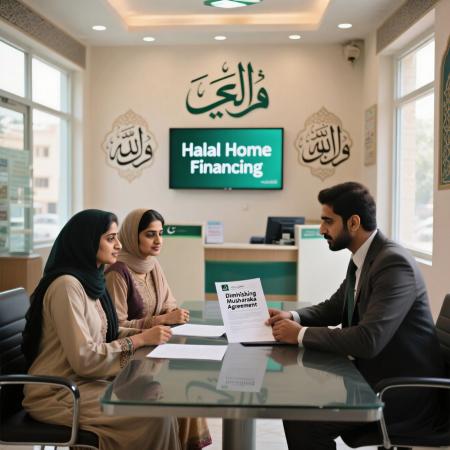
The Shift from Conventional to Islamic Housing Finance
For decades, conventional banks dominated the housing finance sector in Pakistan, offering mortgage loans based on interest (riba). However, many religiously observant citizens avoided these products, believing them to be haram (prohibited) under Islamic law. This created a massive gap in access to formal housing finance, especially among middle- and lower-income families who could not afford to build homes entirely from savings. The rise of Islamic Banks leading in Housing Finance has filled this gap by introducing asset-based, risk-sharing models that eliminate interest and promote shared ownership. Unlike conventional loans, where the bank lends money and charges interest, Islamic housing finance operates on principles of partnership, leasing, and gradual equity transfer — making it both ethical and accessible.How Islamic Housing Finance Works: Models and Mechanisms
The success of Islamic Banks leading in Housing Finance lies in their use of Sharia-compliant structures such as Diminishing Musharaka, Ijara, and Murabaha. The most widely adopted model is Diminishing Musharaka, where the bank and the customer jointly purchase a property. The customer then leases the bank’s share while gradually buying it out in installments until full ownership is achieved. For example, if a house costs PKR 10 million, the Islamic bank may co-own 70% of the property, and the customer pays monthly installments that include both rent (for the bank’s share) and a purchase component. Over time — typically 10 to 25 years — the customer acquires 100% ownership. This structure ensures transparency, avoids interest, and complies with Islamic jurisprudence. Other models like Ijara (leasing) are used for rental-to-own schemes, while Murabaha (cost-plus financing) is applied in cases where the bank purchases a property and sells it to the customer at a marked-up price payable in installments. These flexible mechanisms allow Islamic Banks leading in Housing Finance to serve diverse customer needs across urban and rural areas.Consumer Trust and Religious Acceptance
One of the key reasons Islamic Banks leading in Housing Finance have gained widespread popularity is the deep level of trust they inspire among religiously conscious consumers. For many Pakistanis, taking an interest-based loan is not just a financial decision — it is a moral and spiritual one. Islamic housing finance removes this conflict, allowing individuals to fulfill the Islamic duty of providing shelter for their families without compromising their faith.Religious scholars and institutions have played a crucial role in validating these products. Fatwas from the Sharia Advisory Councils of the State Bank of Pakistan and prominent Islamic seminaries have confirmed the halal nature of major Islamic housing schemes. This endorsement has significantly boosted public confidence and encouraged even conservative households to participate in formal housing finance.
Market Growth and Financial Inclusion
The housing finance portfolio of Islamic banks in Pakistan has grown exponentially over the past decade. According to the State Bank of Pakistan (SBP), Islamic housing finance disbursements increased by over 30% annually between 2018 and 2023. Meezan Bank alone accounts for more than 60% of the Islamic housing finance market, followed by BankIslami and Faysal Bank Islamic. This growth reflects not only rising demand but also improved financial literacy and awareness. As more people understand the benefits of Sharia-compliant financing, Islamic Banks leading in Housing Finance are expanding their outreach through digital platforms, mobile apps, and community-based financial education programs. These efforts are helping to bring previously excluded populations — including women, rural families, and low-income earners — into the formal housing sector.Government Support and Policy Enablers
The Pakistani government and central bank have played a supportive role in enabling Islamic Banks leading in Housing Finance to thrive. The State Bank of Pakistan has established a dedicated Islamic Banking Department and issued comprehensive guidelines for Sharia-compliant products. It also requires all Islamic banks to have Sharia Supervisory Boards to ensure compliance. Additionally, government housing initiatives like the Naya Pakistan Housing Program (NPHP) have created opportunities for Islamic banks to partner in large-scale affordable housing projects. By offering Sharia-compliant financing options within these programs, Islamic Banks leading in Housing Finance are ensuring that religious values are integrated into national development goals.Affordability and Long-Term Sustainability
While Islamic housing finance products may have slightly higher upfront costs due to asset ownership structures, they offer greater long-term stability. Since payments are linked to real assets rather than fluctuating interest rates, customers are less vulnerable to economic shocks. Moreover, the absence of compounding interest reduces the total cost of ownership over time. Islamic Banks leading in Housing Finance also emphasize financial discipline, requiring customers to demonstrate stable income and savings before approval. This risk-averse approach has resulted in lower default rates compared to conventional housing loans. According to SBP data, the non-performing loan (NPL) ratio for Islamic housing finance is under 3%, significantly lower than the industry average.Technology and Digital Transformation
To improve accessibility and efficiency, Islamic Banks leading in Housing Finance have embraced digital innovation. Customers can now apply for housing finance online, upload documents, and track approval status through mobile apps. Banks like Meezan and Bank Islami offer digital calculators that break down payment structures under Diminishing Musharaka, helping customers make informed decisions. Blockchain-based property verification, biometric authentication, and AI-driven credit assessments are also being piloted to reduce fraud and processing times. These technological upgrades are making Islamic Banks leading in Housing Finance not only ethical but also modern and competitive.Regional Reach and Urban-Rural Balance
While major cities like Karachi, Lahore, and Islamabad remain key markets, Islamic Banks leading in Housing Finance are increasingly expanding into smaller towns and rural areas. This outreach is critical, as rural populations have traditionally relied on informal financing or family support for home construction. By partnering with local builders, real estate developers, and microfinance institutions, Islamic banks are offering tailored housing solutions for low-cost homes, farmhouses, and disaster-resilient shelters. In flood-affected regions of Sindh and Baluchistan, Islamic banks have supported reconstruction efforts through Sharia-compliant emergency housing loans — further solidifying their role in inclusive development.Women and Financial Empowerment
An often-overlooked impact of Islamic Banks leading in Housing Finance is its contribution to women’s financial empowerment. For the first time, many women in Pakistan are able to apply for housing finance in their own name, even without a male co-signer. Islamic banks have introduced special schemes for female applicants, including reduced down payments and flexible repayment terms. These initiatives not only promote gender equality but also recognize women as key decision-makers in household formation. By enabling women to own homes, Islamic Banks leading in Housing Finance are helping to strengthen family stability and intergenerational wealth.Challenges and Barriers
Despite their success, Islamic Banks leading in Housing Finance face several challenges. One major issue is the higher initial down payment requirement — often 20–30% — which can be a barrier for low-income families. Additionally, the legal framework for property registration and title transfer remains complex and slow, delaying project completion. There is also a need for greater standardization across Islamic banks to ensure consistency in product offerings and Sharia compliance. Some customers still confuse Islamic financing with conventional loans, indicating a need for stronger public awareness campaigns. Finally, inflation and rising construction material costs have increased the financial burden on both banks and borrowers.Public-Private Partnerships and Future Expansion
To overcome these hurdles, Islamic Banks leading in Housing Finance are increasingly engaging in public-private partnerships (PPPs). Collaborations with government housing authorities, real estate developers, and international donors are enabling large-scale, affordable housing projects with integrated Sharia-compliant financing. For example, Meezan Bank has partnered with the Punjab Housing Authority to finance thousands of homes in subsidized housing schemes. Similarly, Bank Islami is working with the Kamyab Jawan Program to offer housing loans to young entrepreneurs and professionals. These partnerships are scaling up the impact of Islamic Banks leading in Housing Finance and making homeownership a reality for more Pakistanis.Environmental and Social Responsibility
Beyond financial services, Islamic Banks leading in Housing Finance are promoting environmental sustainability. Many new housing projects financed by Islamic banks include solar panels, rainwater harvesting systems, and energy-efficient designs — reflecting the Islamic principle of khalifah (stewardship of the Earth). Social responsibility is also embedded in their operations. Banks are supporting community development by funding schools, mosques, and healthcare centers within housing schemes. This holistic approach ensures that housing is not just about shelter, but about building thriving, ethical communities.Future Outlook: Innovation and Inclusion
Looking ahead, Islamic Banks leading in Housing Finance are poised for even greater growth. With the government’s renewed focus on affordable housing and financial inclusion, Islamic banks are expected to play a central role in national development strategies. Emerging trends include:- Green Islamic mortgages for eco-friendly homes
- Rent-to-own models for low-income families
- Digital wallets and fintech integration for seamless payments
- Blockchain-based land records to prevent fraud
- Micro-housing finance for single-room upgrades in slums