
INTEGRATING EARTHEN BUILDING MATERIALS AND METHODS INTO MAINSTREAM CONSTRUCTION
Introduction
Integrating earthen building materials into mainstream construction is not a step backward, but a forward-thinking evolution in sustainable architecture. As the construction industry faces mounting pressure to reduce carbon emissions, minimize waste, and create healthier living environments, ancient techniques are being reimagined with modern precision. Earth—used for millennia in the form of adobe, rammed earth, cob, and compressed earth blocks—is experiencing a renaissance. These natural materials offer a low-carbon, thermally efficient, and aesthetically rich alternative to conventional concrete and steel. This summary explores how integrating earthen building materials can transform the built environment by addressing environmental, economic, and social challenges while meeting contemporary standards of durability, safety, and design.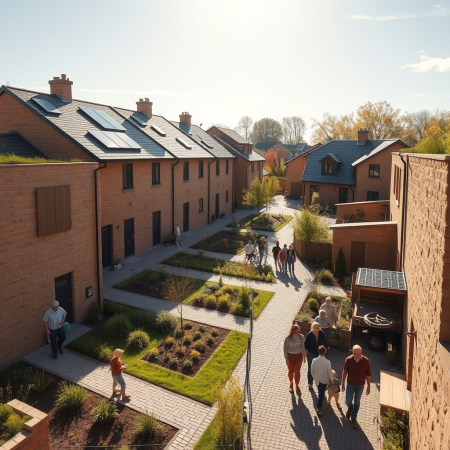
Integrating earthen building materials to combat climate change
The construction sector is responsible for nearly 40% of global carbon emissions, with cement production alone contributing around 8%. As nations strive to meet net-zero targets, the need for low-carbon alternatives has never been greater. Integrating earthen building materials offers a powerful solution. Unlike concrete, which requires high-energy kiln processes, earth is abundant, locally available, and requires minimal processing. When stabilized appropriately—often with small amounts of lime or cement—earthen structures can achieve impressive strength and longevity. Moreover, earth has exceptional thermal mass, meaning it absorbs heat during the day and releases it slowly at night, reducing the need for artificial heating and cooling. This passive climate control lowers energy consumption and enhances occupant comfort. By integrating earthen building materials into mainstream construction, developers and architects can significantly reduce the embodied carbon of buildings while contributing to climate resilience. Projects like the Earth House Estate in Switzerland and Hassan Fathy’s New Gourna Village in Egypt demonstrate that earthen architecture is not only viable but visionary in the fight against climate change.Integrating earthen building materials for cost-effective and accessible housing
Affordability remains a critical barrier to housing access worldwide. Integrating earthen building materials offers a cost-effective solution, especially in rural and low-income regions where conventional materials are expensive to transport and install. Earth is often available on-site or nearby, drastically cutting material and transportation costs. Additionally, construction techniques like cob or rammed earth can be labor-intensive but require minimal machinery, making them ideal for community-led or self-build projects. For example, in sub-Saharan Africa and South Asia, NGOs and local builders have successfully used compressed earth blocks (CEBs) to construct schools, clinics, and homes at a fraction of the cost of brick or concrete structures. These projects empower communities by creating local jobs and reducing dependency on imported materials. When integrating earthen building materials into public housing programs, governments can stretch limited budgets further while delivering durable, healthy homes. This approach not only lowers construction costs but also fosters economic resilience and self-reliance.Integrating earthen building materials with modern engineering standards
A common misconception is that earthen buildings are primitive or unsafe. However, integrating earthen building materials into mainstream construction requires—and is increasingly achieving—rigorous engineering standards. Modern rammed earth walls, for instance, are reinforced with vertical steel bars and designed to meet seismic and wind load requirements. Compressed earth blocks are tested for compressive strength, water resistance, and fire safety, ensuring they comply with building codes. In countries like Australia, France, and the United States, earthen buildings are now constructed with engineered foundations, moisture barriers, and protective overhangs to prevent erosion. These adaptations allow earthen structures to perform reliably in diverse climates, from arid deserts to humid coastal regions. Research institutions and universities are also developing standardized testing protocols and certification systems to support wider adoption. As a result, integrating earthen building materials is no longer seen as experimental but as a credible, code-compliant construction method.Integrating earthen building materials to enhance indoor environmental quality
The health of building occupants is increasingly recognized as a key metric of design success. Integrating earthen building materials contributes to superior indoor air quality and occupant well-being. Unlike synthetic wall finishes or insulation materials that can emit volatile organic compounds (VOCs), earth is non-toxic and naturally breathable. It regulates humidity by absorbing and releasing moisture, preventing mold growth and maintaining a balanced indoor climate. Studies have shown that living in earthen homes can reduce respiratory issues and improve sleep quality due to stable temperatures and reduced airborne pollutants. The natural texture and color of earth walls also create a calming, biophilic aesthetic that enhances mental well-being. As the wellness-focused design movement grows, integrating earthen building materials aligns perfectly with the demand for healthier, more human-centered spaces.Integrating earthen building materials through architectural innovation
Far from being limited to rustic or vernacular styles, integrating earthen building materials allows for striking architectural expression. Contemporary architects are using earth to create bold, sculptural forms that blend seamlessly with natural landscapes. From curved rammed earth walls in luxury eco-homes to modular earth brick facades in urban housing, the material’s versatility is being redefined. Notable examples include the Dunster House in the UK, where rammed earth walls form a central thermal core, and the Great Wall of WA in Australia, a 100-meter-long rammed earth structure that doubles as a public art installation. These projects demonstrate that integrating earthen building materials does not mean sacrificing aesthetics or innovation. On the contrary, earth offers a unique palette of colors, textures, and structural possibilities that inspire creativity and connection to place.Integrating earthen building materials in urban and high-density settings
Many assume earthen construction is only suitable for rural or low-rise buildings. However, integrating earthen building materials into urban environments is both feasible and beneficial. In cities, where heat islands and air pollution are major concerns, the thermal mass and breathability of earth can improve microclimates and reduce energy demand.Innovative hybrid systems are making this possible. For example, earth blocks can be used as infill panels in steel or timber frames, combining the structural efficiency of modern materials with the environmental benefits of earth. In France, the Lauréat Eco-Quartier features multi-story social housing with rammed earth interior walls that regulate temperature and enhance acoustics. Similarly, pilot projects in Germany and the Netherlands are exploring prefabricated earth wall panels for modular urban housing. These developments prove that integrating earthen building materials is scalable and adaptable to high-density, urban contexts.