INFRASTRUCTURE AND HOUSING FINANCE DEPARTMENT PAKISTAN
Introduction
Infrastructure and housing finance are central pillars of economic growth, social stability, and urban transformation in Pakistan. The Infrastructure and Housing Finance Department (IHFD) was established to address the country’s deep-rooted challenges in urban development, housing shortages, and financial exclusion. With a rapidly growing population and accelerating urbanization, Pakistan faces a housing deficit estimated at over 10 million units. The IHFD plays a strategic role in bridging this gap by integrating policy, financing, and implementation under a unified national framework. By focusing on infrastructure and housing finance, the department aims to create sustainable, inclusive, and resilient communities across the country.
Policy Framework and Institutional Coordination
The IHFD operates under the Ministry of Housing and Works and serves as the primary federal body responsible for shaping national strategies related to urban infrastructure and affordable housing. One of its core mandates is to harmonize efforts between federal, provincial, and local governments, ensuring coherence in planning and execution. Given Pakistan’s decentralized governance structure, coordination is essential to avoid duplication and inefficiencies. The department formulates national policies, sets technical standards, and monitors the performance of housing and infrastructure programs. This centralized oversight strengthens infrastructure and housing finance by aligning public investment with long-term development goals.
Through its policy leadership, the IHFD has introduced regulatory reforms to simplify land acquisition, expedite construction permits, and standardize building codes. These measures reduce bureaucratic delays and lower project costs—key barriers to scaling up infrastructure and housing finance initiatives. Additionally, the department works with financial regulators like the State Bank of Pakistan to promote a conducive environment for mortgage lending and real estate investment.
Driving the Naya Pakistan Housing Program
One of the most ambitious undertakings under the IHFD is the
Naya Pakistan Housing Program (NPHP), launched in 2019 with the goal of constructing 5 million affordable homes over the next decade. This program is fundamentally built on the principles of infrastructure and housing finance, combining public funding with private sector participation and innovative financial instruments. The NPHP targets low- and middle-income families, offering them access to secure, climate-resilient, and well-located housing.
The IHFD manages the financial architecture of the NPHP, including the allocation of federal subsidies, coordination with banks for housing loans, and oversight of construction timelines. By leveraging infrastructure and housing finance, the program ensures that homes are not just built but are part of integrated communities with access to water, sanitation, electricity, schools, and healthcare. The use of modern construction technologies such as prefabrication and modular design further enhances cost-efficiency and scalability.
Expanding Access to Affordable Credit
A major constraint in Pakistan’s housing market is the lack of accessible and affordable financing. Traditional banking systems often exclude low-income earners due to stringent eligibility criteria, lack of formal income documentation, and limited credit history. The IHFD addresses this gap by promoting financial inclusion through targeted infrastructure and housing finance programs.
The department collaborates with commercial banks, microfinance institutions, and specialized housing finance companies to design loan products tailored to first-time homebuyers. These include subsidized interest rates, longer repayment tenures (up to 20 years), and reduced down payment requirements. Risk-sharing facilities and partial credit guarantees are also introduced to encourage lenders to serve underserved populations. These initiatives have significantly expanded the reach of infrastructure and housing finance, bringing homeownership within reach for millions.
Public-Private Partnerships and Investment Mobilization
Given the scale of investment required—estimated in the hundreds of billions of dollars—public funding alone cannot meet Pakistan’s infrastructure and housing needs. The IHFD actively promotes public-private partnerships (PPPs) to mobilize private capital and expertise. Through PPP models, private developers construct housing units or upgrade urban infrastructure in exchange for long-term revenue streams or land entitlements.
To attract institutional investors such as pension funds and insurance companies, the IHFD is working on developing a secondary mortgage market. This includes the establishment of a National Housing Finance Company (NHFC) that can refinance housing loans and provide liquidity to primary lenders. By deepening capital markets, the department strengthens infrastructure and housing finance and creates a self-sustaining ecosystem for housing development.
Urban Upgrading and Katchi Abadis Transformation
Beyond new construction, the IHFD prioritizes the upgrading of informal settlements, commonly known as
katchi abadis, where millions of Pakistanis live without legal tenure or basic services. These settlements are often located in high-risk zones and are vulnerable to eviction and natural disasters. The department’s infrastructure and housing finance strategy includes legalizing land rights, improving physical infrastructure, and extending financial services to residents.
Under urban upgrading programs, the IHFD funds the construction of paved roads, drainage systems, clean water supply, and community centers. It also facilitates access to micro-housing loans, enabling residents to incrementally improve their homes. By integrating tenure security with infrastructure and housing finance, the department empowers communities and reduces urban inequality.
Sustainability and Climate Resilience
Pakistan ranks among the top 10 countries most affected by climate change, making sustainability a critical component of all development initiatives. The IHFD embeds climate resilience into infrastructure and housing finance by promoting green building standards, energy-efficient designs, and disaster-resistant construction techniques.
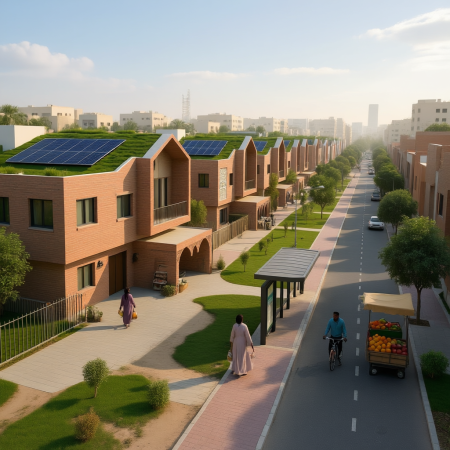
New housing projects under the NPHP are required to incorporate solar panels, rainwater harvesting, and passive cooling systems. The department also supports the use of locally sourced, eco-friendly materials to reduce carbon footprints. By aligning infrastructure and housing finance with environmental goals, the IHFD ensures that urban growth does not come at the expense of ecological balance.
Digital Innovation and Fintech Integration
The IHFD is harnessing digital technologies to enhance the efficiency and inclusiveness of infrastructure and housing finance. Mobile banking platforms, digital credit scoring, and online application portals are being introduced to streamline the loan approval process. These tools reduce processing times, minimize corruption, and improve transparency.
Blockchain technology is being piloted for land record digitization, helping to resolve disputes and prevent fraud. Digital land registries also strengthen property rights, a prerequisite for mortgage lending. By modernizing systems, the IHFD is making infrastructure and housing finance more accessible, especially in rural and remote areas where traditional banking infrastructure is weak.
Land Use and Urban Planning Challenges
One of the biggest hurdles to effective infrastructure and housing finance is the scarcity of developable land in major cities. Urban sprawl, speculation, and inefficient land use have driven up prices and pushed affordable housing to the outskirts, far from jobs and services. The IHFD is advocating for comprehensive land use reforms, including urban densification, mixed-use zoning, and transit-oriented development.
By coordinating with provincial development authorities, the department identifies underutilized public land for housing projects. It also promotes vertical housing and high-density communities to maximize land efficiency. Integrating infrastructure and housing finance with transportation planning ensures that new developments are well-connected and reduce reliance on private vehicles.
Strengthening the Mortgage Market
Pakistan’s mortgage market remains underdeveloped, with mortgage loans accounting for less than 1% of GDP—among the lowest in the world. The IHFD is leading efforts to reform the legal and financial framework to support long-term housing finance. Key initiatives include the proposed National Mortgage Refinancing Company (NMRC), which would purchase mortgages from banks and free up capital for new lending.
The department is also pushing for legislative changes to strengthen
foreclosure mechanisms, protect lenders’ rights, and standardize property valuation. These reforms are essential to build investor confidence and deepen the infrastructure and housing finance market. A robust mortgage system will not only boost homeownership but also stimulate construction, employment, and overall economic activity.
Capacity Building and Institutional Strengthening
Implementing large-scale housing and infrastructure projects requires skilled personnel and strong institutions. The IHFD invests in capacity building through training programs for government officials, engineers, urban planners, and financial analysts. Technical assistance is provided to provincial housing authorities to improve project management and monitoring.
The department also supports research and data collection to inform evidence-based policymaking. Regular surveys on housing demand, affordability, and infrastructure gaps help refine infrastructure and housing finance strategies. By strengthening institutional capabilities, the IHFD ensures that programs are delivered on time, within budget, and to high quality standards.
International Partnerships and Funding Support
The IHFD collaborates with international development partners to access funding, technical expertise, and global best practices. Organizations such as the World Bank, Asian Development Bank (ADB), Islamic Development Bank (IsDB), and United Nations agencies provide financial support and advisory services for housing and urban development projects.
For example, the ADB is funding the Punjab Affordable Housing Program, which integrates infrastructure and housing finance with urban resilience. The World Bank supports slum upgrading initiatives in Karachi and Lahore. These partnerships not only bring in capital but also help build institutional knowledge and promote transparency in infrastructure and housing finance operations.
Private Sector Engagement and Incentives
The private sector is a vital partner in delivering housing at scale. The IHFD facilitates private investment through incentives such as tax exemptions, fast-track approvals, and guaranteed off-take agreements for completed units. Investment forums and housing expos are organized to connect developers with financiers and buyers.
The department also encourages corporate social responsibility (CSR) initiatives, where private companies contribute to affordable housing as part of their community development goals. By creating an enabling environment, the IHFD enhances the role of infrastructure and housing finance in mobilizing private capital for public good.
Monitoring, Evaluation, and Accountability
To ensure transparency and effectiveness, the IHFD has established a robust monitoring and evaluation (M&E) framework for all infrastructure and housing finance programs. Key performance indicators (KPIs) track housing completions, loan disbursements, infrastructure upgrades, and beneficiary satisfaction.
Digital dashboards provide real-time updates on project progress, allowing policymakers to identify bottlenecks and take corrective action. Third-party audits and citizen feedback mechanisms further enhance accountability. This data-driven approach strengthens public trust and improves the impact of infrastructure and housing finance initiatives.
Community Participation and Public Awareness
The success of infrastructure and housing finance depends on public buy-in and active participation. The IHFD conducts awareness campaigns to inform citizens about available housing schemes, eligibility criteria, and application procedures. Grievance redressal cells are established to address complaints and ensure fair treatment.
In urban upgrading projects, residents are involved in planning decisions through community consultations. This participatory approach ensures that developments meet local needs and respect cultural contexts. By fostering inclusivity, the IHFD reinforces the social dimension of infrastructure and housing finance.
Future Outlook and Strategic Vision
Looking ahead, the IHFD envisions a future where every Pakistani has access to safe, affordable housing and modern infrastructure. The department continues to refine its strategies, adopt new technologies, and expand partnerships to achieve this vision. The integration of infrastructure and housing finance with national development plans—such as the Vision 2025 and SDG 11 (Sustainable Cities and Communities)—ensures alignment with broader goals.
Emerging trends such as smart cities, renewable energy integration, and circular economy principles are being incorporated into future projects. The IHFD is also exploring green bonds and climate financing as new tools for infrastructure and housing finance, opening up innovative avenues for funding sustainable development.
Conclusion
In conclusion, the Infrastructure and Housing Finance Department is at the heart of Pakistan’s efforts to build a more equitable and prosperous society. Through strategic use of infrastructure and housing finance, the department is transforming urban landscapes, empowering low-income families, and stimulating economic growth. From policy reform to on-the-ground implementation, every initiative reflects a commitment to sustainability, inclusion, and innovation.
As Pakistan continues to urbanize, the role of infrastructure and housing finance will only grow in importance. With strong leadership, continued investment, and multi-stakeholder collaboration, the IHFD is laying the foundation for a Naya Pakistan—where shelter is a right, not a privilege, and where cities thrive on the principles of justice, resilience, and shared prosperity.
Also read: The urban requirements and challenges for Pakistan
