
INDIA – AFFORDABLE HOUSING RAJASTHAN INITIATIVES
Introduction
Affordable housing Rajasthan is driving a quiet revolution across the vast and vibrant state, where desert landscapes blend with historic cities and rural villages. What began as a policy initiative has now become a cornerstone of inclusive development, transforming lives by providing safe, sustainable, and dignified shelter to millions.
With rapid urbanization, migration, and growing income disparities, the need for decent, low-cost homes has never been greater. Recognizing this, the Government of Rajasthan, in collaboration with central schemes and private partners, has launched a series of transformative initiatives to ensure that every citizen, regardless of economic status, has access to safe and dignified shelter.
Government-Led Mission: Pradhan Mantri Awas Yojana – Urban (PMAY-U)
The most significant driver of Affordable housing Rajasthan is the Pradhan Mantri Awas Yojana – Urban (PMAY-U), a flagship national program launched in 2015 with the goal of "Housing for All by 2022" (later extended). Under this mission, Rajasthan has emerged as one of the top-performing states in terms of project approvals, fund utilization, and house completions. Through PMAY-U, the state government identifies eligible beneficiaries — primarily from the Economically Weaker Sections (EWS), Low-Income Groups (LIG), and Middle-Income Groups (MIG) — and provides them with financial assistance in the form of direct benefit transfers (DBT). These funds support either the construction of new homes, enhancement of existing ones, or the purchase of flats in approved housing projects. The integration of technology through the AwaasSoft platform has ensured transparency and real-time monitoring of progress. Each completed unit under Affordable housing Rajasthan is designed to be pucca (permanent), with basic amenities like toilets, electricity, and clean water — aligning with the broader goals of urban renewal and public health.Innovative Construction Technologies and Cost Efficiency
One of the key reasons Affordable housing Rajasthan has been successful is the adoption of modern, cost-effective construction technologies. Traditional brick-and-mortar methods are being replaced with faster, eco-friendly alternatives such as:- Prefabricated structures
- Autoclaved Aerated Concrete (AAC) blocks
- Rural Technology Park (RTP)-approved designs
- 3D cement printing (pilot projects)
Focus on Urban Slum Rehabilitation
A major component of Affordable housing Rajasthan is the rehabilitation of urban slums. In cities such as Jaipur, Bikaner, and Bharatpur, thousands of families live in informal settlements with limited access to basic services. The state has prioritized in-situ slum redevelopment — meaning homes are rebuilt on the same land, minimizing displacement. Under this model, temporary shelters are provided during construction, and residents are involved in the planning process. Once completed, beneficiaries receive a formal property title, which empowers them economically and socially. This approach not only improves living conditions but also integrates marginalized communities into the formal urban system. The success of slum rehabilitation in Jaipur’s Sanganer and Jagatpura areas has become a model for other cities, proving that Affordable housing Rajasthan can be both humane and scalable.Rural Housing: Pradhan Mantri Awas Yojana – Gramin (PMAY-G)
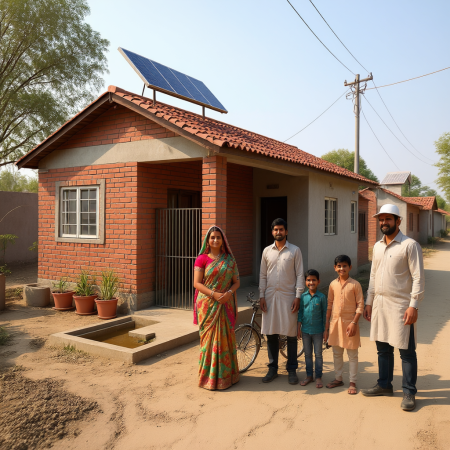
While urban initiatives dominate headlines, Affordable housing Rajasthan also extends deep into rural areas through the Pradhan Mantri Awas Yojana – Gramin (PMAY-G). This central scheme, implemented by the Rural Development Department, targets households living in kutcha (temporary) homes. Eligible families receive financial assistance — up to ₹1.2 lakh in plains and ₹1.3 lakh in hilly or difficult areas — to construct pucca houses with two rooms, a toilet, and a safe roof. The funds are transferred directly to the beneficiary’s bank account in three installments linked to construction milestones. As of 2024, over 2.5 million rural houses have been completed in Rajasthan under PMAY-G, significantly reducing homelessness and improving health outcomes. The use of local artisans and traditional Rajasthani architecture ensures that these homes are not only functional but also culturally appropriate.Women-Centric Housing Policies
An empowering aspect of Affordable housing Rajasthan is its focus on gender equity. Under both PMAY-U and PMAY-G, houses are either jointly registered in the name of husband and wife or solely in the woman’s name. This policy strengthens women’s economic rights, enhances their decision-making power, and protects them from displacement in case of marital conflict. In several districts, women’s self-help groups (SHGs) have been involved in monitoring construction, managing funds, and even training as masons through the Grihini Udyami Yojana. This not only ensures accountability but also creates livelihood opportunities — making Affordable housing Rajasthan a tool for social transformation.Public-Private Partnerships and Private Sector Involvement
To scale up delivery, the state government has actively promoted public-private partnerships (PPPs) under Affordable housing Rajasthan. Real estate developers are incentivized to include EWS and LIG units in larger housing projects through floor-area ratio (FAR) bonuses and faster approvals. Private developers like Tata Housing, Godrej Properties, and local firms have launched affordable housing projects in Jaipur, Ajmer, and Jodhpur, often in collaboration with financial institutions offering low-interest home loans. These partnerships ensure that Affordable housing Rajasthan is not solely dependent on government funding but benefits from private efficiency and innovation.Smart City Integration: Affordable Housing in Urban Renewal
As part of the Smart Cities Mission, six cities in Rajasthan — Jaipur, Udaipur, Ajmer, Bikaner, Kota, and Alwar — are integrating Affordable housing Rajasthan into their urban development plans. These smart city projects include:- Mixed-income housing complexes
- Transit-oriented development near metro and bus corridors
- Green building standards (solar panels, rainwater harvesting)
- Digital property management systems
Financial Inclusion and Housing Loans
Access to credit is critical for the success of Affordable housing Rajasthan. While government subsidies cover a portion of construction costs, many families still require additional financing. To address this, banks and housing finance companies (HFCs) offer specialized low-cost home loans with flexible repayment terms. The State Bank of India, Punjab National Bank, and HDFC have introduced EWS/LIG-focused products with interest rates as low as 6.5%. Additionally, the Rajasthan State Cooperative Bank supports rural housing through micro-loans and group lending models. Financial literacy campaigns are also being conducted to educate beneficiaries about loan terms, repayment schedules, and property rights — ensuring that Affordable housing Rajasthan leads to long-term financial stability.Sustainability and Climate-Resilient Design
Given Rajasthan’s arid climate and water scarcity, sustainability is a core principle of Affordable housing Rajasthan. New homes are designed to be energy-efficient and climate-resilient, featuring:- Thick walls and insulated roofs to reduce indoor heat
- Rainwater harvesting systems
- Solar water heaters and rooftop solar panels
- Drought-resistant landscaping
Technology and Digital Governance
Digital tools have revolutionized the implementation of Affordable housing Rajasthan. The AwaasSoft portal, used under PMAY, allows real-time tracking of applications, approvals, construction progress, and fund disbursements. Beneficiaries can check their status online or via mobile apps, reducing delays and corruption. Geotagging of every completed house ensures transparency and prevents duplication. Drone surveys and GIS mapping help identify high-priority areas and monitor project quality. This tech-driven approach has made Affordable housing Rajasthan one of the most transparent and accountable housing programs in India.Challenges and Implementation Gaps
Despite its successes, Affordable housing Rajasthan faces several challenges. In some rural areas, delays in fund disbursement and lack of skilled labor slow down construction. Land acquisition remains a sensitive issue, especially in urban redevelopment projects. There are also concerns about the quality of some completed units — reports of cracks, poor plumbing, or inadequate ventilation have surfaced in isolated cases. To address this, the state has introduced third-party quality audits and citizen feedback mechanisms. Additionally, awareness about housing schemes remains low in remote villages, where illiteracy and language barriers hinder participation. Mobile outreach teams and local NGOs are now being deployed to bridge this gap.Future Outlook: Scaling Up and Innovating
Looking ahead, Affordable housing Rajasthan is poised for further expansion. The state government has announced plans to build over 500,000 additional homes by 2027, with a focus on peri-urban areas and migrant workers. Emerging trends include:- Affordable rental housing for urban poor
- Co-living spaces for youth and working professionals
- Modular homes for disaster-prone zones
- Blockchain-based land records to prevent fraud