INCLUSIVE UNITED CITIES FOR ALL: AFFORDABLE HOUSING AND HOMELESSNESS
Introduction
Inclusive United cities are more than a vision—it is a necessity for a world where urbanization is accelerating, inequality is deepening, and millions still live without a safe place to call home. As cities grow in size and economic importance, they must also grow in compassion, equity, and justice. Inclusive United cities are those that ensure every resident—regardless of income, background, race, gender, or housing status—has access to secure, affordable housing and the dignity that comes with it. This means confronting the dual crises of unaffordable housing and homelessness not as isolated issues, but as interconnected symptoms of systemic failure.
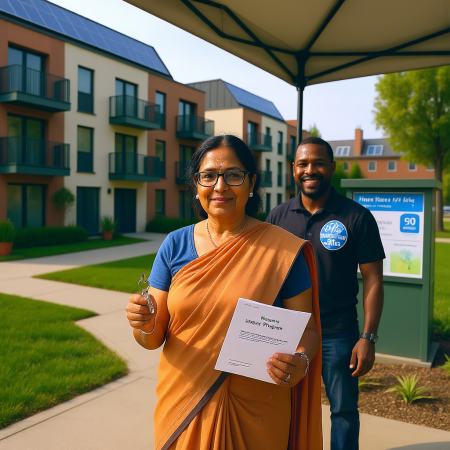
To build Inclusive United cities, we must move beyond temporary fixes and embrace long-term, people-centered solutions that prioritize human rights, community well-being, and social cohesion. Without such a commitment, cities risk becoming divided landscapes of privilege and exclusion, where only the wealthy can thrive.
The Global Housing Crisis: A Barrier to Unity
At the heart of the struggle for Inclusive United cities lies the global housing crisis. In cities from New York to Nairobi, from London to Lagos, housing prices have soared while wages have stagnated. For low- and middle-income families, the dream of homeownership or even stable renting is slipping away. In many urban centers, more than half of a household’s income goes toward rent, leaving little for food, healthcare, or education. This imbalance fuels insecurity, displacement, and ultimately, homelessness.
The lack of affordable housing is not a natural outcome—it is the result of policy choices, market failures, and decades of underinvestment in social housing. When cities prioritize luxury developments over community needs, they deepen inequality and weaken social fabric. Inclusive United cities reject this model. They recognize that housing is not a commodity to be traded for profit, but a fundamental human right. Achieving Inclusive United cities requires a fundamental shift in values—one that places people before property values.
Homelessness: The Human Cost of Exclusion
Homelessness is one of the most visible and tragic consequences of failed housing systems. On any given night, hundreds of thousands of people sleep on the streets, in shelters, or in vehicles across the world. Many are families with children, veterans, survivors of domestic violence, or individuals struggling with mental health and addiction. Behind every person experiencing homelessness is a story of loss, trauma, and systemic neglect.
In too many cities, homelessness is criminalized rather than addressed. Laws that ban sleeping in public spaces, panhandling, or loitering push vulnerable people further into the margins. These punitive approaches do nothing to solve the root causes of homelessness—they only deepen suffering. Inclusive United cities take a different path. They treat homelessness as a policy failure, not a personal one. They invest in solutions that restore dignity, provide stability, and reintegrate individuals into the community.
Housing as a Human Right
The foundation of Inclusive United cities is the recognition that housing is a human right. This principle is enshrined in international agreements such as the Universal Declaration of Human Rights and the International Covenant on Economic, Social and Cultural Rights. Yet, in practice, this right is routinely violated in urban areas around the world.
When cities fail to protect this right, they undermine their own stability and prosperity. Children without stable homes perform worse in school. Adults without addresses struggle to find jobs. Communities with high rates of homelessness face increased strain on healthcare, policing, and social services. By contrast, Inclusive United cities understand that secure housing is the bedrock of a healthy society. It enables education, employment, health, and civic participation. It is not a luxury—it is a prerequisite for a functioning democracy.
Affordable Housing: More Than Just Low Rent
Affordable housing is often misunderstood as simply “cheap housing.” But true affordability goes beyond price. A home is affordable when it allows a household to meet other basic needs without financial strain. It must also be safe, located near jobs and services, and protected from sudden eviction or rent hikes.
Inclusive United cities define affordability holistically. They consider transportation costs, access to schools and healthcare, and the quality of the built environment. They ensure that affordable housing is integrated into neighborhoods—not isolated in neglected corners of the city. Mixed-income developments, rent controls, and long-term leases are all tools that help create sustainable affordability. Inclusive United cities also prioritize energy-efficient, climate-resilient housing to reduce utility costs and environmental impact.
Social and Public Housing: A Proven Solution
One of the most effective ways to achieve Inclusive United cities is through robust investment in social and public housing. Countries like Austria, Finland, and Singapore have shown that when governments build and maintain high-quality housing for all, homelessness declines and social cohesion improve.
Yet, in many nations, public housing has been dismantled or underfunded. The “right to buy” schemes of the 1980s in the UK, for example, led to a dramatic reduction in council housing stock. In the US, federal investment in public housing has declined for decades. Inclusive United cities reverse this trend. They reinvest in public housing, ensure it is well-maintained, and expand it to meet growing demand. They also support non-profit housing associations and community land trusts that keep homes permanently affordable.
Ending Homelessness: The Housing First Model
One of the most successful strategies for achieving Inclusive United cities is the Housing First approach. Pioneered in Finland and adopted in cities like Houston and Salt Lake City, this model provides permanent housing to people experiencing homelessness without preconditions such as sobriety or employment.
The results are transformative. Studies show that Housing First reduces chronic homelessness, improves health outcomes, and lowers public costs by reducing emergency room visits and incarceration. It works because it treats people with dignity and recognizes that stability must come before recovery. Inclusive United cities embrace Housing First not as a charity, but as a smart, humane, and cost-effective policy.
Prevention: Stopping Homelessness Before It Starts
While providing housing to those already homeless is crucial, Inclusive United cities also focus on prevention. Most people who become homeless do so after a crisis—job loss, medical emergency, domestic violence, or family breakdown. With timely support, many of these situations can be resolved before eviction occurs.
Prevention strategies include emergency rental assistance, legal aid for tenants facing eviction, and financial counseling. Mobile outreach teams can connect at-risk individuals with services before they lose their homes. Inclusive United cities fund these programs proactively, recognizing that preventing homelessness is far more effective—and less expensive—than responding to it after the fact.
Community-Led and Cooperative Housing
Top-down solutions often fail because they don’t reflect the needs of residents. Inclusive United cities empower communities to shape their own housing futures. Community land trusts, housing cooperatives, and self-build projects give residents control over land and homes, ensuring affordability is preserved for generations.
These models also foster stronger social ties, mutual support, and neighborhood pride. For example, the Champlain Housing Trust in Vermont has developed over 2,000 affordable homes that remain permanently below market rate. Inclusive United cities scale up such initiatives, providing funding, technical support, and land access to grassroots organizations.
Urban Planning for Equity and Inclusion
The way cities are planned determines who belongs and who is excluded. Too often, urban development prioritizes luxury apartments, shopping malls, and office towers over affordable homes. This leads to displacement, gentrification, and the erosion of long-standing communities.
Inclusive United cities plan with equity in mind. They require developers to include affordable units in new projects (inclusionary zoning), protect tenants from no-fault evictions, and prioritize transit-oriented development. They preserve existing affordable housing and invest in neighborhoods that have been historically underserved. Urban planning in Inclusive United cities is participatory residents are involved in decisions about land use, design, and regeneration.
The Role of Data and Technology
Achieving Inclusive United cities requires accurate data. Cities must know how many people are homeless, where affordable housing is needed, and who is at risk of eviction. Door-to-door surveys, GIS mapping, and real-time dashboards help governments respond effectively.
Technology can also improve access to services. Online portals for housing applications, AI-driven risk assessments, and mobile apps for tenant rights make systems more transparent and efficient. Inclusive United cities use data ethically and inclusively ensuring that marginalized groups are counted and served.
Inclusion of Marginalized Communities
True inclusivity means leaving no one behind. Black, Indigenous, and People of Color (BIPOC), LGBTQ+ individuals, migrants, people with disabilities, and women facing domestic violence often face disproportionate barriers to housing. Discrimination in rental markets, lack of accessible homes, and cultural insensitivity in services deepen their vulnerability.
Inclusive United cities actively combat these inequities. They enforce anti-discrimination laws, fund
culturally competent housing programs, and ensure accessibility in design. They prioritize the needs of survivors of violence and provide safe, confidential housing options. In Inclusive United cities, diversity is not a challenge—it is a strength.
Sustainability and Climate Resilience
The climate crisis intersects with housing in profound ways. Many low-income neighborhoods are located in flood-prone or heat-vulnerable areas. Poorly insulated homes lead to high energy bills and health risks. Inclusive United cities address this by building green, energy-efficient housing and retrofitting existing homes.
Solar panels, rainwater harvesting, passive cooling, and sustainable materials reduce costs and environmental impact. These features are not luxuries—they are essential for long-term affordability and resilience. Inclusive United cities link housing policy with climate action, recognizing that a sustainable city is also a just one.
Policy Leadership and Political Will
Ultimately, Inclusive United cities require bold leadership. Housing is often a politically sensitive issue, with powerful interests favoring market-driven solutions. But the status quo is unsustainable. Mayors, city councils, and national governments must commit to transformative change.
This includes increasing funding for affordable housing, reforming zoning laws, and holding developers accountable. It means setting measurable goals and tracking progress transparently. Inclusive United cities are not built overnight—they are the result of sustained political will and public support.
Global Solidarity and Knowledge Sharing
No city has to solve these challenges alone. Inclusive United cities learn from one another. Networks like United Cities and Local Governments (UCLG), the Global Covenant of Mayors, and the Homelessness Prevention Initiative facilitate knowledge exchange and joint advocacy.
Cities in the Global South and North face different contexts, but they share common goals. By sharing best practices, pooling resources, and standing in solidarity, they can accelerate progress. Inclusive United cities are part of a global movement for housing justice.
Conclusion: A Shared Vision for the Future
Inclusive United cities is not a distant dream—it is an achievable reality. It begins with the belief that everyone deserves a safe, stable home. It grows through investment, innovation, and inclusion. It is sustained by compassion, data, and accountability.
Also read: The New Divided City Partners Changing in European Cities
