
Housing the Poor in African Cities
Introduction
Across the rapidly urbanizing landscapes of Africa, one of the most pressing and persistent challenges is providing adequate, safe, and affordable shelter for low-income populations.
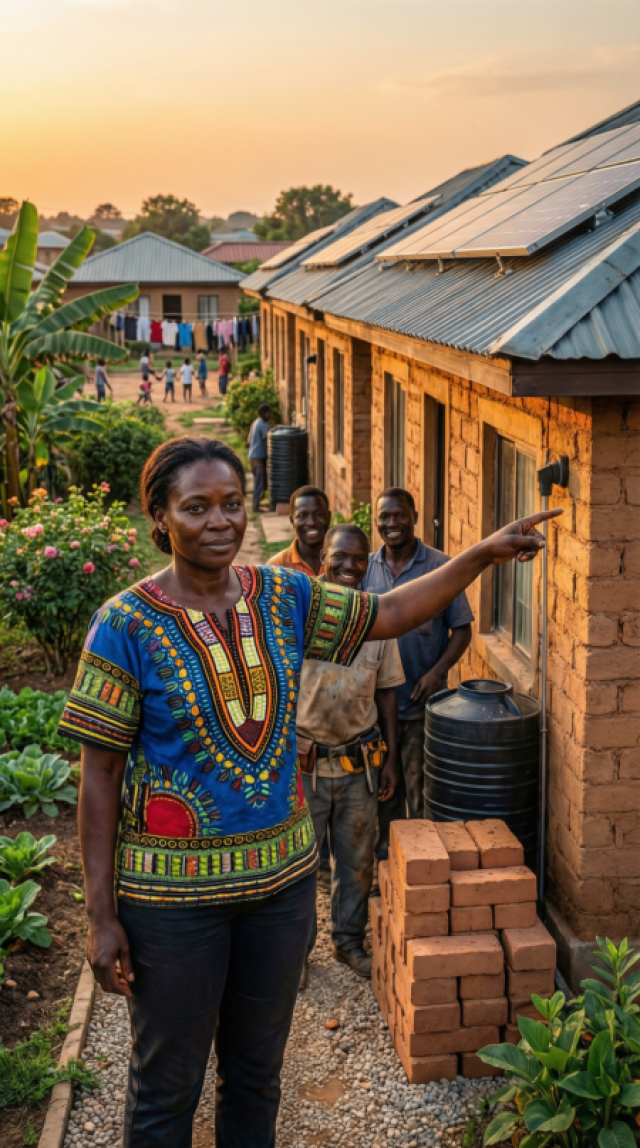
As cities swell with rural migrants seeking better opportunities, informal settlements—often characterized by overcrowding, inadequate infrastructure, and insecure tenure—continue to expand.
The issue of housing the poor in African cities is not merely a matter of bricks and mortar; it is deeply intertwined with economic inequality, governance, land rights, climate vulnerability, and social justice.
This summary explores the multifaceted dimensions of housing the poor in African cities, examining their historical roots, current realities, policy responses, innovative solutions, and prospects.
The Urban Explosion and Its Housing Crisis
Africa is urbanizing faster than any other continent. According to UN-Habitat, over 40% of Africans now live in urban areas—a figure projected to exceed 60% by 2050. Yet this demographic shift has not been matched by corresponding investments in urban infrastructure or housing supply.
The result? A severe deficit in formal housing options for the urban poor. In cities like Lagos, Nairobi, Kinshasa, and Johannesburg, millions reside in slums or informal settlements where basic services such as clean water, sanitation, electricity, and waste management are either absent or grossly inadequate.
This crisis stems from a combination of factors: rapid population growth, limited access to finance, restrictive land tenure systems, weak urban planning frameworks, and insufficient political will.
For many urban dwellers earning less than $2 a day, renting even the most basic room in a formal structure is financially out of reach. Consequently, they resort to self-built shelters on unoccupied or contested land—often without legal recognition.
These conditions perpetuate cycles of poverty and marginalization, making housing the poor in African cities one of the continent’s most urgent development priorities.
Historical Context: Colonial Legacies and Post-Independence Policies
Understanding today’s housing challenges requires looking back at colonial urban planning practices. During the colonial era, African cities were deliberately segregated along racial lines, with Europeans occupying well-serviced residential zones while Africans were confined to overcrowded townships or labor compounds with minimal amenities.
Post-independence governments inherited these spatial inequalities but often lacked the capacity—or sometimes the vision—to transform them meaningfully.
In the decades following independence, many African states attempted large-scale public housing projects. However, these initiatives frequently failed due to poor implementation, corruption, lack of maintenance funds, and misalignment with actual demand.
Moreover, top-down approaches ignored the agency and resourcefulness of the urban poor, who had long developed their own informal housing strategies.
Over time, governments shifted away from direct provision toward market-oriented models, assuming private developers would fill the gap.
But the market largely caters to middle- and high-income groups, leaving the poorest behind. Thus, despite decades of policy experimentation, housing the poor in African cities remains an unresolved dilemma rooted in historical inequities.
Land Tenure and Legal Barriers
One of the biggest obstacles to housing the poor in African cities is insecure land tenure. In many African countries, land ownership systems are complex, blending customary, statutory, and informal arrangements.
Urban land is often controlled by traditional authorities, government agencies, or private speculators, creating a labyrinthine process for acquiring legal title.
Without secure tenure, residents cannot invest confidently in improving their homes or access formal credit using property as collateral.
Moreover, evictions remain a constant threat. Governments and private developers frequently clear informal settlements to make way for infrastructure projects or luxury developments, displacing thousands with little or no compensation.
Such actions violate human rights and deepen urban poverty. Secure tenure is not just about ownership—it’s about dignity, stability, and the right to belong in the city.
Recognizing this, some cities have experimented with land regularization programs, issuing occupancy permits or communal titles to slum dwellers.
While promising, these efforts often face bureaucratic delays, corruption, and resistance from powerful land interests.
Until land governance becomes more inclusive and transparent, progress on housing the poor in African cities will remain limited.
Financing Affordable Housing: Gaps and Opportunities
Affordability is central to the challenge of housing the poor in African cities. Most low-income households spend a disproportionate share of their income on rent—sometimes up to 70%—leaving little for food, education, or healthcare.
Meanwhile, mortgage markets are underdeveloped; formal banks consider the urban poor too risky to lend to, citing irregular incomes and lack of collateral.
Microfinance institutions have stepped in to some extent, offering small loans for home improvements, but these rarely cover full construction costs.
Public investment in housing is also constrained. Many African governments allocate less than 1% of their national budgets to housing, far below the levels needed to address the backlog.
International donors and development banks have supported various housing programs, but sustainability remains a concern once external funding end. Recently, there’s growing interest in blended finance models that combine public, private, and community resources.
For example, Kenya’s Affordable Housing Program aims to deliver 500,000 units by leveraging partnerships with private developers and offering subsidies to low-income buyers. Similar initiatives are emerging in Ethiopia, Rwanda, and Ghana.
While not perfect, these models signal a shift toward more pragmatic, scalable approaches to housing the poor in African cities.
Community-Led Solutions and Incremental Housing
Despite systemic barriers, the urban poor have demonstrated remarkable resilience and innovation in housing the poor in African cities. Many adopt incremental building strategies—starting with a basic shelter and gradually upgrading it as finances allow.
This approach aligns with how people actually live and save, making it more realistic than rigid, one-size-fits-all housing designs imposed from above.
Community-driven upgrading projects have also shown success. Organizations like Slum Dwellers International (SDI) support savings groups among the urban poor, enabling them to pool resources, map their settlements, and negotiate directly with local authorities for infrastructure improvements.
In cities like Cape Town and Kampala, such grassroots movements have secured water taps, toilets, drainage systems, and even paved roads—all without mass evictions.
These initiatives prove that when given a voice and resources, communities can be powerful agents of change in housing the poor in African cities.
Furthermore, participatory planning processes that involve residents in design and decision-making lead to more appropriate and sustainable outcomes.
Top-down master plans often ignore local knowledge and social networks, resulting in poorly utilized spaces or abandoned projects.
In contrast, co-created solutions reflect real needs and foster a sense of ownership. Empowering communities isn’t just ethical—it’s effective.
Climate Change and Environmental Vulnerability
Another critical dimension of housing the poor in African cities is environmental risk. Informal settlements are frequently located in hazardous areas—floodplains, steep slopes, or near industrial zones—because safer land is unaffordable or unavailable. Climate change exacerbates these risks, with rising sea levels, intense rainfall, and extreme heat disproportionately affecting the urban poor.
For instance, in Dar es Salaam, recurrent flooding destroys makeshift homes and spreads waterborne diseases. In Lagos, coastal erosion threatens entire neighborhoods. Yet climate adaptation strategies rarely prioritize informal settlements.
Mainstream urban resilience plans focus on protecting economic assets rather than vulnerable populations. Integrating climate-proofing into housing policies—through elevated foundations, green infrastructure, or relocation with compensation—is essential for safeguarding lives and livelihoods.
Addressing climate justice must therefore be part of any comprehensive strategy for housing the poor in African cities.
Policy Innovations and Governance Challenges
Effective governance is key to advancing housing the poor in African cities. Unfortunately, urban management in many African countries remains fragmented, under-resourced, and reactive.
Municipalities often lack the technical capacity, data systems, or financial autonomy to implement integrated housing strategies. Political short-termism further undermines long-term planning, as leaders prioritize visible projects over systemic reforms.
However, promising policy innovations are emerging. Some cities have adopted pro-poor land use regulations, allowing higher densities or mixed-use development in low-income areas.
Others are digitizing land records to reduce fraud and speed up titling. South Africa’s “Breaking New Ground” policy emphasizes integrated human settlements that combine housing with jobs, transport, and services—a holistic vision that moves beyond isolated housing units. Similarly, Rwanda’s rigorous urban planning and land registration system has significantly reduced informality in Kigali.
Yet scaling these successes requires strong institutions, political commitment, and citizen engagement. National urban policies must explicitly prioritize the housing needs of the poor and allocate adequate resources.
Local governments need greater fiscal decentralization to respond to local contexts. And civil society must hold authorities accountable. Only through coordinated, multi-level governance can meaningful progress be made on housing the poor in African cities.
Technology and Innovation in Urban Housing
Technology offers new tools to accelerate progress in housing the poor in African cities. Mobile platforms now enable digital land registries, speeding up titling processes.
Drones and satellite imagery help map informal settlements accurately, informing plans for upgrading. Fintech apps facilitate micro-mortgages and rental payments, increasing financial inclusion.
Even construction methods are evolving—modular housing, 3D printing, and locally sourced materials promise faster, cheaper, and greener building alternatives.
For example, Nigeria’s “RentSmallSmall” platform connects low-income tenants with verified landlords and offers flexible payment plans via mobile money.
In Kenya, startups like BuildX Studio use sustainable materials and community input to design affordable homes. While technology alone won’t solve the housing crisis, it can enhance efficiency, transparency, and accessibility—if deployed equitably and with user-centered design.
The key is ensuring that innovations serve the needs of the poor, not just tech entrepreneurs or investors.
The Role of International Cooperation
Global partnerships also play a role in housing the poor in African cities. UN-Habitat, the World Bank, and regional bodies like the African Union have launched initiatives promoting inclusive urban development.
The New Urban Agenda, adopted at Habitat III in 2016, reaffirms the right to adequate housing and calls for slum prevention and upgrading. African governments have endorsed these commitments, but implementation lags.
International cooperation should focus on capacity-building, knowledge exchange, and supporting locally led solutions—not imposing foreign blueprints. South-South collaboration, such as learning from Brazil’s favela upgrading or India’s Pradhan Mantri Awas Yojana, can offer relevant insights.
But context matters: what works in São Paulo may not translate directly to Accra. Therefore, global actors must listen to African voices and fund grassroots innovation. Sustainable progress on housing the poor in African cities depends on solidarity, not paternalism.
Housing the Poor in African Cities: A Human Right and Economic Imperative
At its core, housing the poor in African cities is both a moral obligation and a smart investment. Adequate housing improves health, education, safety, and productivity.
It reduces public health costs, boosts local economies, and fosters social cohesion. Conversely, neglecting housing entrenches inequality, fuels unrest, and stifles urban potential.
The right to adequate housing is enshrined in international law and many African constitutions. Yet for millions, this right remains unrealized.
Closing the gap requires rethinking urban development not as a luxury for the few but as a shared responsibility for all.
It demands bold leadership, inclusive planning, and sustained investment. Most importantly, it requires centering the voices and agency of the urban poor themselves.
Looking Ahead: A Vision for Inclusive African Cities
The path forward for housing the poor in African cities lies in integration—not segregation.
Future cities must be designed for everyone, with mixed-income neighborhoods, accessible public transport, green spaces, and resilient infrastructure.
Policies should promote in-situ upgrading over forced evictions, secure tenure over speculation, and community participation over technocratic elitism.
Achieving this vision won’t happen overnight. But with growing awareness, innovative financing, technological tools, and empowered citizens, transformation is possible.
African cities have the opportunity to leapfrog outdated models and pioneer inclusive, sustainable urbanism. By prioritizing housing, the poor in African cities, the continent can build not just houses—but hope, dignity, and shared prosperity.
In conclusion, housing the poor in African cities is a complex but solvable challenge. It intersects with nearly every aspect of urban life—from land and finance to climate and governance.
Success will depend on coordinated action across sectors, levels of government, and communities. The stakes are high, but so is the potential. With commitment and creativity, African cities can become places where even the poorest can thrive.