HOUSING SYSTEM AND URBANIZATION IN THE PEOPLE’S REPUBLIC OF CHINA
Introduction
Housing system and Urbanization in the People’s Republic of China represent one of the most dramatic and complex transformations in modern history. Over the past four decades, China has evolved from a largely rural society into the world’s most populous urban nation, with over
65% of its 1.4 billion people now living in cities. This shift has been driven by state-led economic reforms, industrial expansion, and a deliberate policy of urban development.
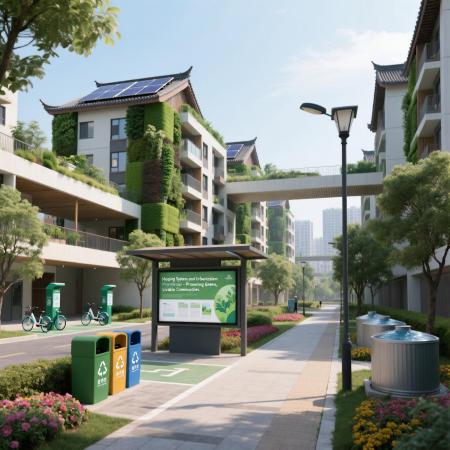
At the heart of this transformation lies the housing system and urbanization, a dual force that has reshaped the physical landscape, social fabric, and economic structure of the country. What began as a state-controlled, low-cost housing model has evolved into a dynamic, market-driven system that is both a driver of growth and a source of growing inequality. Understanding housing system and urbanization is essential to grasping China’s rise, its challenges, and its future.
From Communal Living to Market-Driven Housing
In the early years of the People’s Republic, housing was a public good. Under the planned economy, urban residents lived in work-unit compounds (
danwei), where homes were allocated based on employment, family size, and political status. These dwellings were basic—often lacking private bathrooms or kitchens—but they were secure and affordable. The state owned nearly all urban land and housing, and homeownership was rare.
This began to change in the 1980s with the introduction of economic reforms. The government started selling public housing to employees at subsidized rates, marking the beginning of a transition from welfare housing to a
commodified housing system. By the 1990s, the state largely withdrew from direct housing provision, and the real estate market was liberalized. Housing system and urbanization became intertwined, as new cities and satellite towns were built to accommodate millions of rural migrants and a growing middle class.
The Rise of the Real Estate Economy
Today, real estate is one of the largest sectors of China’s economy, contributing nearly
25–30% of GDP when including construction, finance, and related industries. Cities like Beijing, Shanghai, Shenzhen, and Guangzhou have become global metropolises, with towering skyscrapers, high-speed rail networks, and sprawling residential complexes.
The housing system and urbanization have fueled this growth. Urban land is leased by the state to developers, generating massive revenue for local governments. In many cities, land sales account for up to 40% of local fiscal income. This model has enabled rapid infrastructure development but has also led to speculation, debt accumulation, and overbuilding.
The result is a paradox: while millions of homes have been built, many stand empty, and housing prices have soared beyond the reach of ordinary citizens. In Shenzhen, the price-to-income ratio exceeds 35:1—among the highest in the world. Housing system and urbanization have created wealth but also deepened inequality.
The Hukou System and Migrant Exclusion
A defining feature of housing system and urbanization in China is the
hukou (household registration) system. Introduced in the 1950s,
hukou ties access to social services—such as healthcare, education, and public housing—to one’s place of birth. Over
290 million rural migrants work in cities but lack local
hukou, making them ineligible for subsidized housing, schools, and welfare.
These migrants often live in informal settlements, factory dormitories, or subdivided apartments in urban villages (
chengzhongcun). While they fuel urban economies, they remain second-class citizens in the places they help build. This exclusion undermines social cohesion and limits upward mobility.
Housing system and urbanization are thus not just about physical infrastructure—they are about inclusion and rights. Without
hukou reform, millions will remain trapped in temporary, insecure living conditions.
Urban Villages: Islands of Informality
Chengzhongcun—urban villages—are a unique feature of China’s urban landscape. These are former rural communities absorbed by expanding cities, where land remains collectively owned and housing is informally constructed. They provide affordable shelter for low-income workers, but often lack proper sanitation, fire safety, and legal recognition.
Despite their importance, many urban villages are being demolished to make way for high-end developments. In cities like Guangzhou and Shenzhen, redevelopment projects have displaced thousands, pushing housing demand—and prices—into surrounding areas. Housing system and urbanization must balance modernization with affordability, ensuring that the poor are not priced out of the city.
Affordable and Social Housing Initiatives
Recognizing the risks of unaffordable housing, the Chinese government has launched several initiatives to expand access. The
Affordable Housing Project, launched in 2010, aimed to build 36 million units by 2020, including public rental housing, low-income housing, and slum redevelopment.
While significant progress was made, many units were built on city outskirts, far from jobs and services. Others were sold to middle-income buyers rather than the poorest. In 2021, the government launched a new phase, emphasizing
guaranteed housing for low-income families and
rehabilitation of old urban neighborhoods.
Housing system and urbanization are increasingly focused on quality and inclusion, not just quantity. The goal is not just to house people, but to integrate them into the urban fabric.
Homeownership Culture and Investment
In China, housing is more than shelter—it is the primary vehicle for wealth accumulation. With limited investment options and a weak social safety net, families pour savings into real estate. It is common for parents to buy homes for their children, often before they finish university.
This investment culture has driven demand and inflated prices. In some cities, over 85% of households own homes, but many own multiple units. Speculation has become a national concern, leading to government intervention.
Housing system and urbanization are now being reshaped by policies designed to cool the market:
- Purchase restrictions (e.g., only one home per family)
- Higher down payments for second homes
- Property taxes in pilot cities (Shanghai, Chongqing)
- "Three Red Lines" policy to limit developer debt
These measures aim to separate housing as shelter from housing as investment—a critical step in stabilizing housing system and urbanization.
Sustainable and Smart Cities
As urbanization continues, China is investing heavily in
sustainable and smart urban development. The concept of the "eco-city" has gained traction, with projects like
Tianjin Eco-City and
Shenzhen’s Green Building Program promoting energy efficiency, green spaces, and low-carbon transport.
The
housing system and urbanization strategy includes:
- Green building standards (e.g., 75% energy savings in new homes)
- Sponge cities to manage flooding through permeable surfaces and wetlands
- Smart home technology and AI-driven urban management
- Transit-oriented development to reduce car dependency
These innovations reflect a shift from quantity to quality, ensuring that housing system and urbanization support long-term environmental and social well-being.
Regional Disparities and Tiered Cities
China’s urbanization is highly uneven. The housing system and urbanization process is concentrated in
Tier-1 cities (Beijing, Shanghai, etc.), where demand and prices are highest. However, many of these cities are now saturated, leading to a "spillover effect" into Tier-2 and Tier-3 cities.
To manage this, the government promotes
regional integration, such as the
Guangdong-Hong Kong-Macao Greater Bay Area and the
Yangtze River Economic Belt. These initiatives aim to create balanced urban networks, reducing pressure on megacities and stimulating growth in secondary centers.
Housing system and urbanization must address regional imbalances to ensure equitable development.
Rural Revitalization and Counter-Urbanization
In recent years, signs of
reverse migration have emerged. High living costs, housing stress, and improved infrastructure in rural areas have led some migrants to return home. The government’s
rural revitalization strategy supports this trend by investing in agriculture, e-commerce, and tourism.
While full de-urbanization is unlikely, housing system and urbanization must now consider the countryside as part of the national housing ecosystem. Vacant rural homes are being repurposed, and new policies encourage urban residents to invest in rural properties.
This marks a shift from a purely urban-centric model to a more integrated urban-rural housing system and urbanization approach.
Technology and Digital Transformation
Technology is reshaping
housing system and urbanization in China. Digital platforms like
Alibaba’s housing services,
Meituan’s property listings, and
government e-planning portals have streamlined access to housing information, applications, and financing.
Blockchain is being tested for
land registration, reducing fraud and speeding up transactions. AI and big data are used to predict housing demand, monitor construction, and manage urban services. The housing system and urbanization is becoming smarter, more transparent, and more efficient.
Challenges of Overbuilding and Ghost Cities
Despite its successes, housing system and urbanization face serious challenges. One of the most visible is the phenomenon of
"ghost cities"—large-scale developments built in anticipation of future demand, but left largely unoccupied. Places like
Ordos Kangbashi and
Zhengzhou New Area have modern infrastructure but few residents.
These projects, often driven by local government debt and land sales, represent a misallocation of resources. They highlight the risks of top-down planning without real demand. Housing system and urbanization must become more responsive to actual population needs.
The Role of State and Market
China’s housing system and urbanization is a hybrid model—neither fully state-controlled nor entirely market-driven. The central government sets broad policy, while local governments and developers execute projects. This duality creates both flexibility and instability.
State-owned enterprises (SOEs) and large private developers like
Evergrande and
Vanke dominate the market. When Evergrande faced collapse in 2021, it triggered a crisis that exposed the fragility of the real estate sector. The government responded with bailouts and tighter regulation, reaffirming its role as both market enabler and regulator.
Housing system and urbanization require a delicate balance between growth and control.
Social and Cultural Impacts
The housing system and urbanization has transformed family life and social values. Homeownership is seen as a prerequisite for marriage, leading to immense pressure on young couples. In cities, rising prices have pushed families to live in smaller units or move to the suburbs.
At the same time, urbanization has created new forms of community. Mixed-use developments, co-living spaces, and digital neighborhoods are redefining how people interact. Housing system and urbanization are not just economic forces—they are shaping culture and identity.
Monitoring and Accountability
To ensure progress, housing system and urbanization are monitored through national censuses, housing surveys, and performance indicators. The Ministry of Housing and Urban-Rural Development tracks:
- Number of units built
- Slum redevelopment progress
- Rental market stability
- Green building compliance
Public dashboards and third-party evaluations enhance transparency. Housing system and urbanization are now subject to data-driven governance.
Conclusion: A Nation in Transition
Housing system and urbanization in the People’s Republic of China is a story of ambition, transformation, and contradiction. It has lifted millions out of poverty, built modern cities, and powered economic growth. But it has also created inequality, environmental strain, and financial risk.
Also read: Affordable Housing for Rural Migrant Workers in Urban China
