HOUSING STABILITY FOR ALL IN LONDON
Introduction
Housing stability for all in London is not just a policy goal—it is a moral and social imperative for one of the world’s most vibrant and diverse cities. As London’s population continues to grow and economic pressures mount, the dream of secure, affordable, and long-term housing remains out of reach for too many. Achieving housing stability for all in London means ensuring that every resident, regardless of income, background, or circumstance, can live in a safe, dignified home without fear of eviction, displacement, or homelessness. This vision requires bold action, systemic reform, and a shared commitment across government, communities, and institutions. Without it, inequality will deepen, social cohesion will weaken, and London’s future prosperity will be undermined.
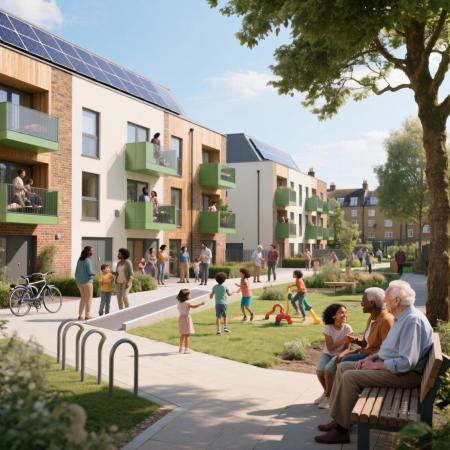
The Current Crisis: Why Housing Stability Matters
The foundation of housing stability for all in London begins with understanding the depth of the current crisis. London faces a severe affordability gap, where housing costs have skyrocketed far beyond the reach of average incomes. Renters now spend, on average, over 40% of their income on housing, with some low-income families spending more than 60%. This leaves little room for essentials like food, healthcare, or education. The private rental market, which houses nearly 30% of Londoners, is dominated by short-term tenancies and rising rents, creating a constant state of insecurity.
For many, housing instability means living in overcrowded conditions, temporary accommodations, or even on the streets. Over 100,000 people in London are currently on waiting lists for social housing, and thousands are trapped in hostels or bed-and-breakfasts. The lack of secure housing not only affects individuals’ well-being but also impacts children’s education, mental health, and employment prospects. Housing stability for all in London must be seen as a prerequisite for a functioning society—one where people can thrive, not just survive.
The Shortage of Affordable and Social Housing
One of the most significant barriers to housing stability for all in London is the chronic shortage of affordable and social housing. Decades of underinvestment and policy shifts away from public housing have left a gaping hole in supply. Since the 1980s, the number of council homes has declined dramatically due to right-to-buy schemes and limited new construction. Today, social housing makes up less than 20% of London’s housing stock, down from nearly 30% in the 1990s.
Meanwhile, new developments often prioritize luxury flats and high-end rentals, catering to international investors rather than local families. This imbalance has created a two-tier system: one for those who can afford market rates, and another for those left scrambling for scarce, substandard options. To achieve housing stability for all in London, the city must dramatically increase the supply of genuinely affordable homes—through council building programs, housing associations, and community-led projects.
Strengthening Tenant Rights and Protections
Even when housing is available, insecurity remains a major issue. Many renters in London are on short-assured tenancies, which allow landlords to issue a Section 21 “no-fault” eviction with just two months’ notice. This power imbalance leaves tenants vulnerable, especially in a market where finding a new home is increasingly difficult and expensive. The threat of eviction—often used to avoid repairs or discourage complaints—undermines any sense of security.
True housing stability for all in London requires stronger legal protections. This includes abolishing no-fault evictions, introducing rent controls to prevent sudden price hikes, and guaranteeing longer tenancies (such as five-year fixed terms). Renters should also have the right to request reasonable modifications, keep pets, and challenge poor maintenance. Empowering tenants through legal aid, advisory services, and unionization can help balance the scales and ensure that housing is a stable foundation, not a source of stress.
Tackling Homelessness and Emergency Housing
Homelessness is one of the starkest failures in London’s housing system. Despite being a global financial capital, the city has one of the highest rates of rough sleeping and hidden homelessness in the UK. Thousands of people—many of them women, children, and migrants—live in temporary shelters, hostels, or sofa-surf with friends. These arrangements are not only unstable but also detrimental to health, safety, and dignity.
Preventing homelessness is far more effective—and humane—than responding to it after the fact. Housing stability for all in London demands robust early intervention: financial support for those at risk of eviction, rapid rehousing programs, and wraparound services for those with complex needs (such as mental health issues or addiction). The "Housing First" model, which provides permanent housing without preconditions, has proven successful in other cities and should be expanded in London. Ending homelessness is not just possible—it is essential to achieving housing stability for all in London.
Community-Led and Cooperative Housing Solutions
One of the most promising paths to housing stability for all in London lies in community-led housing initiatives. These projects—such as housing cooperatives, community land trusts, and self-build schemes—put residents at the heart of decision-making. By collectively owning or managing land and homes, communities can ensure affordability is preserved for generations, resisting the pressures of speculation and gentrification.
These models also foster stronger social ties, mutual support, and neighborhood pride. For example, the East London Community Land Trust has developed affordable homes that remain permanently below market rates, with residents involved in design, management, and governance. Scaling up such initiatives across London could transform how we think about housing—not as a commodity, but as a shared resource. Housing stability for all in London is strengthened when communities have real power over their homes.
Urban Planning and Inclusive Development
The way London is planned and developed has a direct impact on housing stability for all in London. Too often, regeneration projects displace long-term residents, replacing affordable homes with luxury towers that serve only the wealthy. This process—known as gentrification—erodes community fabric and pushes lower-income families to the city’s periphery, far from jobs, schools, and public transport.
To reverse this trend, urban planning must prioritize inclusion. This means mandating that new developments include a significant proportion of affordable and social housing units—ideally 50% or more. It also means protecting existing communities from displacement through stronger tenant protections and community right-to-buy schemes. Mixed-income neighborhoods, green spaces, and walkable design should be the norm, not the exception. Housing stability for all in London depends on planning with people, not just for profit.
The Role of Government and Local Authorities
Achieving housing stability for all in London requires strong leadership and coordination at all levels of government. The Greater London Authority (GLA), under the Mayor of London, has a central role in setting strategy, allocating funding, and holding boroughs accountable. The current mayor has pledged to build 110,000 new affordable homes during this term, but delivery has lagged behind targets.
Local councils are on the front lines of housing delivery, managing social housing, processing applications, and supporting vulnerable residents. However, many face severe budget constraints and lack the resources to act effectively. Greater devolution of powers and funding—from central government to local authorities—is essential. Councils should also be empowered to use publicly owned land for affordable housing and to enforce inclusionary zoning policies. Housing stability for all in London cannot be achieved without strong, well-resourced local governance.
Health, Education, and Social Equity
Housing stability is not isolated from other social issues—it is deeply interconnected with health, education, and economic opportunity. Children in unstable housing are more likely to change schools frequently, fall behind academically, and experience emotional distress. Adults in overcrowded or poor-quality homes face higher risks of respiratory illness, anxiety, and depression.
By ensuring housing stability for all in London, the city can improve public health outcomes, reduce educational inequality, and strengthen workforce participation. Stable housing allows people to focus on their jobs, care for their families, and contribute to their communities. It is not just a housing issue—it is a public investment in London’s future. When people have secure homes, society as a whole becomes more resilient and productive.
Sustainability and the Green Transition
The climate crisis adds another layer of urgency to housing stability for all in London. Many older homes in the city are poorly insulated, leading to high energy bills and carbon emissions. This hits low-income households hardest, trapping them in "fuel poverty"—forced to choose between heating and eating.
Retrofitting existing homes with better insulation, solar panels, and efficient heating systems can reduce energy costs and environmental impact. New developments should meet high sustainability standards, such as
Passivhaus or net-zero carbon. Green social housing not only improves living conditions but also creates green jobs and supports London’s climate goals. Housing stability for all in London must be environmentally sustainable to be truly long-lasting.
Inclusion and Equity for Marginalized Communities
True housing stability for all in London must be inclusive. Black, Asian, and minority ethnic (BAME) communities, LGBTQ+ individuals, disabled people, and migrants often face systemic barriers to secure housing, including discrimination, bias in allocation systems, and lack of accessible homes.
Anti-discrimination laws must be rigorously enforced, and targeted programs should address specific needs—such as accessible housing for disabled residents or safe shelters for LGBTQ+ youth. Data collection and monitoring can help identify and close equity gaps. Only when every community feels safe and welcome in London’s housing system can we claim to have achieved housing stability for all in London.
Innovation, Technology, and Financial Models
Innovative financing and technology can accelerate progress toward housing stability for all in London. Social impact bonds, where private investors fund housing projects in exchange for social outcomes, can unlock new capital. Community land trusts allow communities to own land collectively, ensuring long-term affordability.
Digital tools can also improve access to services—online portals for housing applications, AI-driven eviction risk assessments, and apps that connect tenants with legal advice. When used ethically, technology can make housing systems more transparent, efficient, and responsive. Housing stability for all in London benefits from creative solutions that go beyond traditional models.
Public Awareness and Cultural Change
Finally, achieving housing stability for all in London requires a shift in public perception. Too many still see housing as a personal responsibility or a financial investment, rather than a human right. Public education campaigns, school curricula, and media storytelling can help reframe the conversation.
Residents need to know their rights and understand the policies available to them. They must also recognize that stable housing benefits everyone—not just those in need. When people see housing as a shared value, political will grows, and change becomes possible. Housing stability for all in London starts with changing hearts and minds.
Conclusion: A Shared Vision for the Future
Housing stability for all in London is not a utopian dream—it is a practical and necessary goal for a just and thriving city. It requires investment, policy reform, community empowerment, and sustained political will. From building more social homes to protecting tenants, from ending homelessness to embracing sustainability, every step forward brings London closer to this vision.
Also read: Solving London’s housing crisis
