
HOUSING POLICY IN IRELAND
Introduction
Housing Policy in Ireland has become one of the most pressing social and economic issues of the 21st century. Once known for its strong tradition of homeownership and stable rental markets, Ireland now faces a deepening housing crisis marked by soaring prices, a shortage of affordable homes, and rising homelessness. What was once a system built on aspiration and security has, in recent decades, transformed into one of exclusion, speculation, and instability.
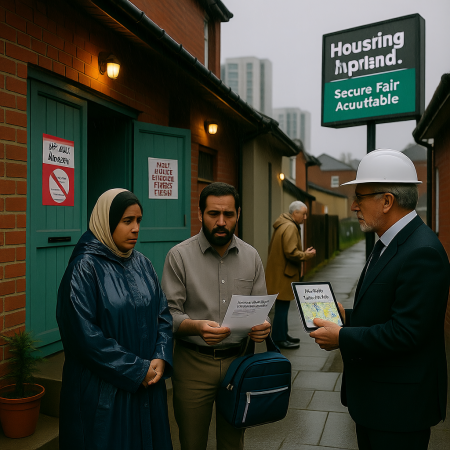
Housing Policy in Ireland is no longer just about bricks and mortar—it is about dignity, equity, and the fundamental right to shelter. As urban centers like Dublin, Cork, and Galway swell with demand, and rural areas struggle with vacancy and underdevelopment, the need for a coherent, compassionate, and effective housing policy has never been greater.
The Roots of the Crisis
The current state of Housing Policy in Ireland cannot be understood without examining its historical context. For much of the 20th century, Ireland maintained a balanced housing system, supported by a robust public housing sector and accessible homeownership opportunities. However, beginning in the 1980s, successive governments began to retreat from direct involvement in housing provision. Investment in social housing declined sharply, and responsibility was increasingly shifted to the private market. The Celtic Tiger era (1995–2007) brought rapid economic growth, but also rampant speculation in property. Developers, banks, and investors fueled a construction boom that prioritized profit over social need. When the global financial crisis hit in 2008, the Irish property market collapsed, leading to a wave of foreclosures, bank bailouts, and years of austerity. Crucially, the recovery that followed did not include a revival of public housing. Instead, Housing Policy in Ireland became increasingly reliant on private developers and foreign investment, particularly in the rental sector.The Rental Market: From Crisis to Crisis
One of the most visible failures of Housing Policy in Ireland is the state of the private rental market. Once a transitional phase for young adults, renting has become a long-term reality for millions—especially in Dublin, where over 40% of households are renters. Yet the market is unstable, expensive, and poorly regulated. Rent prices have skyrocketed, with average rents in Dublin exceeding €2,000 per month. Tenants face short-term leases (often just 6–12 months), frequent rent increases, and the constant threat of eviction. The "no-fault" eviction system—under Section 34 of the Residential Tenancies Act—allows landlords to terminate leases without reason, creating a climate of insecurity. Housing Policy in Ireland has responded with reforms like the Rent Pressure Zone (RPZ) system, which caps rent increases at 4% per year in designated areas. While a step forward, enforcement remains weak, and many landlords circumvent the rules. Without stronger tenant protections, Housing Policy in Ireland will continue to fail those who rely on the rental sector.Homelessness: A National Shame
Perhaps the starkest indicator of the failure of Housing Policy in Ireland is the rise in homelessness. As of 2024, over 12,000 people—including nearly 4,000 children—are recorded as homeless, living in emergency accommodations such as hotels, hostels, and temporary shelters. This is not due to a lack of housing stock, but a lack of affordable and accessible options. Many families become homeless after being priced out of the private rental market or facing eviction. Others are trapped in overcrowded or unsafe living conditions. The situation is particularly dire for women fleeing domestic violence, migrants, and young adults aging out of care. Housing Policy in Ireland has been criticized for focusing on temporary solutions—such as funding hotel beds—rather than permanent housing. While initiatives like the Housing First model have shown promise in providing stable homes to those with complex needs, they remain underfunded and limited in scale. Housing Policy in Ireland must shift from crisis management to prevention and long-term support.Social and Affordable Housing: A Shrinking Safety Net
At the heart of any effective housing system is a strong social housing sector. Yet Housing Policy in Ireland has seen a dramatic decline in the supply of social and affordable homes. Council housing, once a cornerstone of the system, now makes up less than 6% of the total housing stock—the lowest in the European Union. Successive governments have reduced capital investment in public housing, opting instead for Public-Private Partnerships (PPPs) and Part V agreements, which require developers to provide a percentage of affordable units in new projects. However, these models have delivered far fewer homes than promised, and many so-called "affordable" units are still out of reach for low-income families. Housing Policy in Ireland must reinvest in direct public provision. Council-led building programs, community land trusts, and non-profit housing associations must be empowered to deliver genuinely affordable homes. Without this, Housing Policy in Ireland will remain reactive and inadequate.Planning and Land Use: Barriers to Supply
Even when funding is available, Housing Policy in Ireland is often hindered by slow and fragmented planning processes. Local authorities face backlogs in planning applications, and development is frequently delayed by legal challenges or community opposition. Moreover, land banking—where developers acquire land and hold it for speculative gain—is a major obstacle. Large tracts of land, particularly in Dublin, remain undeveloped despite urgent housing needs. Housing Policy in Ireland has introduced measures like the Land Development Agency (LDA), established in 2019, to unlock state-owned land for housing. However, progress has been slow, and more aggressive tools—such as vacant site levies and compulsory purchase orders—are needed to accelerate delivery. Urban planning must also prioritize density, sustainability, and integration. Sprawl and car dependency increase infrastructure costs and environmental impact. Housing Policy in Ireland should promote transit-oriented development, brownfield regeneration, and mixed-income neighborhoods.Tenant Rights and Legal Reforms
A fair housing system requires strong legal protections for tenants. Housing Policy in Ireland has taken steps toward reform, including:- Abolishing most "no-fault" evictions (planned for 2025)
- Introducing longer tenancies (up to 4 years)
- Strengthening the Residential Tenancies Board (RTB)