
Housing Policy for Low-Income Households in Korea: Application of Policy Analysis Process Theory
The document titled "Housing Policy for Low-Income Households in Korea: Application of Policy Analysis Process Theory" by Sang-Hun Lee provides a comprehensive analysis of the housing policies in South Korea aimed at low-income households. It applies a theoretical framework based on policy analysis processes to evaluate the effectiveness and challenges of these policies. The following summary encapsulates the key points and findings from the document.Introduction
The paper begins by recognizing the critical role housing plays in the well-being of individuals and families. It highlights that while housing policy should serve all segments of the population, in Korea, there has been a historical bias toward middle- and high-income groups, often neglecting low-income households. This neglect has resulted in significant housing challenges for these vulnerable groups, including rising prices, inadequate rental options, and poor living conditions.Housing Problems in Korea
Korea's housing landscape is marked by several pressing issues for low-income families:- Affordability Crisis: Many low-income households struggle to afford adequate housing due to soaring property prices.
- Substandard Living Conditions: A significant number of families live in inadequate dwellings lacking basic facilities.
- Insufficient Public Housing: Despite government efforts to increase public housing stock, demand continues to outpace supply.
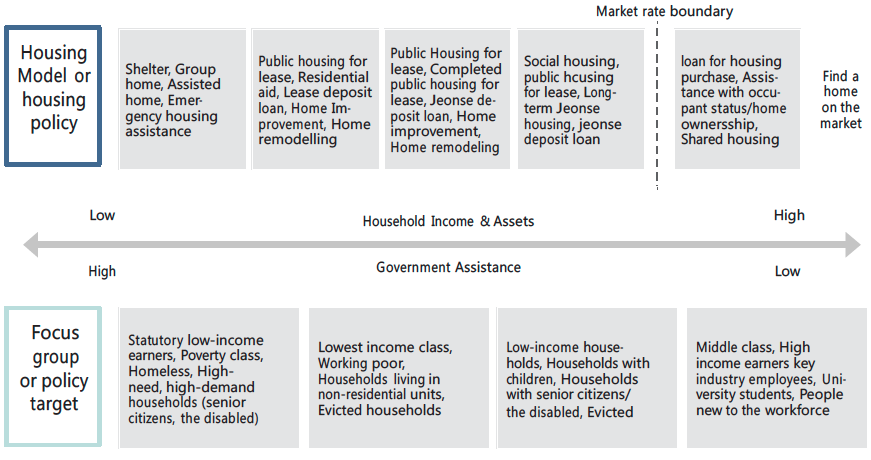
Historical Context of Housing Policy
The paper traces the evolution of housing policy in Korea, particularly since the 1980s. Key initiatives include:- Two-Million Housing Drive (1988-1992): Aimed at building public rental units but faced financial constraints.
- 10-Year Plan (2000): A systematic approach to supplying one million public rental units was introduced.
- Diverse Subsidy Programs: Various financial assistance programs were established to alleviate rent burdens for low-income families.
Policy Analysis Process Theory
Lee applies policy analysis process theory as a framework to evaluate Korea's housing policies. This approach emphasizes:- Defining Problems: Understanding how housing issues are identified and prioritized.
- Evaluation Criteria: Assessing what criteria are used to evaluate the effectiveness of policies.
- Implementation Alternatives: Exploring different strategies that have been employed and their outcomes.
Recommendations for Improvement
Based on his analysis, Lee offers several recommendations for enhancing Korea's housing policy framework:- Integrate Political, Economic, and Social Considerations: Policies should reflect a holistic understanding of the factors influencing housing needs.
- Market-Dependent Approaches: Emphasizing market mechanisms can help address housing shortages more effectively.
- Indirect Measures: Utilizing taxation and financing strategies may be more effective than direct regulations.
- Tailored Assistance Criteria: Policies should consider household characteristics to better meet diverse needs.
- Focus on Housing Demand: Strategies should prioritize fulfilling various housing demands among lower-income groups.