
Housing Challenge And Government’s Policy Intervention: A Case Of Service Delivery In Nigeria
1. Introduction: Contextualizing the Housing Challenge
The Housing Challenge in contemporary Nigeria is profound, multifaceted, and interwoven with economic, demographic, institutional, and policy dynamics. Housing is not merely about shelter; it is a complex bundle of services that influences social stability, economic productivity, health, and human dignity. Yet, despite housing being a fundamental human need and an economic driver, the gap between the demand for housing and the actual supply of adequate units in Nigeria has escalated into a defining national crisis.
Nigeria’s spike in population growth, urban migration, and shifts in family structures have intensified the Housing Challenge. Urban centers such as Lagos, Abuja, and Port Harcourt continue to attract rural migrants seeking employment, economically viable opportunities, and better access to public services – a demographic trend that has strained housing stock beyond its limit. Effective delivery of housing services is central to meeting this growing need, yet persistent shortfalls in policy implementation and institutional support have exacerbated housing scarcity.
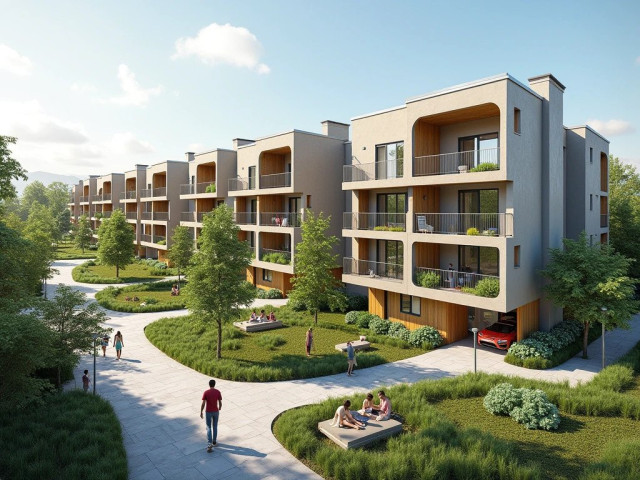
This detailed summary explores the core elements of the Housing Challenge in Nigeria, the historical and policy context of government intervention, systemic bottlenecks, and recommendations for future action based on the original study by Alamu (2022).
2. The Nature and Scope of Nigeria’s Housing Challenge
2.1 Defining the Housing Challenge
The Housing Challenge refers to the enduring gap between the number of housing units needed by the population and the actual stock of adequate, affordable, and accessible homes available. In Nigeria, this gap is not simply a matter of numbers — it embodies qualitative deficits in sanitation, structural safety, legal tenure, environmental suitability, and affordability.
Analysts emphasize that housing encompasses more than basic shelter; it relates to economic development, public health, decent living conditions, and social inclusion. Thus, the Housing Challenge is simultaneously a social, economic, and administrative concern.
2.2 Scale and Intensity of the Housing Challenge
Nigeria’s Housing Challenge has evolved over decades. Historical data and academic estimates draw attention to an immense backlog: while global housing needs reach hundreds of millions of units, Nigeria’s specific requirement is estimated in the tens of millions. By some accounts, Nigeria needed approximately 22 million additional housing units as of the late 2010s to address existing shortages, and that number has only grown since.
This deficit reflects longstanding failures to match household formation rates with adequate delivery of new dwellings. The shortfall is not only quantitative but also qualitative: many existing homes are unsafe, overcrowded, without access to basic services like potable water and sanitation, and in some cases, structurally substandard.
3. Historical and Policy Context of Government Intervention
3.1 Origins of Government Policy on the Housing Challenge
Government intervention in Nigeria’s housing sector stretches back to the colonial period, with successive housing policies expanding in ambition but often lacking effective implementation. Earlier efforts were characterized by direct governmental construction of housing units—especially for civil servants and those in formal employment sectors.
However, such direct provision proved insufficient to keep pace with rising demand, particularly from low- and middle-income households who constitute the largest demographic cohort facing the Housing Challenge.
3.2 Shift Toward Enabling Environments
By the 1990s and 2000s, Nigerian housing policy underwent significant ideological shifts. A more enabling role for the government emerged, where the state sought to create policy frameworks and legal environments that encourage private sector participation, market innovation, and diversified financing models. This shift reflected an understanding that direct state construction alone could not resolve the systemic Housing Challenge.
For example, the 2012 Nigeria Housing Policy moved toward enabling environments and incentivizing private builders rather than the government remaining the sole provider—recognizing that private actors could play a transformative role if properly supported.
4. Structural Drivers of the Housing Challenge
4.1 Demographic and Economic Pressure
Nigeria’s rapidly growing population is a major driver of the Housing Challenge. With the country among the fastest growing populations in Africa, family formation rates and urban migration amplify the demand for new housing units beyond what existing programs can deliver.
Additionally, urban centers have become magnets for rural populations seeking employment and services, which has concentrated demand for affordable housing in cities. This urban pressure elevates land prices and rent levels, adding another layer to the Housing Challenge that disproportionately affects low-income groups.
4.2 Institutional and Policy Fragmentation
A central issue exacerbating Nigeria’s Housing Challenge is fragmented and poorly coordinated institutions responsible for housing delivery. While national housing policies exist, their implementation bottlenecks often stem from overlapping mandates between federal, state, and local governments, unclear accountability, and inconsistent enforcement.
Moreover, the absence of an integrated national housing strategy that effectively ties land use, infrastructure development, mortgage finance, and urban planning together has impeded progress in closing the housing gap.
4.3 Land and Finance Constraints
Land costs represent one of the most significant obstacles in addressing the Housing Challenge. Urban land is expensive, marred by complex tenure systems, and frequently subject to speculative price inflation. These factors discourage formal housing development and push low-income families toward informal settlements.
Access to housing finance remains limited for many Nigerians, especially those in the informal sector without regular incomes or documented credit histories. Traditional mortgage products are often inaccessible due to high interest rates, short tenures, and stringent collateral requirements. This reinforces the Housing Challenge by limiting the ability of households to acquire homes through formal financial channels.
5. Consequences of the Housing Challenge
5.1 Growth of Informal Settlements
One of the most visible consequences of the Housing Challenge has been the proliferation of informal settlements and slums in major cities. As formal housing stock remains insufficient, millions of Nigerians resort to self-built homes in peri-urban areas, often without legal tenure or access to basic services like clean water, waste management, and electricity.
These settlements, while providing shelter, are structurally and socially precarious and often lack integration into broader urban planning frameworks. This situation exacerbates public health risks, environmental degradation, and social exclusion.
5.2 Overcrowding and Substandard Living Conditions
Inadequate housing supply has also led to overcrowding, where multiple families or extended family units reside in a single dwelling unit. Such overcrowding undermines health outcomes, increases disease transmission, and compromises educational and social outcomes, especially for children.
Substandard conditions characterize much of the available housing that low-income households can afford. These conditions often lack basic sanitation infrastructure and are susceptible to environmental hazards.
5.3 Economic Impacts
Economically, the Housing Challenge represents lost opportunities. Housing construction stimulates economic activity—through job creation in construction, services, and materials supply chains—but the inability to scale housing delivery means foregone economic growth potential. Furthermore, insecure housing limits household investment in education and enterprise, perpetuating cycles of poverty.
6. Evaluating Government Policy Responses
6.1 Strengths of Policy Approaches
Despite the persistent nature of the Housing Challenge, Nigeria’s policy frameworks recognize housing as a key component of national development and socio-economic well-being. Positioning housing within economic planning and urban development strategies underscores its importance beyond a pure shelter domain.
Policy shifts toward enabling private sector participation and creating regulatory platforms for developers reflect a pragmatic move away from state-led direct construction toward market-based solutions.
6.2 Limitations and Implementation Gaps
However, a central failure in addressing the Housing Challenge has been the persistent gap between policy formulation and execution. Many policies remain aspirational due to limited monitoring systems, weak enforcement mechanisms, and political inertia.
Financial mechanisms to incentivize production of affordable housing are underdeveloped, particularly in terms of long-term mortgage finance accessible to lower-income households. Most banks remain risk-averse, and formal mechanisms like mortgage markets are immature relative to demand.
Moreover, coordination across levels of government often weakens implementation efficacy. States and local governments, which are closer to on-the-ground delivery, frequently lack the technical capacity or resources to drive comprehensive housing programs.
7. Policy Recommendations to Overcome the Housing Challenge
7.1 Strengthening Institutional Coordination
A central recommendation is to enhance institutional coordination and accountability in tackling the Housing Challenge. This involves clearly defined mandates, streamlined regulatory processes, and robust data systems to track housing needs, supply gaps, and resource allocations.
7.2 Enhancing Access to Housing Finance
Expanding innovative finance mechanisms tailored to the needs of low- and middle-income households is critical. This could include micro-mortgages, shared equity programs, rent-to-own schemes, and alternative credit assessment models that include informal sector income patterns.
7.3 Leveraging Land and Urban Planning Reforms
Reforming land policy to make well-located urban land accessible for housing development—through land pooling, land banks, and streamlined tenure systems—will reduce a major component of the Housing Challenge: high land cost and speculative pricing.
7.4 Fostering Public-Private Partnerships
Public-private partnerships (PPPs) can mobilize private capital, expertise, and innovation at scale. Governments can act as facilitators, offering incentives such as tax breaks, infrastructure support, and land at concessional rates to encourage private developers to build affordable housing.
8. Conclusion: Confronting the Housing Challenge for Sustainable Development
The Housing Challenge in Nigeria is not a simple supply issue—it reflects deep population growth pressures, institutional barriers, economic constraints, and historical policy gaps. Yet, housing is fundamental to sustainable development and human welfare.
Government policies have acknowledged the challenge, and progressive shifts toward enabling environments mark important progress. However, bridging the policy-implementation divide requires sustained political will, enhanced institutional capacities, and multi-sector collaboration. Strengthening financial access, reforming land systems, and enabling private sector engagement are critical levers in transforming the housing landscape.
Most importantly, confronting the Housing Challenge in Nigeria is not only about building homes — it’s about building inclusive, resilient, and equitable communities where all citizens can share in economic opportunities and dignified living standards.
Also Read: Innovative Financial and Operational Models for Affordable Housing: A Review of Emerging Market Strategies