HOUSING AND SUSTAINABLE URBAN DEVELOPMENT IN SRI LANKA
Introduction
Housing and Sustainable Urban Development. Sri Lanka — an island of lush hills, ancient temples, and bustling ports — stands at a pivotal moment in its urban evolution. While often celebrated for its natural beauty and cultural heritage, the country is quietly undergoing one of the most complex urban transitions in South Asia. Cities are swelling. Housing is becoming unaffordable. Infrastructure is buckling. Climate threats loom larger each monsoon. And yet, amid these pressures, there’s a growing momentum — from policymakers, architects, communities, and technologists — to reimagine what urban life in Sri Lanka can and must become.
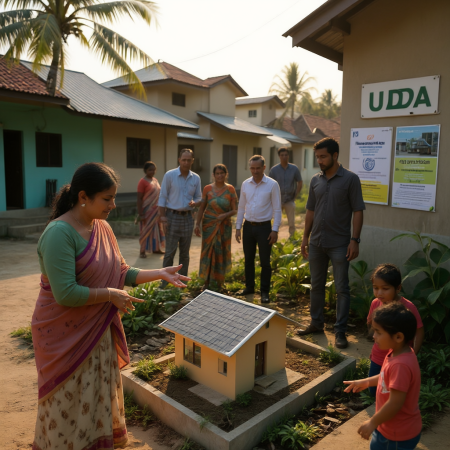
Housing and Sustainable Urban Development. This isn’t just about building more apartments or widening roads. It’s about designing cities that are equitable, resilient, ecologically responsible, and culturally rooted. It’s about ensuring that a garment worker in Seeduwa, a fisherman in Negombo, or a student in Jaffna can access safe, dignified housing without sacrificing their livelihoods or their environment. It’s about learning from the mistakes of Colombo’s speculative boom and the neglect of plantation towns — and forging a new urban contract for all Sri Lankans.
Housing and Sustainable Urban Development. In this 2000-word summary, we’ll explore the current state, challenges, innovations, and future pathways of housing and sustainable urban development in Sri Lanka — not through dry statistics alone, but through the lived realities of its people and the quiet revolutions happening on the ground.
Historical Context: From Hydraulic Civilizations to Concrete Jungles
Housing and Sustainable Urban Development. Sri Lanka’s relationship with urban space is ancient — and deeply intelligent. Long before modern zoning laws or concrete high-rises, Sinhalese kingdoms engineered cities like Anuradhapura and Polonnaruwa around water. Massive reservoirs, gravity-fed canals, and strategically placed monasteries created urban ecosystems that thrived for centuries — balancing human needs with ecological limits.
Colonial rule — first Portuguese, then Dutch, and finally British — imposed foreign urban logics. Colombo was reshaped into a mercantile fortress, with segregated neighborhoods and imported architectural styles. Housing became a marker of race and class — bungalows for colonials, cramped tenements for locals. That spatial hierarchy never fully disappeared.
Housing and Sustainable Urban Development. Post-independence planning oscillated between socialist ideals and neoliberal experiments. The 1950s saw garden suburbs and public housing blocks. The 1980s brought commercial liberalization — and with it, unregulated construction, land speculation, and the birth of Colombo’s vertical skyline. The end of the civil war in 2009 unleashed a wave of infrastructure projects — highways, ports, luxury condos — often prioritizing image over inclusion.
Housing and Sustainable Urban Development. Today, Sri Lanka inherits this layered legacy — and must reconcile it. Ancient wisdom about water and land. Colonial imprints of segregation. Post-war haste. The challenge? To build not just on top of history — but with it.
The Housing Crisis: More Than Just a Shortage
Housing and Sustainable Urban Development. Sri Lanka doesn’t just have a housing shortage — it has a housing justice crisis. An estimated 1.2 million households lack adequate shelter. In Colombo alone, over 65,000 families live in informal settlements — under bridges, beside railways, atop garbage dumps. Their homes are made of scrap metal, plastic sheets, and salvaged wood. Sanitation is shared. Electricity is pirated. Eviction is a constant fear.
The math is brutal. A modest apartment in Colombo costs upwards of LKR 25 million — 15 times the annual income of a low-wage worker. Even government “low-cost” housing starts at LKR 3.5 million — out of reach without subsidies. Mortgages are scarce. Rental markets are predatory — with deposits equal to a year’s rent and zero tenant protections.
Housing and Sustainable Urban Development. The burden falls hardest on women, youth, the elderly, and ethnic minorities. Single mothers in Wellawatte juggle rent with food costs. Tamil returnees in Jaffna struggle to rebuild homes on contested land. Tea estate workers still live in colonial-era “line rooms” — wooden shacks with no running water or privacy.
Relocation programs — like those moving Colombo’s slum dwellers to high-rises in Homagama — offer roofs but break communities. Jobs, schools, and social networks are left behind. “You gave us a flat,” one resident told researchers, “but you took our lives.”
Housing and Sustainable Urban Development. Solutions are emerging — but they’re fragmented. NGOs like Sevanatha promote “incremental housing” — core units families expand over time. Community savings groups pool resources to buy land collectively. But without land reform, credit access, and legal tenure, these remain drop-in-the-bucket efforts.
Sustainable Infrastructure: The Backbone of Livable Cities
Housing and Sustainable Urban Development. A city is only as sustainable as its underlying systems — and Sri Lanka’s are fraying. Water pipes leak 45% of supply. Sewage flows into lagoons. Garbage piles up in open dumps. Power grids sputter. Traffic chokes economic productivity.
Colombo’s drainage system — designed for 1930s rainfall — now drowns during monsoons. The 2017 floods submerged 300,000 homes. The Meethotamulla garbage dump collapse killed 32. Public transport — though used by 70% of commuters — gets less than 10% of transport funding. The canceled Light Rail Transit project was a devastating setback.
Housing and Sustainable Urban Development. Yet innovation flickers. In Kandy, electric tuk-tuks glide silently through streets. In Galle, bicycle lanes weave past colonial ramparts. In Moratuwa, communities compost organic waste — slashing landfill use by 60%. Rooftop solar panels glint above middle-class homes — but slum dwellers still burn kerosene.
The path forward? Integrate systems. Design streets that hold stormwater and host trees. Turn waste into energy. Power buses with renewables. Connect housing to transit. And — crucially — involve citizens in maintaining these systems. Sustainability isn’t a technical fix — it’s a cultural practice.
Climate Resilience: Cities on the Frontlines
Housing and Sustainable Urban Development. Sri Lanka ranks among the world’s top 10 countries vulnerable to climate change. Its cities — especially coastal ones — face rising seas, fiercer floods, longer droughts, and deadly heatwaves.
Colombo, built on wetlands, is sinking. Sea-level rise could inundate 30% of its commercial core by 2100. Informal settlements on riverbanks flood yearly — yet relocation plans ignore future risks. The “Port City,” built on reclaimed land, may become a stranded asset.
Heat is a silent killer. Colombo’s concrete canyons trap heat — pushing summer temps to 38°C. Tin-roofed shacks become ovens. Green cover has shrunk from 35% to 12% since 1980 — stripping the city of its natural cooling system.
Housing and Sustainable Urban Development. National policies mention climate adaptation — but urban-specific action is thin. The ADB-funded “Climate Resilient Inclusive Cities” program is a start — promoting green roofs,
bioswales, and flood-resilient housing in 3 municipalities. But it needs scaling.
Community-led adaptation offers hope. Women in Moratuwa plant mangroves as coastal buffers. Youth in Ratmalana map flood risks with drones. These grassroots efforts need funding, legal backing, and integration into city masterplans.
Housing and Sustainable Urban Development. Climate resilience isn’t optional — it’s survival. And it must be designed with — not for — the communities most at risk.
Inclusion: Whose City Is It, really?
Housing and Sustainable Urban Development. Sustainable cities must be inclusive cities — yet Sri Lanka’s urban spaces often exclude the very people who keep them running.
Women navigate streets designed without safety or sanitation in mind. Persons with disabilities confront sidewalks blocked by vendors, buses without ramps, buildings without elevators. Tamil and Muslim communities report discrimination in housing access and municipal services. LGBTQ+ youth find few safe public spaces.
Housing and Sustainable Urban Development. Participatory models are challenging this. UN-Habitat’s “Women-Friendly Cities” initiative in Kandy trained women to audit public spaces — leading to better lighting, seating, and toilets. “Community Architects” in Colombo train slum dwellers to co-design their own housing — preserving social ties while upgrading structures.
In Jaffna, Tamil women lead housing cooperatives — ensuring designs reflect cultural needs. In Badulla, elderly groups co-create “aging-in-place” housing pods — with ramps, communal kitchens, and health clinics nearby.
Housing and Sustainable Urban Development. Inclusion isn’t a checklist — it’s a process. It requires handing over power — not just consultation. It means budgets, laws, and leadership that reflect the diversity of urban life.
Innovations from Below: Grassroots Ingenuity
Housing and Sustainable Urban Development. While national plans stall, Sri Lanka’s most exciting urban innovations are bubbling up from communities.
In Wattala, low-income families formed savings cooperatives — pooling money to buy land and co-design homes with architects. Costs dropped 40%. Social bonds strengthened.
In Slave Island, residents mapped their own slum — then negotiated with the UDA to co-design a “vertical village” with shared courtyards, rooftop gardens, and ground-floor shops. No one was displaced. Everyone had a voice.
Housing and Sustainable Urban Development. Tech is amplifying these efforts. The “MyColombo” app lets citizens report potholes or illegal dumping — 70% get fixed within 48 hours. “Colombo Urban Lab” uses AI to optimize bus routes and predict flood zones. Blockchain pilots in Gampaha are digitizing land titles — reducing disputes.
Green building is taking root. “The Oasis” in Rajagiriya runs on solar, harvests rainwater, and cools naturally. “Eco Flats” in Mount Lavinia use recycled plastic bricks. These aren’t showpieces — they’re proof that sustainability is affordable.
Housing and Sustainable Urban Development. The lesson? Top-down alone won’t work. The future is co-created — by residents, designers, techies, and officials working as equals.
Financing the Future: Beyond Broken Budgets
Housing and Sustainable Urban Development. Money is the ultimate bottleneck. With national debt over 100% of GDP, traditional funding is gone. Cities must become financially self-reliant.
Municipal councils generate only 5% of their own revenue. The rest comes from erratic central transfers. New laws aim to fix this — letting councils levy betterment taxes, issue bonds, and keep local revenue.
Land value capture is promising. When a new road boosts nearby property values, why shouldn’t 30% of that windfall fund sidewalks or parks? Colombo’s Borella pilot raised LKR 800 million in 18 months.
Housing and Sustainable Urban Development. Green bonds, diaspora investment, and blended finance are emerging. The “Urban Innovation Fund” matches public money with private impact investors — funding startups like “Eco Brick Homes” (made from recycled plastic) and “Solar Slum Grids.”
Community investment pools are powerful. In Galle, residents contribute LKR 500/month to a communal fund — used to install solar streetlights or clean drains. Returns come as safer streets and higher property values.
Housing and Sustainable Urban Development. The message? Cities can’t wait for handouts. They must generate, capture, and reinvest value — locally, creatively, equitably.
Governance: From Central Control to Civic Power
Housing and Sustainable Urban Development. Sri Lanka’s urban governance is stuck in the past — centralized, siloed, and often corrupt. The UDA plans, the Megapolis Ministry duplicates, Municipal Councils execute poorly.
Reforms are inching forward. New laws let councils approve building plans and manage local infrastructure. E-governance portals cut permit times from 60 days to 7.
Civic tech is boosting accountability. “BudgetWatch.lk” tracks municipal spending. “Voice of the Ward” apps let citizens rate services. In Kandy, participatory budgeting lets residents decide how to spend 10% of the council’s capital budget.
Housing and Sustainable Urban Development. Capacity building is key. The “Urban Leadership Academy” trains officials in climate planning and community engagement. Over 500 graduated in 2023.
The goal? Shift from “government” to “governance” — where power is shared, transparent, and responsive. This needs legal teeth — like a “Right to the City” law — and protection for activists and whistleblowers.
Culture and Heritage: The Soul of the City
Housing and Sustainable Urban Development. Sri Lanka’s cities aren’t just functional spaces — they’re cultural tapestries. Dutch canals in Galle. Tamil temples in Jaffna. Art Deco cinemas in Colombo. Moorish mosques in Pettah. These aren’t relics — they’re living heritage.
Yet development often bulldozes soul. The demolition of Colombo’s Terminus Station for a mall sparked outrage. Gentrification in Fort displaces street vendors — erasing centuries-old economies.
Better models exist. Galle Fort preserves facades while turning warehouses into cafes — funding its own upkeep. Jaffna’s new homes incorporate Tamil courtyards and lime plaster — restoring dignity. Kandy’s “Living Heritage Corridor” links temples and markets in a walkable zone — boosting tourism without erasing daily life.
Housing and Sustainable Urban Development. Heritage isn’t about freezing the past — it’s about evolving with identity intact. Tools like Heritage Impact Assessments and craft apprenticeships can embed culture into every urban plan.
Without this, Sri Lanka’s cities risk becoming generic — beautiful on postcards, soulless to live in.
Conclusion: The Quiet Revolution
Housing and Sustainable Urban Development. Sri Lanka’s urban future won’t be shaped by grand masterplans alone — but by the quiet, persistent work of communities designing their own homes, techies mapping flood risks, women auditing public spaces, and officials learning to listen.
The ingredients for transformation are here: ancient wisdom about water and land, grassroots innovation, digital tools, policy reforms, and a generation demanding better.
Housing and Sustainable Urban Development. What’s missing isn’t vision — it’s political courage. Courage to decentralize power. To tax land fairly. To protect tenants. To design with climate in mind. To say “no” to speculative towers and “yes” to incremental, inclusive growth.
Housing and Sustainable Urban Development. The goal isn’t a perfect city — but a living, breathing, evolving one. One where a child in a Colombo slum can dream of a home with a window. Where a fisherman in Negombo isn’t displaced by a luxury marina. Where a grandmother in Kandy can walk safely to temple. Where sustainability isn’t a buzzword — but a way of life.
Housing and Sustainable Urban Development. That’s the Sri Lanka its cities deserve — and the one its people are already building, one brick, one policy, one community meeting at a time.
Also read: Slums as a Barrier to Urban Development in Kolkata
