
Housing and Basic Infrastructure Services
Introduction
Housing and Basic Infrastructure Services form the bedrock of human dignity, public health, economic productivity, and social stability. Without access to safe shelter, clean water, sanitation, reliable energy, and transportation, individuals and communities cannot thrive. In both developing and developed nations, the quality, accessibility, and integration of Housing and Basic Infrastructure Services directly determine the well-being of citizens and the resilience of cities.
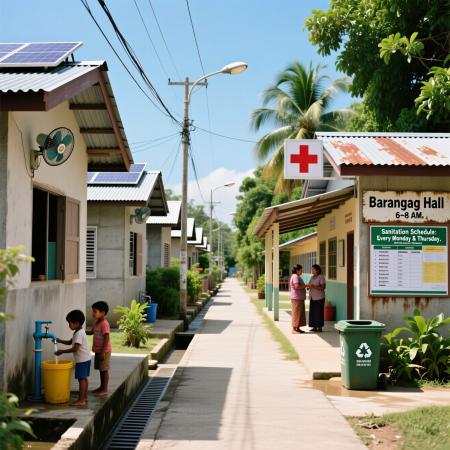
This summary explores the critical interdependence between housing and essential infrastructure, examines global and local challenges, highlights successful models, and underscores why investing in integrated Housing and Basic Infrastructure Services is not just a moral imperative but a strategic driver of sustainable development.
The Inseparable Link Between Shelter and Services
Housing is far more than four walls and a roof. True shelter becomes a home only when it is connected to Basic Infrastructure Services—water supply, sanitation, solid waste management, electricity, drainage, roads, and digital connectivity. A house without clean water forces residents to walk miles daily, exposing women and children to safety risks. A home without proper sanitation contaminates groundwater and spreads disease. A settlement without drainage becomes a flood trap during monsoons. Thus, Housing and Basic Infrastructure Services must be planned, financed, and delivered as a unified system. Fragmented approaches—building houses in remote areas with no roads or water lines—create “housing without habitability.” The most successful urban and rural development programs recognize that Housing and Basic Infrastructure Services are two sides of the same coin: one cannot succeed without the other.Global Challenges in Delivering Integrated Services
Globally, billions still lack access to adequate Housing and Basic Infrastructure Services. According to UN-Habitat, over 1.6 billion people live in inadequate housing, while 2 billion lack safely managed sanitation and 771 million have no access to clean drinking water. In rapidly urbanizing regions of Asia, Africa, and Latin America, informal settlements expand faster than cities can provide services. Key challenges include:- Rapid urbanization: Cities absorb millions of rural migrants annually, overwhelming existing infrastructure.
- Funding gaps: Municipalities often lack capital and technical capacity to extend services.
- Land tenure insecurity: Informal settlers are frequently excluded from utility connections.
- Climate vulnerability: Poor drainage and flimsy housing increase disaster risks.
- Inequitable access: Low-income communities are systematically underserved.
The Philippine Context: Progress and Persistent Gaps
In the Philippines, the delivery of Housing and Basic Infrastructure Services remains uneven. While national programs like the Pambansang Pabahay para sa Pilipino aim to build millions of homes, many projects—especially in relocation sites—suffer from delayed or absent infrastructure. Families moved from Metro Manila to far-flung provinces often find themselves without jobs, schools, clinics, or even piped water. Conversely, successful models exist. The Zonal Improvement Program (ZIP) upgrades informal settlements in situ, providing not just tenure but also water lines, septic tanks, footpaths, and street lighting. Similarly, the Balai ng Bayan concept integrates housing with daycare centers, health stations, and livelihood hubs—demonstrating that Housing and Basic Infrastructure Services can be co-designed for maximum impact. Yet, the national housing backlog exceeds 6 million units, and millions still rely on open defecation or shared communal toilets. Closing these gaps requires treating Housing and Basic Infrastructure Services as non-negotiable components of every development project.Core Components of Basic Infrastructure Services
Effective Housing and Basic Infrastructure Services encompass several interlinked systems:- Water Supply: Safe, affordable, and continuous access to potable water.
- Sanitation and Sewerage: Hygienic toilets, wastewater treatment, and drainage to prevent flooding.
- Solid Waste Management: Regular collection, recycling, and safe disposal.
- Energy Access: Reliable electricity for lighting, cooking, and communication.
- Transport and Mobility: All-weather roads, footpaths, and public transit linking homes to jobs and services.
- Digital Connectivity: Internet and mobile access for education, finance, and emergency response.
- Social Infrastructure: Proximity to schools, health centers, and community spaces.
The Role of Policy and Governance
Strong institutions and coherent policies are essential for scaling Housing and Basic Infrastructure Services. In the Philippines, the creation of the Department of Human Settlements and Urban Development (DHSUD) in 2019 aimed to unify housing and urban planning under one roof. Similarly, the Philippine Development Plan (PDP) 2023–2028 emphasizes “inclusive, safe, and resilient human settlements” with integrated service delivery. However, implementation often falters at the local level. Barangays and cities lack technical staff, data systems, or coordination mechanisms. Utilities (like MWSS for water or Meralco for power) operate in silos, rarely aligning with housing timelines. To fix this, governments must adopt area-based planning, where Housing and Basic Infrastructure Services are mapped and budgeted together for entire neighborhoods—not piecemeal.Financing Integrated Development
One major barrier is financing. Traditional models fund housing and infrastructure separately, creating delays and cost overruns. Innovative approaches are emerging:- Blended finance: Combining government subsidies, private investment, and community contributions.
- Land-value capture: Using future tax revenues from upgraded areas to fund upfront infrastructure.
- Green bonds: Raising capital for climate-resilient water and energy systems.
- Micro-utilities: Community-managed water kiosks or solar microgrids in off-grid areas.
Community Participation: From Beneficiaries to Co-Creators
Top-down delivery often fails because it ignores local needs. The most sustainable Housing and Basic Infrastructure Services involve communities from day one. In the Philippines, the Community Mortgage Program (CMP) allows informal settlers to collectively purchase land and co-design infrastructure. In Ormoc City, post-disaster housing projects included participatory mapping of drainage and evacuation routes. When residents help plan water lines, choose toilet types, or maintain streetlights, they develop ownership and ensure long-term functionality. This shifts the paradigm: communities are not passive recipients but active partners in delivering Housing and Basic Infrastructure Services.Climate Resilience and Futureproofing
Climate change intensifies the stakes. Floods, typhoons, and sea-level rise threaten both homes and infrastructure. A house may survive a storm, but if the road is washed out or the water system is contaminated, it’s uninhabitable. Thus, modern Housing and Basic Infrastructure Services must be climate-resilient:- Elevated homes in flood zones
- Permeable pavements for stormwater absorption
- Solar-powered water pumps
- Mangrove buffers along coastal settlements
Technology as an Enabler
Digital tools are transforming service delivery:- GIS mapping identifies underserved zones for targeted investment.
- Mobile apps allow residents to report broken pipes or clogged drains.
- Smart meters reduce water theft and enable fair billing.
- Prefabricated sanitation units speed up installation in dense areas.
Lessons from Global Best Practices
Countries like Singapore, Thailand, and Colombia offer valuable insights:- Singapore: Integrated public housing (HDB) includes water, energy, transport, and green spaces from day one.
- Thailand: The Baan Mankong program upgrades entire informal neighborhoods with community-led infrastructure.
- Colombia: Medellín’s “social urbanism” linked cable cars, libraries, and parks to marginalized hillside communities.
The Road Ahead: Toward Integrated Human Settlements
The future of urban and rural development lies in integrated human settlements—where housing, jobs, services, and ecology coexist. This requires:- Unified planning: One master plan for land use, housing, water, transport, and environment.
- Devolved capacity: Empowering LGUs with tools, data, and funding.
- Inclusive standards: Minimum service requirements for every new housing project.
- Monitoring frameworks: Tracking not just houses built, but services delivered.