
HOUSING AFFORDABILITY AND INCOME INEQUALITY
Introduction
Housing affordability and income inequality are two of the most pressing challenges facing modern cities. As urban populations grow and economic disparities widen, the connection between housing affordability and income inequality becomes increasingly evident. In cities across the globe—from New York and London to Mumbai and São Paulo—rising rents, stagnant wages, and a shortage of low- and middle-income housing have created a crisis that disproportionately affects vulnerable communities. The interplay between housing affordability and income inequality is not just an economic issue; it is a social, political, and moral one that shapes who can live where, how families thrive, and what opportunities are available across generations.
The Growing Gap: How Housing Affordability and Income Inequality Feed Each Other
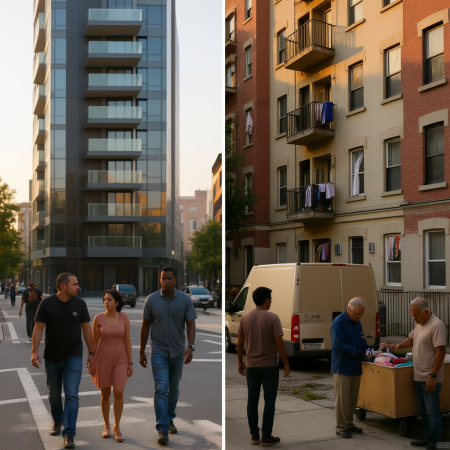
One of the most significant trends in recent decades has been the widening gap between income growth and housing costs. While wages for middle- and low-income workers have stagnated or grown slowly, housing prices in major cities have skyrocketed. This divergence lies at the heart of the housing affordability and income inequality crisis. When housing costs rise faster than incomes, more households are pushed into cost-burdened status—spending more than 30% of their income on rent or mortgage payments. In cities like San Francisco, Toronto, and Sydney, median home prices now exceed ten times the median household income, making ownership impossible for most without substantial financial assistance. Even renting has become unaffordable for many, with average rents consuming 40–50% or more of take-home pay for low-income workers. This imbalance intensifies housing affordability and income inequality by locking lower-income families into precarious living conditions while enabling wealthier individuals to accumulate property and equity. Moreover, income inequality fuels housing market distortions. High-income earners can outbid others for homes, driving up prices and reducing supply for moderate-income buyers. Luxury developments often replace affordable units, further shrinking the stock available to average earners. As a result, housing affordability and income inequality reinforce each other: unequal incomes lead to unequal access to housing, which in turn deepens economic and social stratification.Urbanization and the Pressure on Housing Affordability and Income Inequality
Rapid urbanization has intensified the strain on housing systems, particularly in global cities that attract investment, talent, and tourism. As more people move to urban centers seeking jobs and opportunities, demand for housing rises. However, supply has not kept pace, especially for affordable units. Zoning restrictions, land speculation, and slow approval processes have limited new construction, particularly for low- and middle-income housing. This imbalance disproportionately affects lower-income residents, who are often forced to live in overcrowded, substandard, or distant housing. Long commutes, poor access to services, and neighborhood instability further entrench housing affordability and income inequality. In many cases, the most affordable housing is located in under-resourced areas with fewer schools, healthcare facilities, and job opportunities—creating spatial inequality that mirrors income disparities. For example, in cities like Los Angeles and Paris, low-income families are increasingly pushed to the urban periphery, where transportation costs eat into already tight budgets. This spatial mismatch between housing and opportunity deepens housing affordability and income inequality by limiting upward mobility and reinforcing cycles of poverty.The Role of Policy in Shaping Housing Affordability and Income Inequality
Government policies play a crucial role in either mitigating or exacerbating housing affordability and income inequality. Historically, public investment in social housing, rent control, and housing subsidies helped balance market forces and ensure access for lower-income groups. However, since the 1980s, many governments have reduced funding for affordable housing, favoring market-driven solutions that prioritize private development. This shift has had profound consequences. Without strong public intervention, housing markets tend to serve those with higher incomes, leaving low- and moderate-income households behind. The retreat from social housing has worsened housing affordability and income inequality by removing a key counterbalance to market speculation and gentrification. In contrast, countries like Austria and Singapore have maintained high levels of public and non-profit housing, ensuring that housing affordability and income inequality remain more manageable. In Vienna, for instance, over 60% of residents live in municipally owned or subsidized housing, allowing people across the income spectrum to live in well-maintained, centrally located homes. These models demonstrate that proactive housing policy can break the link between housing affordability and income inequality.Gentrification: A Symptom of Housing Affordability and Income Inequality
Gentrification is one of the most visible manifestations of housing affordability and income inequality. When wealthier residents move into historically low-income neighborhoods, property values rise, rents increase, and long-term residents—often from marginalized communities—are displaced. While urban renewal can bring new investment and improved infrastructure, it often benefits newcomers more than existing residents. The social cost of gentrification reveals the deep roots of housing affordability and income inequality. Displaced families lose not only their homes but also their social networks, schools, and cultural ties. Small businesses close, community organizations dissolve, and neighborhood character erodes. In cities like Atlanta, Brooklyn, and London, gentrification has become synonymous with the exclusion of Black, Latino, and working-class communities, highlighting how housing affordability and income inequality intersect with race and history. Moreover, many "affordable" units created during gentrification are not truly accessible to the lowest-income households. They may require incomes far above minimum wage or be limited to short-term subsidies. As a result, the appearance of housing diversification often masks the reality of deepening housing affordability and income inequality.The Impact on Families and Children
The consequences of housing affordability and income inequality extend beyond economics—they affect health, education, and long-term well-being. Children in housing-insecure families are more likely to experience frequent moves, overcrowding, and homelessness, all of which disrupt schooling and emotional development. Studies show that unstable housing is linked to lower academic performance, higher dropout rates, and increased behavioral issues. When families spend most of their income on rent, they have little left for nutritious food, healthcare, or enrichment activities. This financial stress contributes to chronic health problems and limits opportunities for upward mobility. The cumulative effect reinforces housing affordability and income inequality across generations, as children from low-income households face systemic barriers to success. In contrast, stable, affordable housing provides a foundation for family security and growth. When housing costs are manageable, parents can save, invest in education, and pursue career advancement. This underscores the importance of addressing housing affordability and income inequality not just as housing issues, but as fundamental determinants of social equity.Racial and Gender Dimensions of Housing Affordability and Income Inequality
Housing affordability and income inequality are not experienced equally across demographic groups. Historical and systemic discrimination—such as redlining, discriminatory lending, and employment gaps—has left Black, Indigenous, and other people of color disproportionately affected by unaffordable housing. For example, in the United States, Black and Latino households are more likely to be cost-burdened and less likely to own homes than white households, even at similar income levels. This racial homeownership gap is a direct legacy of housing affordability and income inequality shaped by policy and prejudice. Similarly, women—especially single mothers—face heightened housing insecurity due to the gender pay gap and greater caregiving responsibilities. Lower incomes make it harder to afford rent, and domestic violence survivors often face housing discrimination or homelessness. These intersecting vulnerabilities show that housing affordability and income inequality cannot be addressed without considering race, gender, and historical injustice.The Role of the Private Market and Financialization
In recent decades, housing has increasingly been treated not as a basic human need but as a financial asset. Institutional investors, real estate investment trusts (REITs), and foreign buyers often purchase homes not to live in, but to generate returns. This financialization of housing drives up prices and reduces availability for ordinary buyers and renters. When homes become commodities, affordability takes a backseat to profit. In cities like Vancouver and Berlin, foreign investment and speculative buying have made housing unattainable for local residents, intensifying housing affordability and income inequality. Even middle-class professionals struggle to enter the market, while low-income families face eviction and homelessness. The rise of short-term rentals, such as Airbnb, has further reduced the long-term rental supply in tourist-heavy areas. Entire buildings are converted into vacation units, removing homes from the local market. This trend reflects how market forces, unchecked by regulation, deepen housing affordability and income inequality by prioritizing profit over people.Solutions: Breaking the Cycle of Housing Affordability and Income Inequality
Addressing housing affordability and income inequality requires a multi-pronged approach that combines policy innovation, public investment, and community empowerment. Some proven strategies include:- Expanding Social and Affordable Housing: Governments must reinvest in public housing and support non-profit developers to build and maintain affordable units.
- Inclusionary Zoning: Requiring developers to include affordable units in new projects can help integrate housing across income levels.
- Rent Control and Tenant Protections: Policies that limit rent increases and prevent unjust evictions help stabilize low-income households.
- Community Land Trusts (CLTs): These nonprofit organizations own land and lease it to homeowners or developers, ensuring long-term affordability.
- Progressive Taxation on Property and Vacancy: Taxes on vacant homes, luxury properties, or speculative purchases can discourage hoarding and fund affordable housing.
- Wage Growth and Income Support: Raising minimum wages and expanding earned income tax credits can help bridge the gap between incomes and housing costs.