
Global: Dealing with Household Debt
Introduction
Dealing with household debt has become one of the most pressing economic challenges facing households, policymakers, and financial institutions across the globe. In both advanced and emerging economies, families are increasingly relying on credit to cover daily expenses, finance education, buy homes, or manage unexpected emergencies.
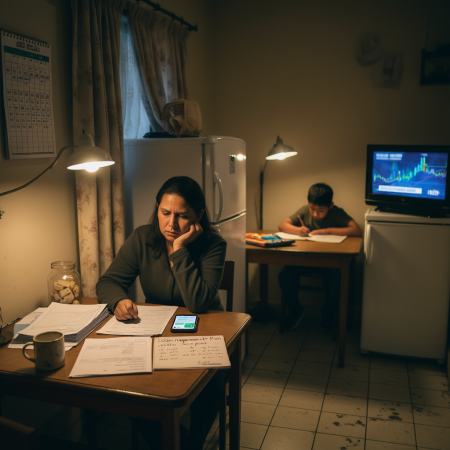
While moderate debt can support consumption and economic growth, excessive or unmanageable household debt can lead to financial distress, reduced spending, and even broader macroeconomic instability. This comprehensive summary explores the causes, consequences, regional variations, policy responses, and practical strategies involved in dealing with household debt, offering a nuanced understanding of a phenomenon that touches millions of lives worldwide.
Understanding Household Debt: What It Includes At its core, dealing with household debt begins with understanding what constitutes household debt. It encompasses all forms of borrowing by individuals or families, including:- Mortgages (loans for home purchases)
- Consumer credit (credit cards, personal loans, auto loans)
- Student loans
- Informal borrowing (from friends, family, or unregulated lenders)
Global Trends in Household Debt Levels
Over the past two decades, global household debt has surged. According to the International Monetary Fund (IMF) and the Bank for International Settlements (BIS), global household debt reached over $57 trillion in 2023—more than 60% of global GDP. Advanced economies like the United States, Canada, Australia, and South Korea have some of the highest household debt-to-GDP ratios, often exceeding 100%. In the U.S., for example, total household debt surpassed $17 trillion in 2024, driven by rising mortgage balances and credit card usage. Meanwhile, emerging markets are experiencing rapid debt growth. Countries like China, Thailand, and Turkey have seen household debt double or triple in just 15 years, fueled by expanding financial inclusion, easy credit, and urbanization. While this reflects greater access to finance, it also raises alarms about overleveraging among populations with less financial literacy or job security. This global rise underscores why dealing with household debt is no longer a niche concern—it’s a central issue in economic resilience and inclusive growth.Root Causes of Escalating Household Debt
Several interconnected factors drive the accumulation of household debt worldwide:- Stagnant Wages vs. Rising Costs: In many countries, real wages have barely kept pace with inflation, especially in housing, healthcare, and education. Families borrow to bridge the gap.
- Easy Credit Conditions: Prolonged low interest rates post-2008 encouraged borrowing. Digital lenders now offer instant loans with minimal scrutiny.
- Cultural and Social Norms: In some societies, home ownership or financing weddings/education through debt is deeply embedded in social expectations.
- Financial Deregulation: Looser lending standards and aggressive marketing by banks and fintech firms have made credit more accessible—and sometimes predatory.
- Economic Shocks: The pandemic, inflation spikes, and job losses forced many households to rely on credit for survival, not consumption.
The Consequences of High Household Debt
When households are overburdened by debt, the ripple effects extend far beyond personal finances:- Reduced Consumption: Debt-servicing obligations leave less money for goods and services, slowing economic growth.
- Mental Health Strain: Studies consistently link high debt levels to anxiety, depression, and family stress.
- Financial Exclusion: Defaulting on loans can damage credit scores, limiting future access to finance or housing.
- Systemic Risk: If many households default simultaneously—especially on mortgages—it can trigger banking crises, as seen in 2008.
- Intergenerational Inequality: Student debt or inherited financial instability can limit opportunities for younger generations.
Regional Perspectives: Contrasts in Debt Experiences
Dealing with household debt looks different across regions due to varying financial systems, regulations, and cultural attitudes.- United States: Dominated by mortgages and student loans. Rising credit card debt and “buy now, pay later” schemes add pressure. Bankruptcy laws offer some relief, but stigma remains.
- Europe: More conservative borrowing in countries like Germany; higher mortgage debt in the UK and Netherlands. Strong consumer protections exist, but cost-of-living crises are straining budgets.
- Asia: In South Korea and China, household debt is soaring amid property speculation and education costs. Japan faces aging populations with declining asset values.
- Latin America: High reliance on informal credit and payroll loans. Inflation erodes repayment capacity.
- Africa: Limited formal credit access, but mobile lending (e.g., M-Pesa in Kenya) is expanding rapidly—raising concerns about over-indebtedness without safeguards.
- Macroprudential Regulations:
- Loan-to-value (LTV) and debt-to-income (DTI) caps on mortgages prevent excessive borrowing.
- Example: Canada’s 2016 mortgage stress test reduced risky lending.
- Interest Rate Policy:
- While rate hikes aim to curb inflation, they also increase debt servicing costs—posing a dilemma for central banks.
- Debt Relief and Restructuring Programs:
- Some countries offer mortgage forbearance, student loan forgiveness, or personal insolvency frameworks.
- Post-pandemic, many nations temporarily suspended evictions and foreclosures.
- Financial Education Initiatives:
- Teaching budgeting, credit literacy, and savings habits from an early age can prevent overborrowing.
- Consumer Protection Laws:
- Caps on interest rates, transparency in loan terms, and bans on predatory practices shield vulnerable borrowers.
The Role of Financial Institutions
Banks, fintech firms, and microfinance institutions play a dual role: they enable access to credit but also bear responsibility for responsible lending. Ethical practices include:- Assessing borrowers’ true repayment capacity—not just credit scores.
- Offering flexible repayment options during crises.
- Avoiding aggressive marketing of high-cost credit to low-income groups.
Practical Strategies for Households
While systemic change is essential, individuals can take steps to manage their debt responsibly:- Budgeting and Tracking: Use apps or spreadsheets to monitor income, expenses, and debt payments.
- Debt Consolidation: Combine high-interest debts into a single lower-interest loan (if terms are favorable).
- Prioritizing High-Cost Debt: Pay off credit cards or payday loans first due to their exorbitant rates.
- Building Emergency Savings: Even small buffers reduce reliance on credit during shocks.
- Seeking Professional Help: Nonprofit credit counseling services can negotiate with creditors or create repayment plans.
The Impact of Technology and Digital Lending
The rise of fintech has transformed dealing with household debt—for better and worse. On one hand, digital platforms offer:- Faster access to small loans for emergencies.
- Transparent comparison tools for interest rates.
- Automated savings and debt-repayment apps.
Lessons from Past Crises
History offers critical insights. The 2008 Global Financial Crisis was rooted in unsustainable U.S. household mortgage debt. In its aftermath, many countries strengthened lending rules and promoted financial literacy. Similarly, the Asian Financial Crisis of 1997 revealed how rapid credit expansion without oversight could destabilize entire economies. Post-crisis reforms in Thailand and Korea included better household debt monitoring and consumer safeguards. These episodes prove that ignoring household debt imbalances invites systemic risk. Proactive dealing with household debt is far less costly than crisis response.The Future of Household Debt: Challenges Ahead
Looking forward, several trends will shape how the world approaches dealing with household debt:- Climate-related Shocks: Floods, heatwaves, and crop failures may force more households into debt for recovery.
- Aging Populations: Retirees with insufficient savings may rely on reverse mortgages or credit, increasing vulnerability.
- Rising Inequality: As wealth concentrates, middle- and lower-income households may borrow more just to maintain living standards.
- Global Interest Rate Volatility: Higher rates could trigger waves of defaults in highly indebted nations.
Inclusive Approaches to Debt Management
True progress in dealing with household debt requires inclusion:- Gender Lens: Women often face barriers to credit but are more likely to repay loans. Empowering female financial agency reduces household risk.
- Rural Access: Expanding formal credit to rural areas can displace costly informal lenders.
- Language and Literacy: Financial tools must be accessible in local languages and simple formats.
Measuring Success: Beyond Debt Ratios
Success in dealing with household debt shouldn’t be measured only by lower debt-to-income ratios. Equally important are:- Reduced financial stress (measured via surveys)
- Increased emergency savings rates
- Lower default and bankruptcy rates
- Greater confidence in managing money