
GLOBAL: CREATING HOUSING MARKETS IN EMERGING MARKET ECONOMIES
Introduction
Creating housing markets in emerging market economies is not just a development goal—it’s a foundational step toward inclusive growth, urban resilience, and social stability across the Global South. From Lagos to Jakarta, Bogotá to Dhaka, hundreds of millions of people live in informal settlements, overcrowded rentals, or self-built shelters not because they refuse formal housing, but because functional, accessible housing markets simply do not exist.
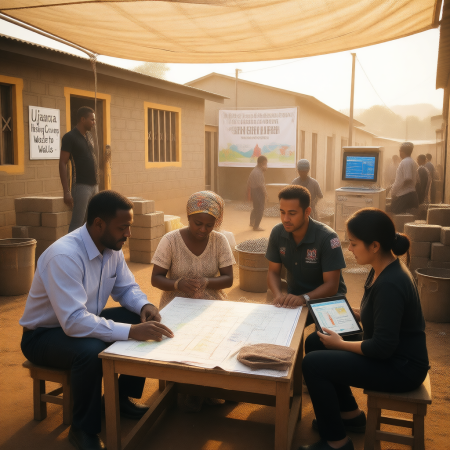
The result is a systemic gap: households that are too poor for private-market homes yet too “wealthy” for social housing fall through the cracks. Bridging this divide requires more than isolated projects—it demands the deliberate, coordinated effort of creating housing markets in emerging market economies that are inclusive, efficient, and responsive to local realities.
The Scale of the Missing Market
The global urban housing deficit exceeds 330 million units, with over 90% of these units concentrated in low- and middle-income countries. Yet this is not primarily a supply shortage—it’s a market failure. In many emerging economies, formal housing finance reaches less than 5% of the population. Land records are fragmented or nonexistent. Construction relies on costly imported materials. And planning systems often favor luxury high-rises over incremental, affordable solutions. Without these foundational pillars, creating housing markets in emerging market economies remains aspirational rather than operational.Why Markets Don’t Emerge Naturally
Unlike in high-income nations, where housing ecosystems evolved over decades with strong institutions, emerging economies face structural gaps:- Unclear land tenure: Up to 70% of urban residents lack formal title, blocking access to credit and investment.
- Shallow mortgage markets: High down payments, short loan terms, and lack of credit history exclude the majority.
- High construction costs: Cement, steel, and glass are often imported, driving prices beyond local affordability.
- Rigid regulations: Outdated building codes and slow permitting discourage small builders and innovation.
Land Tenure: The First Pillar
Secure land rights are the bedrock of any housing market. Without them, households cannot improve their homes, access finance, or plan for the future. Countries like Rwanda and Ethiopia have made strides by digitizing land registries and issuing leasehold titles to informal settlers. Colombia’s “urban legalization” programs grant property rights to favela residents, unlocking pathways to formal services and credit. These reforms demonstrate that creating housing markets in emerging market economies begins with recognizing and formalizing existing urban realities—not erasing them.Finance Innovation: Beyond Traditional Mortgages
Traditional mortgage models rarely fit informal or irregular income streams common in emerging economies. Instead, innovative finance is key:- Payroll-linked savings (e.g., Mexico’s INFONAVIT)
- Housing microfinance (e.g., Kenya’s Jamii Bora)
- Rent-to-own schemes with progressive ownership
- Blended capital combining public guarantees with private investment
Empowering Local Builders and SMEs
Large developers dominate headlines, but in reality, small and medium enterprises (SMEs) and community builders construct most housing in the Global South. Yet they face barriers: limited access to bulk materials, credit, and technical training. Supporting them is essential to creating housing markets in emerging market economies. In Tanzania, “Housing Enabler” programs provide SMEs with prefabricated wall panels and training, cutting build time and cost. In the Philippines, social enterprises supply disaster-resilient starter kits to local masons. When local capacity is strengthened, markets become more diverse, agile, and inclusive.Embracing Incremental and Upgraded Housing
An estimated 80% of housing in emerging markets is built incrementally—room by room, as resources allow. Rather than ignoring this reality, smart policy can support it. Core housing models—providing a secure, serviced structure that families expand over time—have succeeded in South Africa and Peru. Similarly, slum upgrading (improving water, sanitation, roads, and tenure in place) is far more cost-effective and humane than relocation. Both approaches align with the logic of creating housing markets in emerging market economies: meet people where they are and provide tools—not prescriptions.Modernizing Regulation and Planning
Outdated regulations often inflate costs and delay delivery. Performance-based building codes (focusing on safety outcomes, not specific materials) allow for innovation with earth blocks, bamboo, or recycled composites. Streamlined permitting—like Vietnam’s one-stop approval centers—can cut approval times from years to months. In Morocco, standardized designs reduced construction costs by 25%. These reforms show that creating housing markets in emerging market economies includes making rules work for people, not against them.Technology as a Force Multiplier
Digital tools are accelerating progress:- Geospatial mapping identifies underused public land for housing.
- Blockchain land registries (tested in Ghana) reduce fraud and speed transactions.
- E-procurement platforms connect SMEs with bulk material suppliers.
The Economic Case for Action
Beyond equity, there’s a powerful economic argument. A functional housing market:- Generates 5–10% of urban employment
- Stimulates demand for construction materials and household goods
- Increases local property tax revenues
- Reduces congestion and improves public health
Learning from Global Successes
Several countries offer proven models:- Vietnam: Combined land reform, SME support, and fast-track permitting to deliver 1.5 million homes.
- Mexico: INFONAVIT’s payroll-linked system serves over 20 million workers.
- Rwanda: Integrated green building codes with tenure security for sustainable urban growth.
- Colombia: “Vivienda de Inters Social” subsidies reached 3 million households.
Avoiding Past Mistakes
Historical failures offer caution:- Remote mega-projects (e.g., Egypt’s desert cities) often become ghost towns.
- Over-subsidized units strain public budgets without building market capacity.
- Top-down designs ignore cultural context and user needs.
The Role of International Partnerships
Global institutions like the World Bank, IFC, and UN-Habitat play vital roles in de-risking innovation and sharing knowledge. The IFC’s Affordable Housing Program has supported reforms in over 30 countries. Yet success depends on local leadership. International support should strengthen domestic systems—not override them. True progress in creating housing markets in emerging market economies is homegrown, even when globally supported.Centering Equity and Inclusion
Markets must serve everyone—not just the “bankable.” This means:- Prioritizing women’s land rights (they are often excluded from titles)
- Ensuring accessibility for persons with disabilities
- Protecting renters from exploitation
- Including informal settlement residents in planning
A Vision for Functional, Human-Scale Markets
Imagine a future where a street vendor in Nairobi can secure a titled plot and a micro-mortgage. Where a teacher in Medellín rents a quality apartment near her school. Where a farmer in Bihar upgrades his home with locally made, earthquake-resistant blocks. This future is possible—but only if we shift from building units to building systems. Creating housing markets in emerging market economies is about crafting ecosystems where land, finance, construction, and regulation work together to serve real people.Measuring What Matters
Success shouldn’t be measured by unit counts alone, but by:- % of population with secure tenure
- Average time to obtain a building permit
- Share of housing finance reaching low/moderate incomes
- Cost per square meter of decent housing